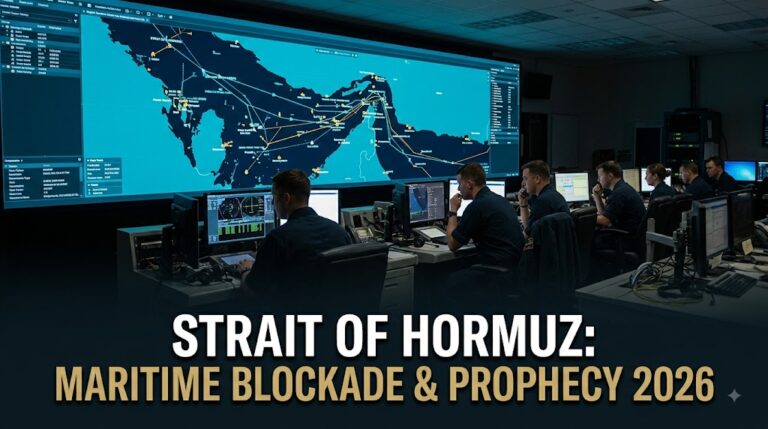
Hormuz navigation aids destroyed overnight sounds like a line from a naval thriller, not a Monday morning shipping brief. Yet here we are. By 04:23 UTC on November 9, Reuters and Arab News were carrying an unnamed Revolutionary Guards Navy official’s claim that navigation systems in the south of the Strait were gone. At 09:55 UTC, live AIS tracking showed only two commercial ships had crossed the waterway—roughly 8% of normal traffic—while 54 vessels sat holding position outside the lane. Any one of those headlines you could shrug off. Stacked together, they deserve a calm, careful look.
I want to do something a little different in this report, friend. I will give you the numbers, but I will also tell you which ones we can confirm in independent maritime reporting, which ones come with an asterisk, and where the fog of war leaves a gap. An unnamed Iranian official’s claim on state television is not the same thing as a satellite photo, and you deserve the version you can trust.
Here is the path we will walk: what AIS and UKMTO actually prove this morning, why blinding a two-mile shipping lane is different from laying a mine, how this fits into the broader Middle East escalation, and what Scripture says to do with all of it—which is neither panic nor a shrug. If you are new here, our guides to the biblical signs of the end times in 2026 and the 2026 Iran war and the Ezekiel 38 Hormuz blockade give you the big map. This report is today’s weather.
What Is Confirmed vs. What Comes With an Asterisk
Let’s separate the hard maritime telemetry from the wartime claims right up front. Neither Reuters nor The Times of Israel could independently verify who destroyed the navigation aids, or how. What we can verify is that commercial traffic has collapsed to a crawl.
| Claim or Metric | Status | What the Reporting Actually Shows |
|---|---|---|
| Southern navigation aids destroyed | Asterisk (IRGC Claim) | Reported by an unnamed IRGC Navy official to Iranian state media; not yet independently verified by UKMTO or commercial satellite imagery. |
| Commercial traffic at ~8% of normal | Confirmed (AIS & PortWatch) | 7.1 ships/day over the past week vs. 84.8 pre-crisis; IMF PortWatch data shows 4.4 total transit calls/day (1.4 tankers/day) in the week to Nov 1. |
| Nov 7 tanker fire & projectile strike | Confirmed (UKMTO) | UKMTO Warnings 199-26 and 200-26 verified both a fire 8 NM northwest of Khasab and a projectile hit on an outbound tanker one hour later. |
| Qeshm Island explosions (Nov 8) | Asterisk (State Media) | Arab News cited Fars reporting explosions late Sunday on Qeshm, with a provincial official saying no vital infrastructure was hit. |
Sources: Reuters / Al-Monitor · Arab News · UKMTO · IMF PortWatch
Why Blinding the Lane Is Different From Laying a Mine
Navigation aids are not decoration. In the Strait of Hormuz, the Traffic Separation Scheme is only two miles wide in each direction, hemmed in by reefs, shoals, and 50,000-ton tankers passing within minutes of each other. Buoys mark the reef edge. Beacons mark the turn. Lights mark the southern channel.
A mine says: do not use this route. Removing the buoys and beacons says: there is no safe route after dark. Even a captain who wants to follow every rule cannot safely transit a two-mile reef-lined channel blind at night. Insurance underwriters know this, which is why war-risk premiums have climbed from 0.15% to over 1.2% of hull value per voyage. That infrastructure choke is the exact dynamic we tracked in our analysis of the global oil crisis in the Strait of Hormuz and Red Sea.
From Mines to Darkness: The Escalation Ladder
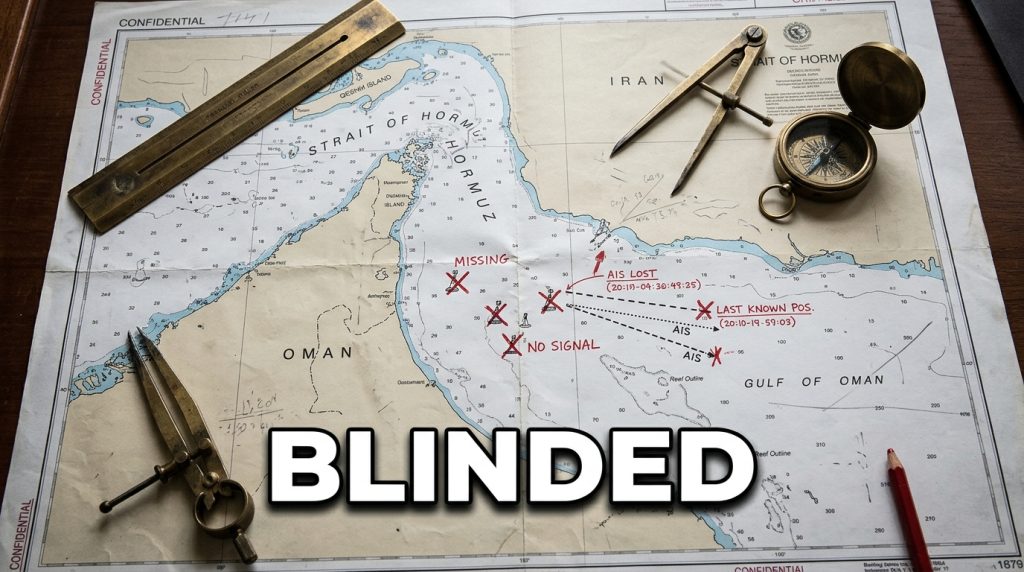
Zoom out, because the details matter. For two weeks, Tehran blamed tanker strikes on ships using an “unauthorised route.” Now, with Hormuz navigation aids destroyed, the message has shifted from harassment to closure.
- UKMTO-verified strikes: On the evening of November 7, UKMTO Warning 199-26 and Warning 200-26 confirmed two separate incidents—a vessel fire 8 nautical miles northwest of Khasab at 19:20 UTC, followed an hour later by an unknown-projectile strike on an outbound tanker at 20:20 UTC.
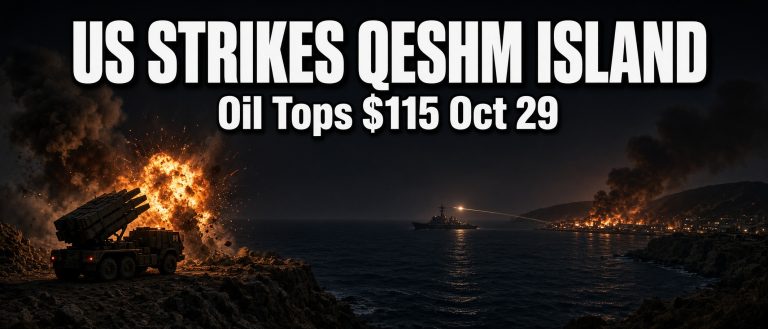
- Qeshm Island’s role: Qeshm Island sits right at the mouth of the Strait. Earlier this month, U.S. forces struck Qeshm Island in what Washington called a defensive response to Iranian surface-to-air missile fire. Whoever controls Qeshm controls whether the lights along that southern channel ever come back on.
- The diplomatic clock: Meanwhile, Task Force Iron Gate continues blockade enforcement in the Gulf of Oman, while in Jerusalem, Israel’s political clock ticks forward toward Tuesday’s Knesset session.
We have seen similar patterns of modern missile and maritime pressure in our wars and rumors of wars coverage. Whether the buoys were knocked out by Iranian forces, caught in crossfire, or sabotaged in the fog of war, the operational effect on global shipping is identical: the lane is dark.
The Prophetic Lens: When the Sea Goes Dark
Here is where I want to be careful, because careful is what a watchman owes you. Every time a headline mentions Iran and the Strait of Hormuz, social media rushes to declare that Ezekiel 38 is happening tomorrow morning. Let’s slow down and read the text.
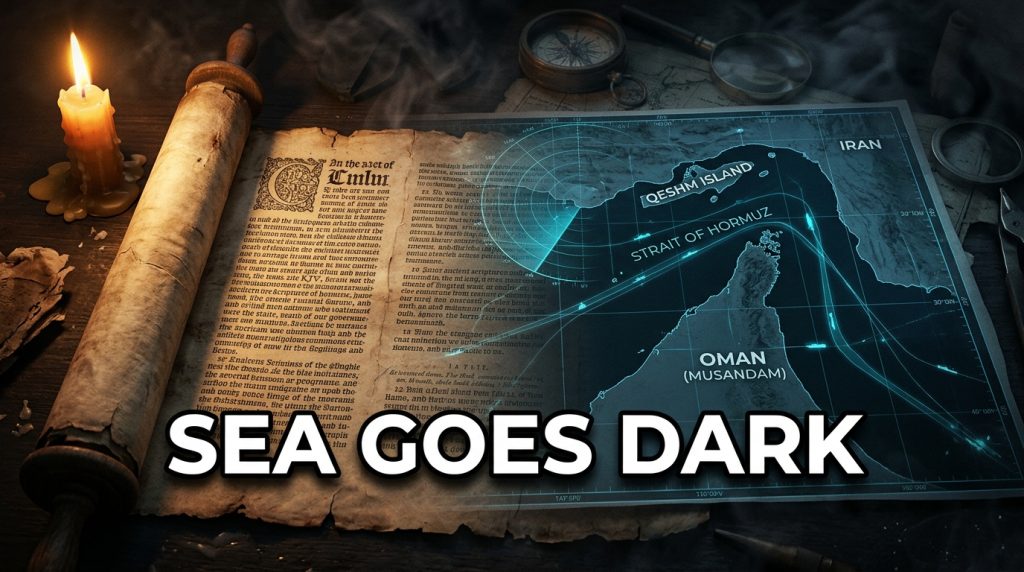
In Ezekiel 38:4–5 (KJV), Persia is listed among the coalition that comes against Israel in the latter days. A maritime blockade in the Persian Gulf or a strike on Qeshm Island is not the Ezekiel 38 invasion. That prophecy describes a specific coalition marching against the mountains of Israel. Persia’s place on that list is a hinge to keep watching, not a fulfillment to declare.
At the same time, look at what Jesus said in Luke 21:25 (KJV): “And there shall be signs in the sun, and in the moon, and in the stars; and upon the earth distress of nations, with perplexity; the sea and the waves roaring.” A blind sea is a perplexed sea. Captains cannot read the water, insurers cannot price the risk, and nations cannot move their oil. I am not saying any single shipping warning fulfills Luke 21. I am saying the mood on the earth is starting to match the mood in the text.
To be fair, the Strait of Hormuz has seen tanker wars before—most notably in the 1980s, when mines and missiles rattled global oil markets without ending the age. History reminds us not to confuse every crisis with the final curtain. Yet when you stack a near-total Hormuz shutdown alongside ongoing wars, political instability in Jerusalem, and a cluster of major earthquakes across the Pacific Rim, the simultaneous convergence is worth staying awake for—because “the whole creation groaneth and travaileth in pain together until now” (Romans 8:22, KJV). We watch the direction of travel loosely and with open hands, as we explain in our guide to biblical discernment.
Calm Hands, a Settled Heart
If reading about a darkened Strait and rising oil risk leaves a knot in your stomach, take a deep breath, grab a sandwich, and remember who sits on the throne. This stuff does not trouble me at all, because I know who my King is.
Proverbs 22:3 (KJV) puts it plainly: “A prudent man foreseeth the evil, and hideth himself: but the simple pass on, and are punished.” Prudence is not panic. It means keeping a little extra fuel in the tank, a few weeks of shelf-stable groceries in the pantry, and enough margin in your budget to help a neighbor if prices spike. Do it calmly, and do it with open hands.
For believers, Luke 21:28 (KJV) gives us our posture: “And when these things begin to come to pass, then look up, and lift up your heads; for your redemption draweth nigh.” We are not waiting for the Antichrist; we are waiting for Jesus Christ, who promised to deliver us from the wrath to come (1 Thessalonians 4:16–17; 1 Thessalonians 5:9, KJV). And if you are not sure where you stand with God today, you do not have to guess. Scripture says, “For God so loved the world, that he gave his only begotten Son, that whosoever believeth in him should not perish, but have everlasting life” (John 3:16, KJV). You can read how to know Him personally on our salvation page, or explore the historical case in our evidence the Bible is true.
Sources
- Reuters / Al-Monitor: Iran says no unauthorised vessels transited Strait of Hormuz overnight after navigation aids destroyed (Nov 9, 2026)
- Arab News: Iran says no unauthorized vessels transited Strait of Hormuz overnight; Qeshm Island explosions reported (Nov 9, 2026)
- UKMTO via Regulas Shipping: Warnings 199-26 and 200-26 — Khasab tanker fire and outbound projectile strike (Nov 7–8, 2026)
- IMF PortWatch / Aureum: Strait of Hormuz daily transit calls and 7-day moving averages (Nov 2026)
- The Nation Thailand: U.S. strikes Iran’s Qeshm Island in defensive response (Nov 3, 2026)
#Hormuz #IranWar #OilCrisis