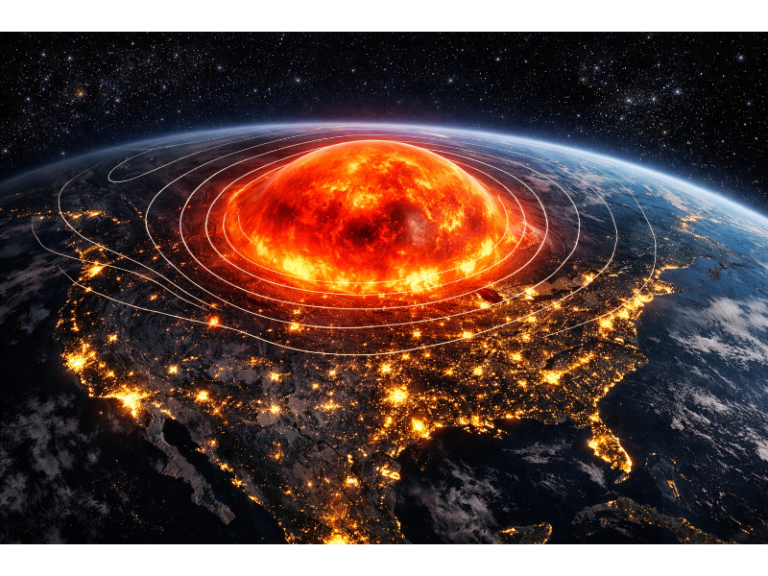
Three maritime chokepoints are under pressure at once. What that means for your world—and for what comes next. The Global Oil Crisis 2026 Explodes
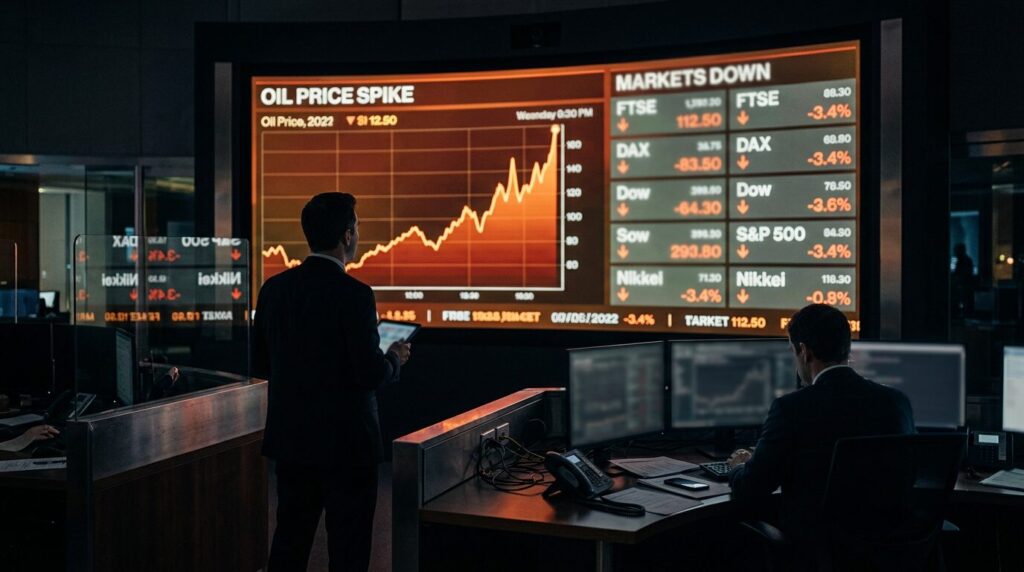
On July 23, 2026, something crossed a threshold. Brent crude climbed past $100 per barrel for the first time since May. That number alone might not sound like an alarm—oil prices move. But the reason it moved is worth sitting with.
It wasn’t a production shortage. It wasn’t seasonal demand. It was something simpler and more unsettling: the world’s most vital shipping routes are under attack, and at the same time.
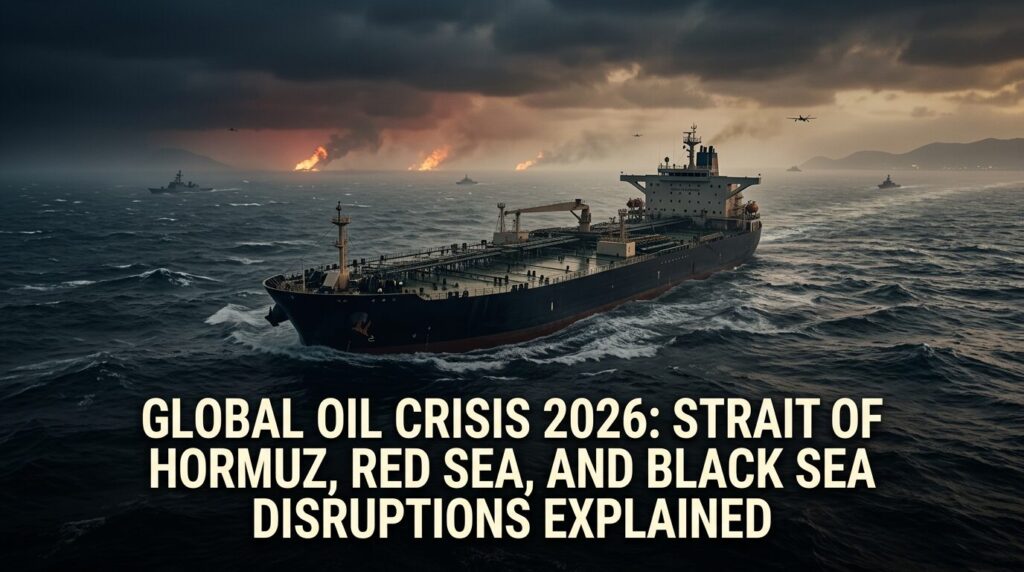
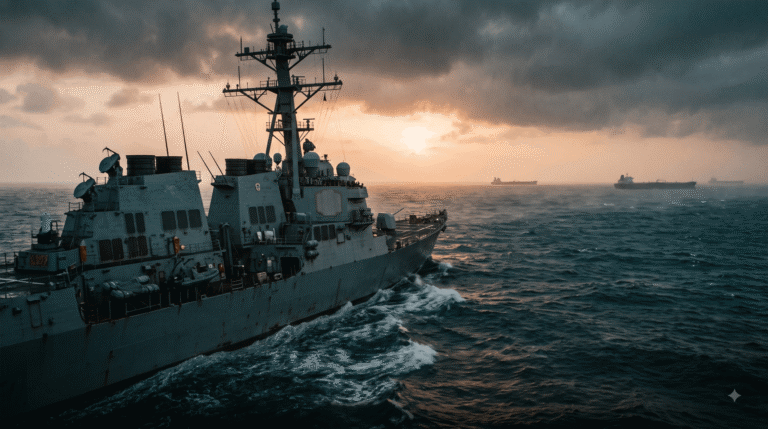
The Strait of Hormuz, through which roughly 30 percent of the world’s seaborne oil passes. The Bab el-Mandeb, where the Red Sea funnels traffic into the Suez Canal. The Black Sea, where a pipeline serves as the main export route for Kazakhstan’s oil. Three chokepoints. Three theaters of conflict. One price shock rippling through every market on Earth.
This is not a story about why gas might cost more at the pump. It’s a story about what happens when the infrastructure carrying civilization’s lifeblood becomes the battlefield.
Global Oil Crisis 2026:THREE CHOKEPOINTS, ONE PRICE SHOCK
Let’s start with what we know happened, because the facts are stark enough without embellishment.
And in the Strait of Hormuz, the pressure is building. According to energy strategist Helima Croft of RBC Capital Markets, Hormuz transit volumes have dropped to approximately 80 percent of normal, adding what markets call a “risk premium”—a price bump that reflects the possibility of further disruption. It’s not that oil isn’t flowing. It’s that every barrel flowing through carries the weight of military uncertainty.
The global oil supply disruption is real, quantifiable, and simultaneous across three theaters. WTI crude sat near $97.70 per barrel, and the message from market strategists was consistent: this is not noise.
WHEN THE SHIPPING ROUTE BECOMES THE BATTLEFIELD
Here’s where it gets worth thinking about: What do you think this means for all of us?
Oil prices have always responded to geopolitical risk. Markets have always priced in uncertainty. But there’s a difference between a market reacting to risk and a market reacting to simultaneous, cascading failures across multiple critical infrastructure points.
Historically, when one route tightens, others absorb the load. When one producer faces sanctions, others increase output. The system has redundancy built in. But redundancy assumes that not everything breaks at once.
According to Helima Croft, the alternate routes for Kazakhstan’s displaced oil are “limited and unlikely to fully offset the disruption.” That’s not market jargon for “we’ll adapt.” It’s market jargon for “we don’t have a plan B.”
The deeper concern comes from inventory. Global Oil Crisis 2026 has impacted the oil reserves which are not empty, but they are being drawn down at a pace that assumes a solution will appear. One analyst put it starkly: the world is functioning like “a savings account for someone who just lost their job.” The money is there—for now. But the spending continues, and there’s no income replacing what’s being withdrawn.
Three chokepoints under pressure. One inventory buffer being ground down. No clear alternate routes. No production surge waiting in the wings. This is the global market instability that moves beyond ordinary market movement into something that demands attention.
“YE SHALL HEAR OF WARS”: READING THE CRISIS WITHOUT FORCING THE TEXT
When Jesus sat on the Mount of Olives and His disciples asked Him about the end of the age, He didn’t start with a list of specific events. He started with a warning about deception, and then He painted a landscape:
Matthew 24:6–8 (King James Version)
“And ye shall hear of wars and rumours of wars: see that ye be not troubled: for all these things must come to pass, but the end is not yet. For nation shall rise against nation, and kingdom against kingdom: and there shall be famines, and pestilences, and earthquakes, in divers places. All these are the beginning of sorrows.”
Notice what Jesus didn’t do: He didn’t say wars would stop happening. He said we would hear of them—that they would become a feature of the landscape, something we’d be aware of, something that would shape the ordinary rhythms of life. He called it the “beginning of sorrows”—a phrase often compared to labor pains. They increase in frequency and intensity, but they’re not themselves the birth.
What we’re watching in the Strait of Hormuz crisis, the Red Sea shipping attacks, and the Black Sea tanker attacks fits that landscape. This Global Oil Crisis 2026 isn’t one isolated conflict. It’s the convergence of multiple tensions—regional, economic, military—all pressing on the same critical infrastructure at the same time.
But here’s where we need to be careful. It’s tempting to draw a direct line from today’s headlines to Matthew 24 and declare: “This is it. This is the fulfillment.” And I understand the impulse. The pattern recognition feels real. But Jesus also said something crucial in the same passage:
Matthew 24:36 (King James Version)
“But of that day and hour knoweth no man, no, not the angels of heaven, but my Father only.”
That’s not a contradiction. That’s a guardrail. We are told to watch. We are not told to set dates or claim certainty about timing. Samuel’s read of this—and he holds it with appropriate humility—is that we are seeing the kind of convergence that Scripture prepared us to recognize: wars, economic instability, the vulnerability of systems we’ve built our lives around. That’s significant. But significant is not the same as conclusive.
There are other ways to read this moment. Some argue that geopolitical conflict and economic disruption are simply part of human history, without prophetic weight. Others interpret Matthew 24 primarily through the lens of first-century events or the general condition of the church age rather than as a direct description of contemporary crises. Neither view is stupid. Both deserve to be heard.
Global Oil Crisis 2026
What we can say with clarity is this: Scripture describes a world marked by increasing distress, conflict, and the shaking of systems. We’re seeing that. Whether this particular oil crisis represents a prophetic sign or simply a convergent geopolitical problem, the Bible’s diagnosis of human history is proving accurate. And that accuracy matters.
Some of this is sealed. I don’t know whether this crisis escalates into something larger. I don’t know whether the Strait of Hormuz remains at 80 percent capacity or drops further. I don’t know whether the CPC terminal comes back online or stays dark. I’m not going to pretend otherwise.
HORMUZ, THE RED SEA, AND THE BLACK SEA: WHY THE GEOGRAPHY MATTERS
But this report doesn’t stand alone. There is more to the Global Oil Crisis 2026
These are not unrelated headlines. They’re pieces of a picture: regional actors escalating military pressure on the world’s energy lifelines at the same time. Coincidence is possible. But pattern is also possible. And pattern is what we’re supposed to notice.
This is not chaos without meaning. It is pattern. And pattern implies an Author—or at minimum, a world being shaped by forces that understand the vulnerability of the systems we depend on.
WHAT SHOULD WE DO WHEN THE WORLD’S LIFELINES BECOME VULNERABLE?
If this stirs something in you, good. That’s the right response. The Global Oil Crisis 2026 is ramping up and that may cause all of us to wonder what is next?
The first thing is to distinguish between categories of information. A military report is not a market forecast. An expert prediction is not a prophecy. A market reaction is not a prophecy fulfilled. We can track all of them without collapsing them into one. The disciplines are different. The confidence levels are different. The applications are different.
The second thing is to let this remind you that the systems we’ve built our lives around are not ultimate security. Energy flows through pipelines and shipping lanes that can be interrupted. Markets can seize. Supply chains can break. That’s not a reason for panic—it’s a reason for clarity. If your sense of safety depends entirely on the uninterrupted flow of global commerce, you’re building on sand.
But here’s what matters more: We have a reason not to be afraid. Not because the world is stable—it isn’t. Not because nothing bad will happen—it will. But because the God who wrote the prophecy is the God who holds the future. Fulfilled prophecy doesn’t prove that everything will be okay in the way we want it to be. It proves that God keeps His word. And a God who keeps His word is trustworthy with the future, even when the future looks uncertain.
Jesus told us to watch. He also told us not to be troubled. That’s not a contradiction. It’s the posture of someone who knows the ending.
THE WORLD IS TELLING US SOMETHING
The global oil crisis 2026 is not just about prices at the pump. It’s about what happens when the infrastructure carrying civilization becomes the target.
Three chokepoints. Three theaters of conflict. One message: the world we’ve built is more fragile than we pretend.
Scripture saw this coming. Not this specific crisis—Scripture doesn’t work that way. But this kind of crisis. This convergence of wars, economic instability, and the vulnerability of the systems we depend on. Jesus called it the beginning of sorrows. Not the end. The beginning. The labor pains before the birth.
If you’re watching these developments and feeling the weight of it, that’s not weakness. That’s clarity. The right response isn’t fear or date-setting. It’s watchfulness. It’s the kind of sober attention that keeps you grounded in what’s actually true instead of what you’re afraid might be true. The Global Oil Crisis 2026 continues and we all need to keep a watchful eye on this developing situation.
And it’s the kind of attention that keeps you looking up—not away from the world, but toward the One who wrote the story.
Watch the headlines. Read the Scripture. Keep your eyes on the Author and Finisher of our Faith. Someday he is coming back and that someday may be closer than you and I think!
NOAA just raised the odds of a “very strong” El Niño to 81 percent, and Palm Springs is bracing for 117 degrees this week. Here’s what the data actually shows, what it doesn’t yet prove, and what Scripture has to say about the pattern underneath it.