13 Nights of Strikes and Two Blockaded Seas: The US-Iran Conflict Reaches a Critical Juncture
As the US pauses air strikes, a simultaneous naval blockade and Houthi expansion threaten the world’s most critical shipping routes. What does this mean for global trade and biblical prophecy?
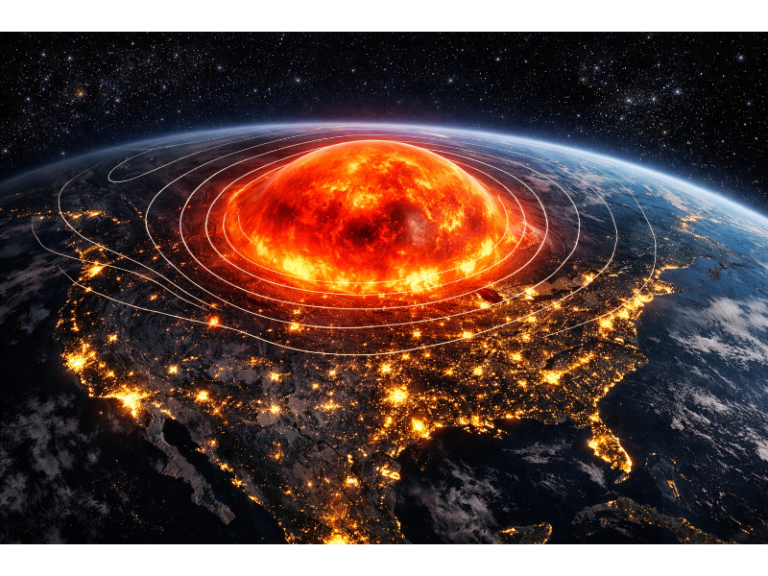
For 13 consecutive nights, the sky over Iran lit up with U.S. military strikes. Then, suddenly, the skies went quiet.
But let’s not mistake a pause in the air for a de-escalation on the water. If you’ve been following the US Iran conflict 2026, you know the real story right now isn’t about bombs falling; it’s about the world’s most critical maritime arteries being choked off. We are talking about the Strait of Hormuz—the narrow passage where a fifth of the world’s oil flows—and the Bab el-Mandeb strait, the gateway to the Red Sea. Both are currently under severe, simultaneous disruption.
Is this operational pause a genuine diplomatic off-ramp, or is it the calm before a global maritime collapse? Today, we are going to look past the headlines of the airstrikes to examine the facts on the water, what Scripture says about the disruption of global trade, and how we should respond as believers.
13 Nights of Fire, Two Blockaded Seas and on goes the US Iran conflict 2026
Let’s start with what is actually happening on the ground and on the water, because the facts alone are striking enough.
According to NewsNation, U.S. forces have temporarily paused their strikes against Iran after 13 straight nights of operations. The White House strategy here is to hold off on expanding the targets to energy infrastructure, giving diplomatic channels time to work. But they are quick to note that all options remain on the table.
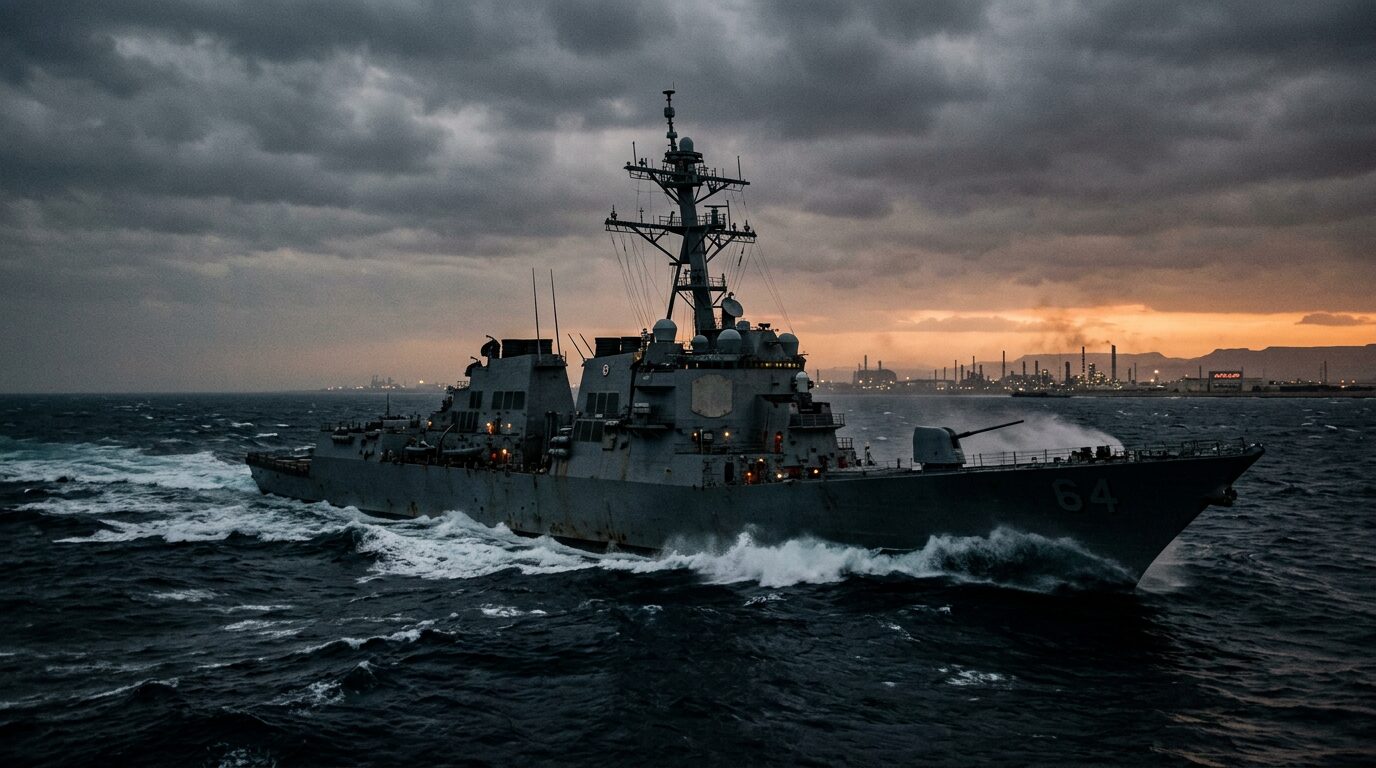
While the air war paused, the water war didn’t. U.S. Central Command confirmed that a naval blockade surrounding Iranian ports remains in full effect. Al Jazeera reports that U.S. forces have recently intercepted and disabled multiple commercial vessels attempting to run this Strait of Hormuz blockade. In a direct mirror response, Iranian forces have also stopped commercial vessels transiting the Strait, citing territorial authority.
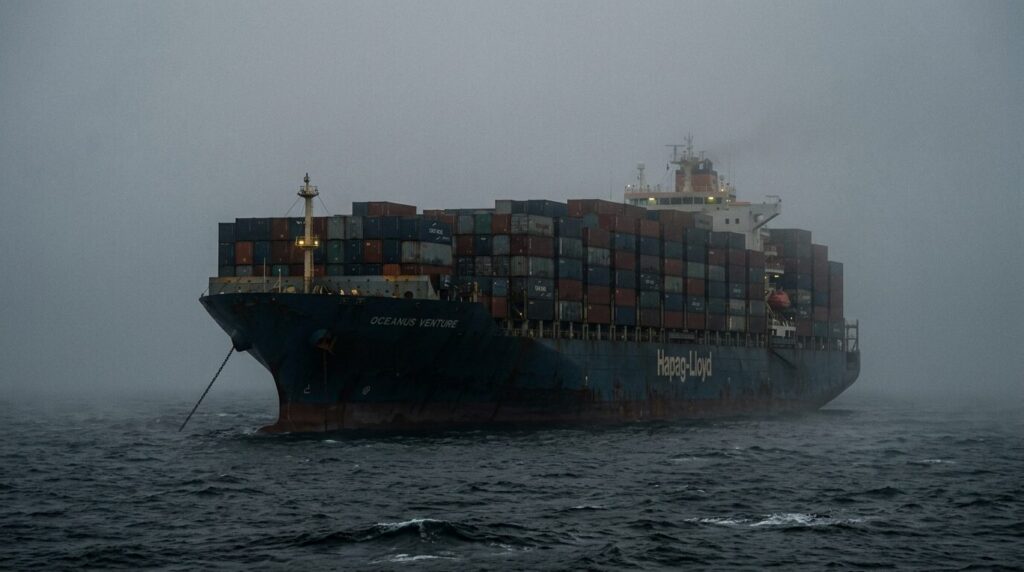
Meanwhile, the conflict has spilled over into the Red Sea. CNN reports that the recent Houthi attacks Red Sea Saudi Arabia include fresh drone and missile strikes on Saudi coastal infrastructure, alongside a newly announced naval blockade. This effectively threatens the Bab el-Mandeb strait, creating a dual chokepoint crisis. The US Iran conflict 2026 continues….
The retaliation hasn’t been limited to the water. CBS News details how the US bases attacked Middle East 2026 have faced repeated drone and missile strikes in Jordan, Kuwait, and Bahrain, resulting in multiple U.S. service member casualties.
Somewhere, a naval strategist is probably updating a “routine regional tension” briefing for the fourth time this month. I don’t blame them. Nobody’s flowchart prepared them for two major global shipping chokepoints getting squeezed at the exact same time.
A Squeeze on the World’s Arteries
So, why is this a sign and not just standard Middle East politics?
Historically, the Strait of Hormuz sees occasional tanker seizures, threats, or brief disruptions. It is a known geopolitical friction point. But a full, active, dual-sided naval blockade enforced by the U.S. Navy, while Iranian proxies simultaneously blockade the Red Sea, is a massive departure from the baseline.

When both the Strait of Hormuz and the Bab el-Mandeb strait are actively choked, it means the two most critical maritime routes for global energy and trade are paralyzed at the same time. As CNBC points out, this isn’t a localized skirmish; it is a systemic disruption of global supply chains.
This is clustering. We are seeing coordinated kinetic strikes on U.S. bases paired with coordinated maritime blockades. When the physical arteries of global trade are systematically squeezed, it forces us to ask what Scripture says about the disruption of the world’s economic systems.
When the Ships Stand Afar Off
Let’s bring this to the Word. When we see the literal disruption of maritime trade, my mind immediately goes to the economic collapse of Mystery Babylon in the book of Revelation.
Look at Revelation 18:17-18: “And every shipmaster, and all the company in ships, and sailors, and as many as trade by sea, stood afar off, And cried when they saw the smoke of her burning, saying, What city is like unto this great city!”
Now, we are not declaring that this specific crisis is the final fulfillment of Revelation 18. But the pattern of maritime trade collapse—the image of shipmasters and sailors standing afar off, watching the global economic system burn—is deeply consistent with this text. We are watching the physical infrastructure of global trade grind to a halt.
This also fits the broader backdrop Jesus gave us about the end of the age. In Matthew 24:6-7, Jesus said: “And ye shall hear of wars and rumours of wars: see that ye be not troubled: for all these things must come to pass, but the end is not yet. For nation shall rise against nation, and kingdom against kingdom: and there shall be famines, and pestilences, and earthquakes, in divers places.”
Notice the progression. Nation against nation. And notice the command: see that ye be not troubled. The frequency and intensity of these multi-front conflicts reflect the “birth pangs” model Jesus described. They are supposed to increase in frequency and intensity.
We also see the gathering of nations in the Middle East, impacting the security of Israel, which echoes Joel 3:2: “I will also gather all nations, and will bring them down into the valley of Jehoshaphat, and will plead with them there for my people and for my heritage Israel, whom they have scattered among the nations, and parted my land.”
Now, I’m not trying to put words in the Almighty’s mouth, and I don’t have a crystal ball. But when you step back and look at the whole board—watching the physical arteries of global trade get squeezed at the exact same time—it’s hard not to notice the scaffolding. To my eyes, this looks less like random geopolitical friction and more like the blueprint for a global control system being stress-tested in real time.
At the same time, intellectual honesty requires us to acknowledge other views. Mainstream geopolitical analysts will tell you this is just a severe, localized conflict over maritime rights and deterrence, not a global prophetic event. Others point to the pause in strikes and the ongoing Oman talks as proof that de-escalation is the primary trajectory. Those are fair points to consider.
But here is what remains sealed: We do not know if the Oman talks will succeed. We do not know if this specific maritime disruption is the exact mechanism of Revelation 18. We only know the pattern is forming, and the Author of the pattern is entirely reliable.
The Blueprint for a Controlled Grid
This event does not stand alone. When we look at the convergence of signs, we see how the physical and digital infrastructure of global control are being stress-tested together.
Global supply chain disruptions historically accelerate political demands for centralized, digital global trade monitoring and Central Bank Digital Currencies (CBDCs). When the physical shipping lanes fail, the push for a digital, controllable alternative grows louder. This overlaps directly with the development of the AI and the Beast system, where advanced technology is required to monitor and control global transactions in real time.
Furthermore, the coordination of kinetic strikes on U.S. bases with maritime blockades reflects the increasing frequency and intensity of the birth pangs model. The conflicts are no longer isolated; they are networked.
We are not looking at isolated geopolitical friction; we are watching the physical and digital infrastructure of global control being consolidated. This is not chaos. It is pattern. And pattern implies an Author.

Watching the Waters, Anchored in the Word
So, what do we do with this?
Jesus told us to “see that ye be not troubled.” Watching this conflict and the resulting blockades means staying informed without surrendering our peace. We analyze the signs, but we do not panic. If this unsettles you, that’s okay. It’s the right response to a world that is shaking. But let it drive you to the one who holds the world together.
The disruption of global systems reminds us that our ultimate security is not in supply chains, geopolitical stability, or a quiet night in the Persian Gulf. The day and hour are unknown, but the season calls us to live with gospel urgency, sharing our faith with those around us.
Every time a biblical pattern aligns with a headline, it is an invitation to trust the Author of the Word. If He got the details of the Middle East right, we can trust Him with our eternal souls.
The world’s shipping lanes may be choked, and the geopolitical map may be shifting, but the promises of God remain entirely unbroken. This is not chaos; it is prophecy unfolding. Fulfilled prophecy proves the Author, and the Author is entirely trustworthy. If you have not anchored your life in Him, there is no better time than today.
Want to go deeper into how these signs are converging? Explore the Full Signs Series here.
Watching with you, —Samuel
DELIVERABLE 4 — SOURCES
- NewsNation, “US forces disable tanker after blockade attempts” — https://www.newsnationnow.com/world/us-iran-war-strikes-military-base-iraq-centcom/
- Al Jazeera, “Oman talking with Tehran on Hormuz as US and Iran continue strikes” — https://www.aljazeera.com/news/2026/7/24/oman-talking-with-tehran-on-hormuz-as-us-and-iran-continue-strikes
- CNN, “Yemen’s Iran-backed Houthis have announced a naval blockade against Saudi Arabia” — https://www.facebook.com/cnn/posts/yemens-iran-backed-houthis-have-announced-a-naval-blockade-against-saudi-arabia-/1419834623342518/
- CBS News, “Iran war: US troops killed, wounded at Jordan base” — https://www.cbsnews.com/live-updates/iran-war-trump-us-troops-killed-wounded-jordan-base/