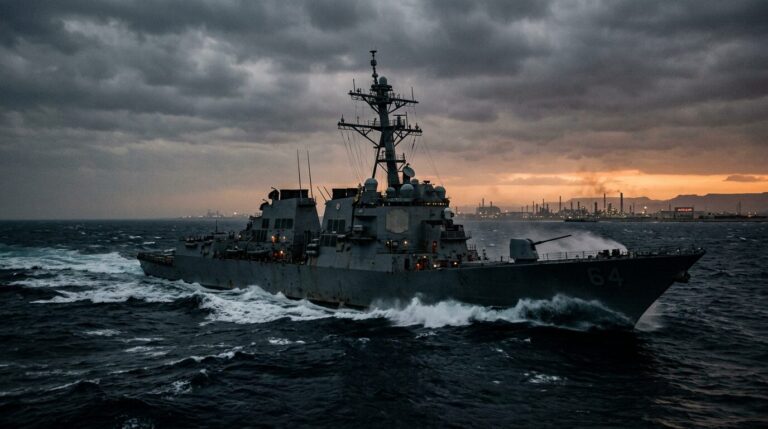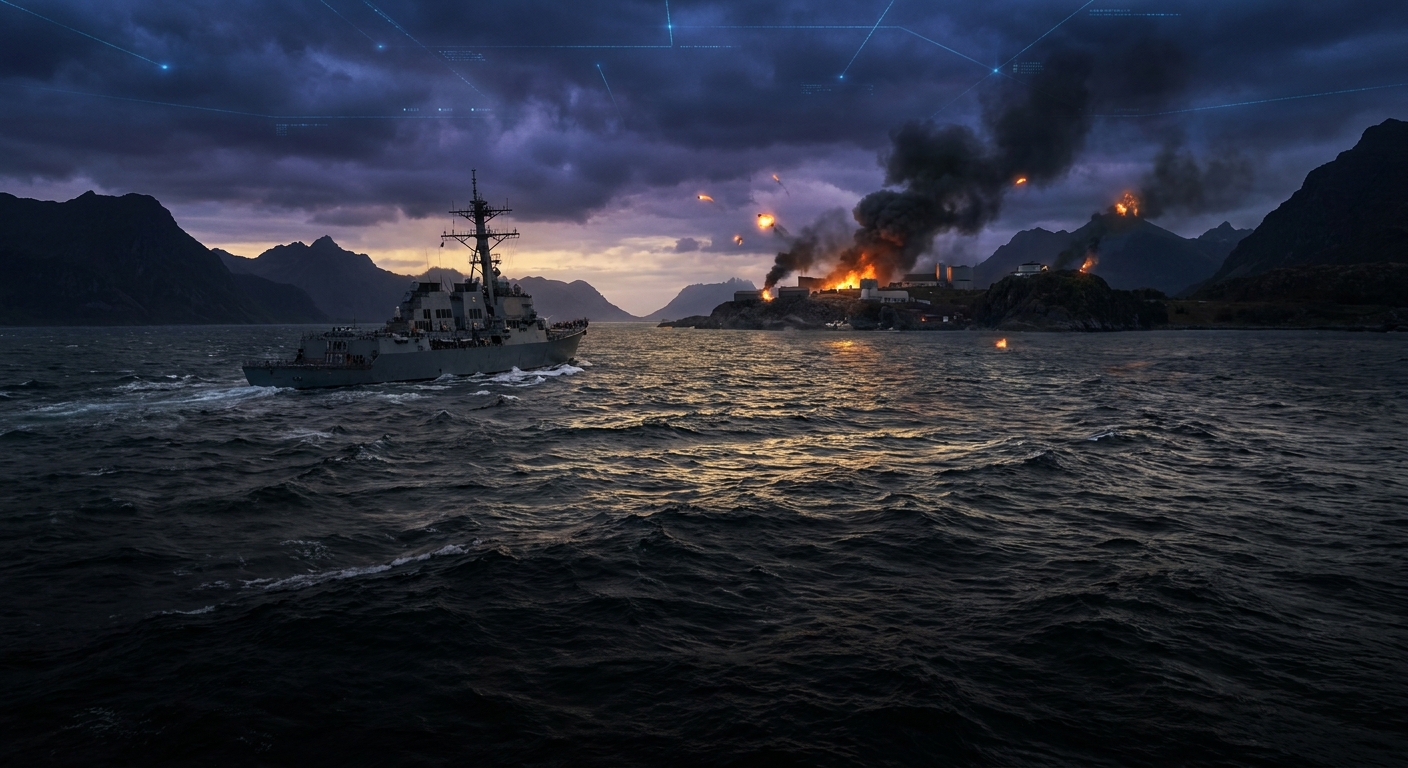
The Chokehold of Elam: How the 2026 Iran War Aligns with Prophetic Scripture
As U.S. strikes enter a 12th consecutive night and Houthi rebels ignite a second maritime front in the Red Sea, ancient prophecies in Jeremiah and Ezekiel take center stage.
On the night of July 22 into July 23, 2026, American aircraft completed their twelfth consecutive night of strikes against Iranian coastal targets. At almost the same hour, several hundred miles to the southwest, Houthi rebels in Yemen struck two Saudi-linked oil tankers, the Encelia and the Layla, in the Red Sea — according to The Hindu. Two fronts, one squeeze. And the squeeze is landing in wallets before it lands in headlines: crude oil is pushing toward $100 a barrel, and gas at the pump is climbing right along with it.
We should be clear about what this is and isn’t. February’s initial campaign — code-named Operation Epic Fury — was the opening chapter. What we’re watching now, this twelve-night wave, is a distinct and ongoing retaliatory campaign. Two different moments in the same unfolding story.
Here’s the question worth sitting with: are we simply watching a military standoff and an energy shock work themselves out, the way these things sometimes do? Or are these synchronized strikes and sea-lane blockades tracing the outline of something older — a pattern named in Scripture long before either strait had a name we’d recognize?
To answer that honestly, we need two terms up front. The Bab el-Mandeb Strait is the narrow southern gateway to the Red Sea, now under direct threat from Houthi attacks. And Elam is the ancient biblical name for the region we now call southwestern Iran. Keep both in mind. We’re going to need them.
12 Nights of Strikes, Two Blockaded Straits, and $100 Oil
Let’s start with what’s verifiable, because everything that follows rests on it.
The ongoing July air campaign. Major combat opened in late February under the name Operation Epic Fury. What’s happening now is different — a distinct, twelve-consecutive-night bombing campaign directed against Iranian military sites, missile storage, and coastal radar installations, confirmed by CENTCOM.
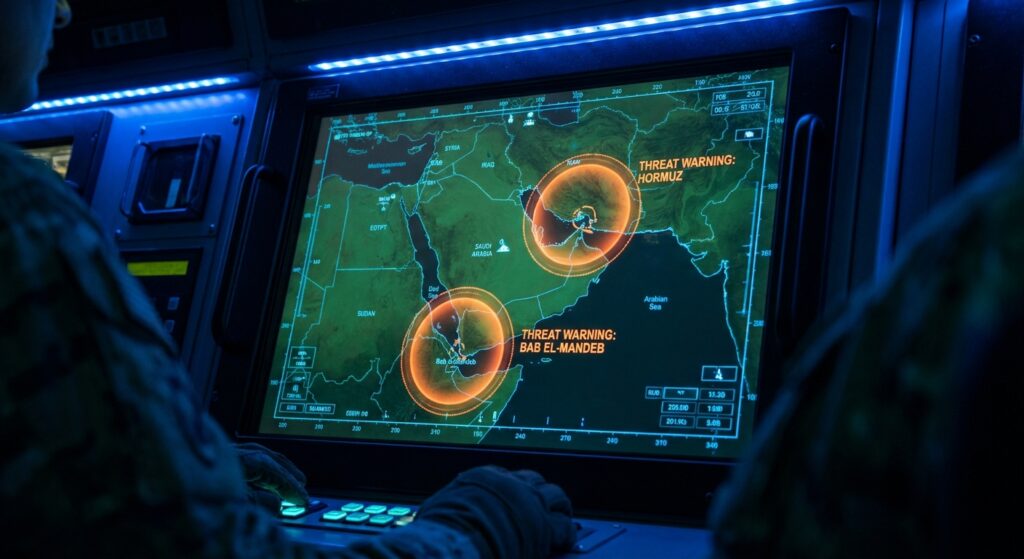
The Strait of Hormuz chokehold. U.S. forces are attempting to enforce a naval blockade on Iranian ports while keeping international shipping lanes technically open — though daily vessel transits have fallen sharply as insurers and shippers pull back from the risk.
The second front: Houthis blockade the Red Sea. This is the escalation that changes the shape of the crisis. Yemen’s Houthi rebels have declared a blockade on Saudi-linked shipping through the Bab el-Mandeb Strait, and that declaration became action with missile and drone strikes on the Encelia and the Layla, per The Hindu.
Infrastructure threats. President Trump has warned that any Iranian strike on Hormuz shipping will be met with the immediate destruction of Iranian power plants or bridges in Tehran, according to Livemint. Iran’s SNSC Secretary Mohammad Baqer Zolqadr and IRGC leadership have answered in kind, promising severe retaliation against regional targets if infrastructure is struck.
The household toll. The Guardian reports crude prices approaching $100 a barrel as of this writing, with maritime insurance rates climbing right alongside — a combination that shows up at the pump and in the price of nearly everything shipped by sea.
Four or five strong facts, well-sourced, are worth more than a dozen thin ones. This is where the case rests, and it’s a solid place to stand.
A Dual-Chokehold Squeeze on the World’s Energy Supply
Here’s where we ask the honest question: is this normal?
Historically, when tension flared in the Persian Gulf, global shipping had somewhere to go — reroute through Red Sea corridors, lean on Saudi pipeline capacity, absorb the disruption at one end while the other stayed open. That’s the baseline we’ve operated on for decades.
What’s different now is that both ends are under pressure at once. The Strait of Hormuz carries roughly 20% of the world’s oil. The Bab el-Mandeb carries something like 12% of global trade, and it’s the very route that would normally serve as the Gulf’s pressure valve. Squeeze both simultaneously, and there’s no pressure valve left. That’s not a variation on a familiar pattern — that’s a different kind of pattern altogether.
We’ve also seen this before in miniature: a hudna, a tactical pause, gets announced, diplomacy gets credit, and then the pause turns out to have been preparation for the next front rather than an end to the conflict. Broken ceasefires and failed agreements, over and over, are their own kind of evidence. Human diplomacy keeps demonstrating that it cannot hold this region still.
When trade routes freeze and energy supply chains buckle on two fronts at the same time, we’re not just watching a regional war anymore. We’re watching the kind of global instability that Scripture described a long time before pipelines and tanker insurance existed.
Breaking the Bow: The Prophetic Destiny of Elam and Persia
This is the part I want to slow down for.
“Thus saith the LORD of hosts; Behold, I will break the bow of Elam, the chief of their might… For I will cause Elam to be dismayed before their enemies, and before them that seek their life: and I will bring evil upon them, even my fierce anger, saith the LORD; and I will send the sword after them, till I have consumed them: And I will set my throne in Elam, and will destroy from thence the king and the princes, saith the LORD.” — Jeremiah 49:35, 37–38 (KJV)

Ancient Elam sits in what we now call southwestern Iran — the same territory holding the IRGC missile bases, coastal launchers, and naval facilities currently absorbing U.S. airstrikes. “The bow,” in other words, is being broken in a place we can point to on a map. And there’s something worth noticing in that last line — “I will set my throne in Elam.” Not military conquest as the final word. A different kind of claim being staked, over the long haul, through the explosive growth of the underground church inside Iran even now.
“Persia, Ethiopia, and Libya with them; all of them with shield and helmet:” — Ezekiel 38:5 (KJV)
Persia — modern Iran — is named as a core member of the Ezekiel 38 coalition. Samuel’s reading of this, and I hold it with real humility, is that the pressure and isolation Iran is under right now may be part of what pushes it toward the very alliance this passage describes. That’s an interpretation, not a certainty, and I want to be honest about that distinction.
“And ye shall hear of wars and rumours of wars: see that ye be not troubled: for all these things must come to pass, but the end is not yet.” — Matthew 24:6 (KJV)
Jesus called this one directly. Rising gas prices, war headlines, a world that feels like it’s fraying at both ends — this is the birth-pang pattern meant to wake the church up, not send it into a panic.
I’ll say plainly: some scholars hold that Jeremiah 49 found its complete fulfillment in the ancient Neo-Babylonian conquests of Elam, and their reading deserves a fair hearing — it’s not a fringe position. Others will tell you this whole conflict is nothing but an economic and maritime containment strategy, with no spiritual dimension worth discussing. I don’t dismiss either view out of hand.
And some of this is sealed. I don’t know the timing, I’m not going to guess at it, and I’d rather tell you that plainly than pretend the pattern answers every question it raises.
War in the Gulf, Fire in the Red Sea, and Economic Strain

This report has focused specifically on the dual-strait squeeze and its scriptural echoes, but it doesn’t stand alone. A few concurrent threads are worth naming:
The twelve-night U.S. strike campaign against Iranian military infrastructure is Sign One — active, ongoing, verifiable. The Houthi blockade of the Bab el-Mandeb, opened by direct attacks on Saudi tankers, is Sign Two — a second front that didn’t exist in this form even months ago. And the financial pressure from both — inflation, energy shocks, and the accelerating push toward centralized digital financial tracking and global economic shaking prophecy dynamics — is Sign Three.
War in Persia, disrupted trade in the Red Sea, and pressure at the local gas pump are not three unrelated news stories. They’re converging lines on the same map. This is not chaos. It is pattern. And pattern implies Author.
Standing Firm When the World’s Energy Shakes 2026 Iran War Ezekiel 38
If rising gas prices and a fragile shipping map have you a little unsettled, that’s okay. That’s actually the right response to earthly systems showing their fragility.
Here’s what we do with that. We anchor our hearts above the economy — not in denial that prices are real, but in trust that provision was never really tied to market stability in the first place. We pray for the harvest in Persia, for the underground church, for civilian safety, as military systems shatter around them. And we use this convergence — the strikes, the blockade, the oil shock — as an opening to talk with an anxious neighbor about a hope that doesn’t move with the headlines.
No date-setting here. No fear as the takeaway. Just watching, staying ready, and letting the Gospel hope lead. 2026 Iran War Ezekiel 38
Ready to Look Up? Watch the Message of Hope
Here’s the whole thing in one sentence: earthly powers can choke sea lanes and wage war on two fronts at once, but they cannot touch what God has already promised.
Watching Jeremiah’s Elam and Ezekiel’s Persia take shape in real time isn’t a reason to be afraid. It’s evidence that the book being fulfilled in front of us is the same book that promises salvation through Jesus Christ — and that promise is every bit as trustworthy as the prophecy currently playing out on the evening news.
If you’re feeling the weight of this moment, I’d invite you to watch our message of hope — a straightforward look at what it means to anchor your life in Christ regardless of what the Strait of Hormuz or the price at the pump is doing this week.
Watching with you, —Samuel
DELIVERABLE 4 — SOURCES
- The Hindu / AP — “Houthis say they attacked 2 Saudi oil tankers in Red Sea as U.S. carries out 12th night of strikes” — https://www.thehindu.com/news/international/houthis-say-they-attacked-2-saudi-oil-tankers-in-red-sea-as-us-carries-out-12th-night-of-strikes/article71257147.ece
- U.S. Central Command (CENTCOM) — “US military completes 12th consecutive night of strikes on Iran: CENTCOM” — https://aa.com.tr/en/us-israel-iran-war/us-military-completes-12th-consecutive-night-of-strikes-on-iran-centcom/4006396
- The Washington Post — “A new threat by Yemen’s Houthis could widen the Iran war and put another trade chokepoint at risk” — https://www.washingtonpost.com/business/2026/07/23/yemen-saudi-houthis-attack-shipping-red-sea-iran/daf1d9ec-8689-11f1-9cec-0fb26676f07e_story.html
- Livemint / News Services — “Trump threatens Iran: ‘Any Hormuz attack will cost you a bridge or power plant’” — https://www.livemint.com/news/us-news/trump-threatens-iran-any-hormuz-attack-will-cost-you-a-bridge-or-power-plant-11784726050922.html
- The Guardian — “Oil prices near $100 a barrel after US attacks Iran and Houthis hit tankers in Red Sea” — https://www.theguardian.com/world/live/2026/jul/23/us-iran-war-live-updates-strikes-houthis-red-sea-saudi-nuclear-deal-middle-east-crisis-latest-news