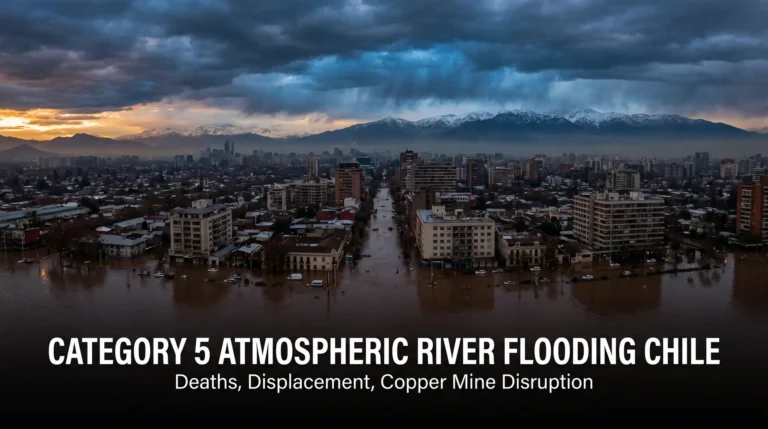
NOAA’s Climate Prediction Center now puts the odds of a “very strong” El Niño at 81 percent — and the 2026 El Niño heat dome the West this week may only be the opening act.
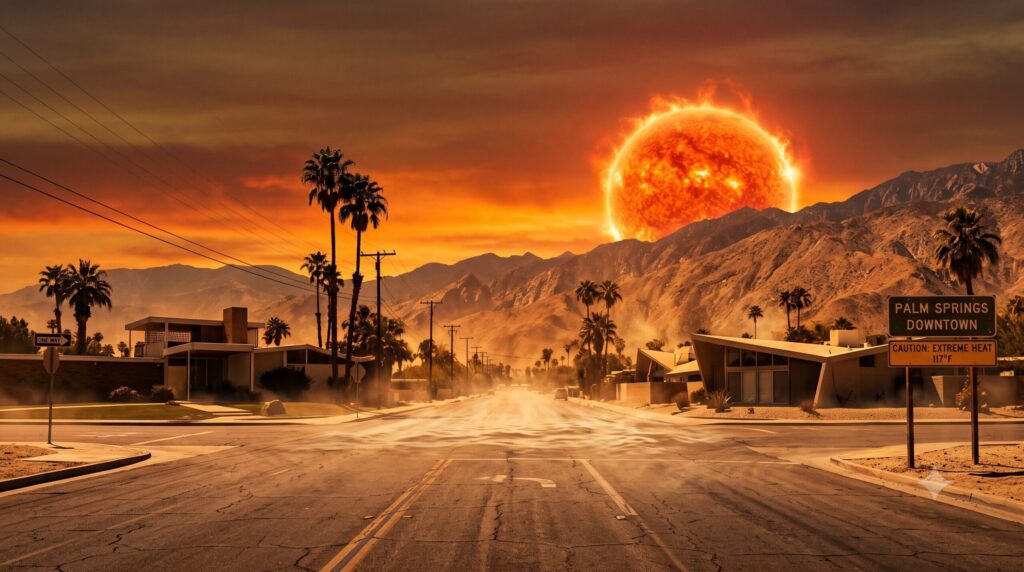
Palm Springs is supposed to hit 117 degrees this week. Not heat index. Actual temperature. That’s the kind of number that stops you mid-scroll, and it’s part of a stretch of triple-digit heat running from Arizona and Nevada all the way through Texas and into Arkansas and Florida, according to the National Weather Service and CBS News because of the 2026 El Niño heat dome.
2026 El Niño heat dome Hit’s The West
Here’s the question I keep sitting with: is this just another brutal week in the desert, or is there something bigger moving underneath it?
I think there’s something bigger. And I want to walk through it with you carefully, because the evidence is genuinely strong here, and strong evidence deserves a steady hand, not a dramatic one.
By the time we’re done, you’ll understand what NOAA is actually forecasting with this El Niño — the periodic warming of the central and eastern Pacific Ocean that reshapes weather patterns worldwide, sometimes bringing drought, sometimes flooding, depending on where you’re standing — how it connects to the heat and flooding already in the headlines, and what Scripture specifically says about famine following unusual weather. We’ll be honest about what we know and what we don’t. That’s the whole point.
So Let’s Take A Look At What The Experts Are Saying!
Let’s start with the plain facts, because that’s where trust gets built or lost.
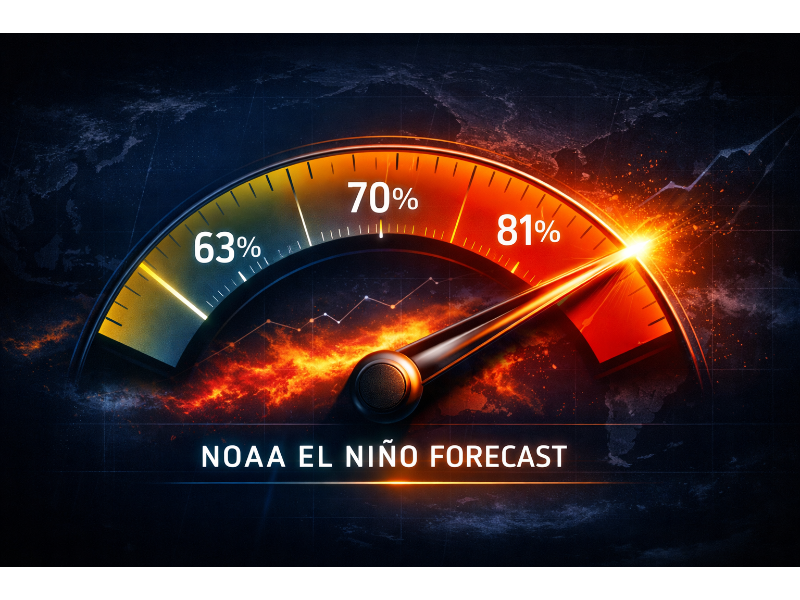
On July 9, NOAA’s Climate Prediction Center raised its probability of a “very strong” El Niño from 63 percent in June to 81 percent. That’s a meaningful jump in just four weeks, and it’s not a static forecast anymore — it’s one that’s been moving, and moving in one direction. NOAA also puts the odds at 97 percent that this El Niño persists all the way through early spring 2027.
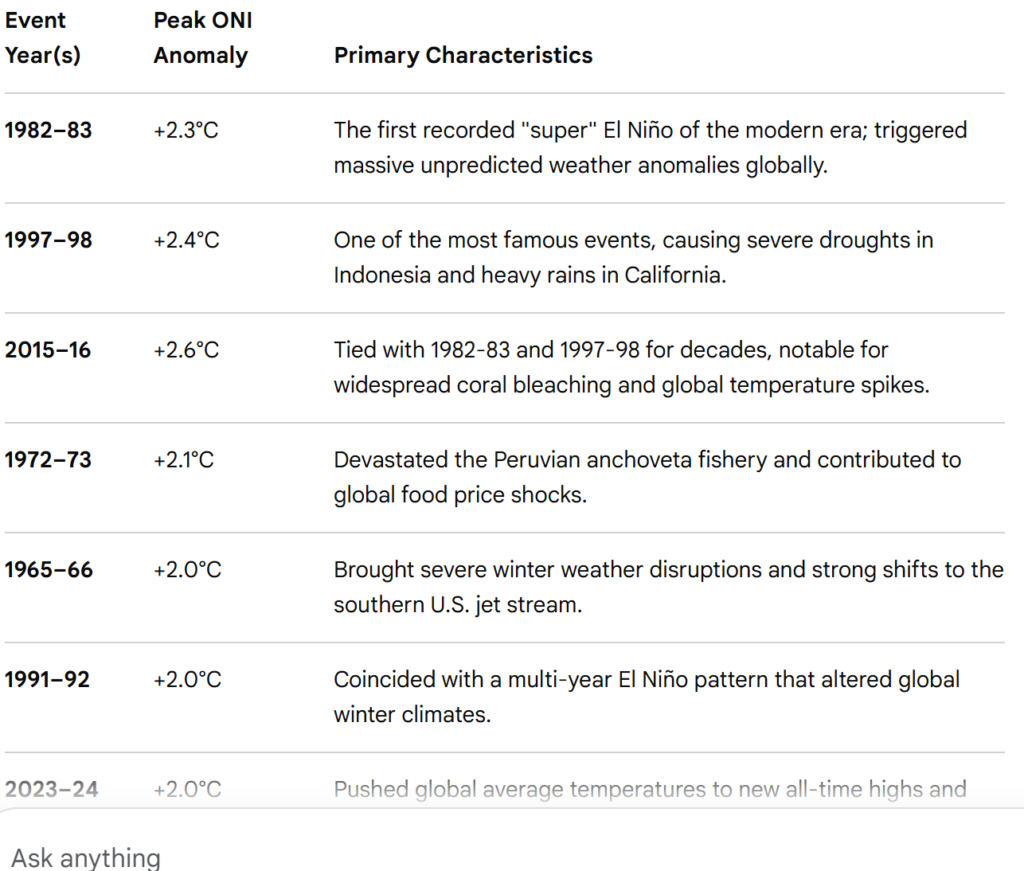
To put “very strong” in perspective: NOAA physical scientist Michelle L’Heureux told USA Today that only seven El Niño events in the last 75 years have reached that classification. Seven. That’s the company this one is keeping.
Meanwhile, on the ground, the numbers back up the forecast. Palm Springs and the Coachella Valley are set for that 117-degree stretch this week. And separately — this is worth pausing on — a second, distinct heat dome is already forecast to move into the West this coming weekend, one that could push temperatures in parts of the Rockies within a few degrees of all-time record highs. Two different heat events, back to back, both tied to the same underlying pattern during this 2026 El Niño heat dome season.

The flooding tells its own story. In southern China’s Guangxi region, Tropical Storm Maysak dumped rain heavy enough to breach a reservoir dam in Hengzhou. Twenty-six people died in that breach alone, thirty-nine total, and roughly 130,000 people were evacuated, according to the Associated Press and Al Jazeera, both citing regional officials. Closer to home, Kelleys Island, Ohio, took somewhere between 13 and 17 inches of rain in under 24 hours — the range varies depending on which measurement you trust, so I’ll give you the range rather than pretend to a precision nobody actually has.
And then there’s India, where monsoon rainfall has run 38 to 43 percent below normal, and rice-growing sowing is down roughly 25 percent compared to last year.

Four continents. One climate driver. That’s not a metaphor — NOAA, the AP, and Al Jazeera are all independently documenting pieces of the same event.
A Departure from the Baseline
Somebody reading this is thinking: heat waves happen every summer, floods happen every year, this is just weather being weather. That’s a fair point, and I don’t want to wave it away.
Very strong El Niños are genuinely rare — seven in 75 years — but they are not new. NOAA scientists have directly compared this one to 1997-98, which was also severe. So if someone tells you this has literally never happened before, that’s not quite accurate, and I’d rather tell you the honest version than the more exciting one.
Here’s where it holds up, and where it doesn’t.
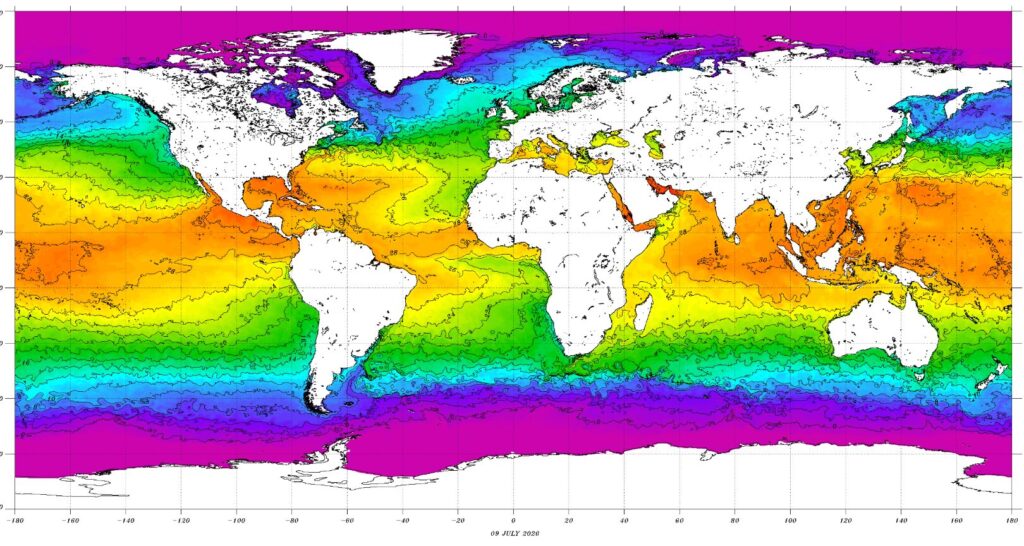
What sets 2026 apart is the speed of the escalation — that jump from 63 to 81 percent in a single month — and the fact that we’re watching extreme events stack up across three separate geographies within roughly the same two-week window. That’s the part that’s harder to wave off as ordinary variation.
I want you to hold two quotes at the same time here, because I think holding them together is more honest than picking just one. Michelle L’Heureux says this event will likely be “among the strongest in the historical record we monitor.” University of Miami scientist Emily Becker, working with the same NOAA forecasting team, put it this way: “It’s pretty extreme. Not unprecedented, but very unusual.”

Both of those are true at once. Rare, yes. Singular in all of history, no. I’d rather give you that tension than resolve it for you falsely.
So is this an isolated event or part of a pattern? The heat, the flooding, and the monsoon disruption are traceable to the same El Niño — that’s a real cluster, not three unrelated headlines. Scripture never promised us that these patterns would be new. It promised us they would be recognizable.
What Jesus Said About This
The pattern in the numbers is striking on its own. What makes it more striking to me is that Jesus described this exact category of pattern two thousand years before satellite data existed.
“For nation shall rise against nation, and kingdom against kingdom: and there shall be famines, and pestilences, and earthquakes, in diverse places.” (Matthew 24:7)
I want to be precise about what maps to what here, because it’s easy to get sloppy with this verse. The heat dome itself isn’t what Matthew 24:7 is describing. What Jesus named specifically is famine. The heat and the flooding we just walked through are the documented mechanism — drought risk in India’s rice-growing regions, agricultural supply concentrated in a small handful of exporting countries — that feeds into the famine risk this verse actually names. That distinction matters. I’m not going to let a heat wave borrow the weight of a word Jesus used more carefully than that.
Luke gives us the same pairing: “And great earthquakes shall be in divers places, and famines, and pestilences; and fearful sights and great signs shall there be from heaven.” (Luke 21:11) Famine, again, paired with unusual events scattered across different places — which fits what we just documented across the U.S., China, and India.
And this isn’t a new idea for God’s people to wrestle with. Genesis tells us: “Behold, there come seven years of great plenty throughout all the land of Egypt: And there shall arise after them seven years of famine…” (Genesis 41:29-30) Weather-driven, multi-year agricultural cycles that swing a whole region from plenty to scarcity — that’s a pattern Scripture already had a category for, long before this week’s forecast.
Here’s my honest read, held the way I hold everything like this — with conviction, and with humility at the same time. Given how closely this fits the pattern of famine-following-unusual-weather that Scripture names specifically, I read this 2026 El Niño heat dome and El Niño primarily through that famine lens — the India monsoon deficit and the fragility of global food supply concentrated in a handful of exporting nations feel like the more theologically significant thread here, more than the heat dome itself, which I’d call the visible symptom rather than the sign.
I’ll also say plainly: mainstream climate scientists like Emily Becker attribute this El Niño to a natural Pacific Ocean cycle, intensified by warming ocean temperatures — full stop, no theological framing attached. And separately, commodities analysts are watching the same food-security risk purely as a market question, tied to how concentrated global agricultural exports are among a small number of countries. Neither of those groups is arguing against what I just said. They’re answering a different question than the one Scripture answers.
And here’s what’s sealed, because some of this is: we don’t yet know the actual harvest outcome. India’s sowing deficit and the broader global food risk are still forecasts, not observed shortages. A cautious reader is right to want fall and winter harvest numbers before drawing a firm conclusion. I don’t know more than that, and I’m not going to pretend otherwise.
2026 El Niño heat dome and Also Extreme Flooding?
This report has focused on one heat dome and one El Niño forecast, but it doesn’t stand alone, and it shouldn’t be read that way.
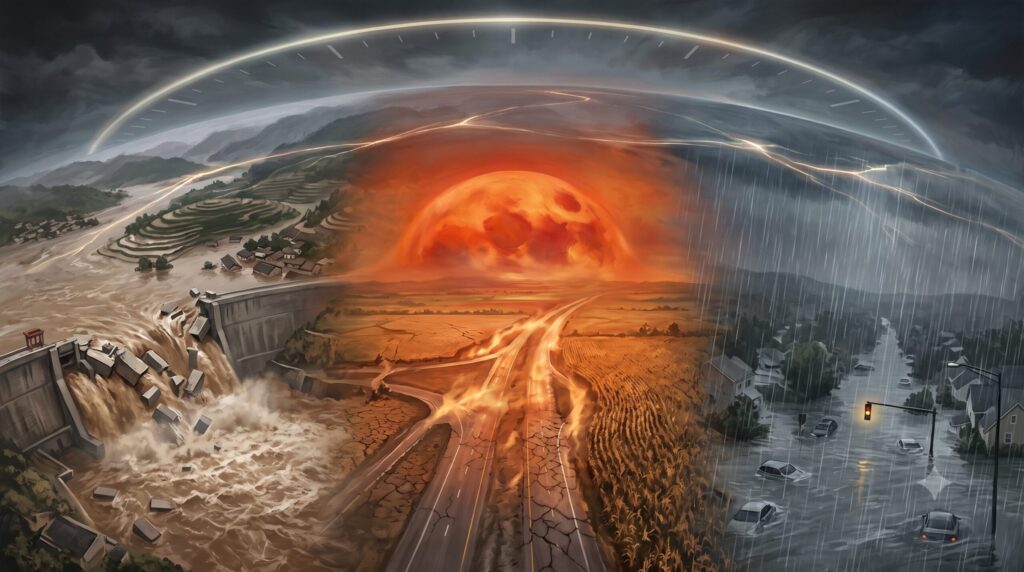
The Guangxi flooding and dam breach happened within roughly the same week as the U.S. heat dome and the Ohio rainfall event — three geographically distant, independently reported extreme-weather events inside a single two-week window. And India’s monsoon deficit, with that 25 percent drop in rice sowing, is happening at the same time, driven by the same El Niño. That’s not three unrelated headlines. That’s one climate driver producing recognizable strain across three continents at once, and we can trace the thread back to the same event rather than just noticing a coincidence.
We are watching multiple categories of signs escalate at the same time, in a way that’s unusually well-documented. This is not chaos. It’s pattern.
Food For Thought
If any of this unsettles you a little, that’s okay. I’d be more worried if it didn’t.
For me, watching well on this specific topic doesn’t look like stockpiling groceries or checking the calendar every morning. It looks like paying attention to the fall harvest reports and food price data as they actually come in over the next several months — genuinely tracking whether this forecasted risk becomes an observed one, rather than assuming it already has.
Jesus himself put a guardrail on all of this: “of that day and hour knoweth no man.” I take that seriously. I’m not describing a countdown here. I’m describing a pattern worth watching.
And here’s the thing that actually settles me, not unsettles me. Two thousand years ago, Scripture named the specific combination we’re watching right now — unusual weather, scattered across places, tied to famine risk. That’s not a vague warning that happens to almost apply. It’s specific enough to be worth taking seriously. I’m watching the harvest numbers this fall not because I’m afraid of what they’ll say, but because I want to see, honestly, whether this pattern holds. That’s the posture I’d invite you into as well.
Where This Leaves Us
NOAA is describing one of the rarest weather patterns in 75 years — and Scripture already told us, long before satellite data existed, what to watch for when unusual weather and famine risk move together.
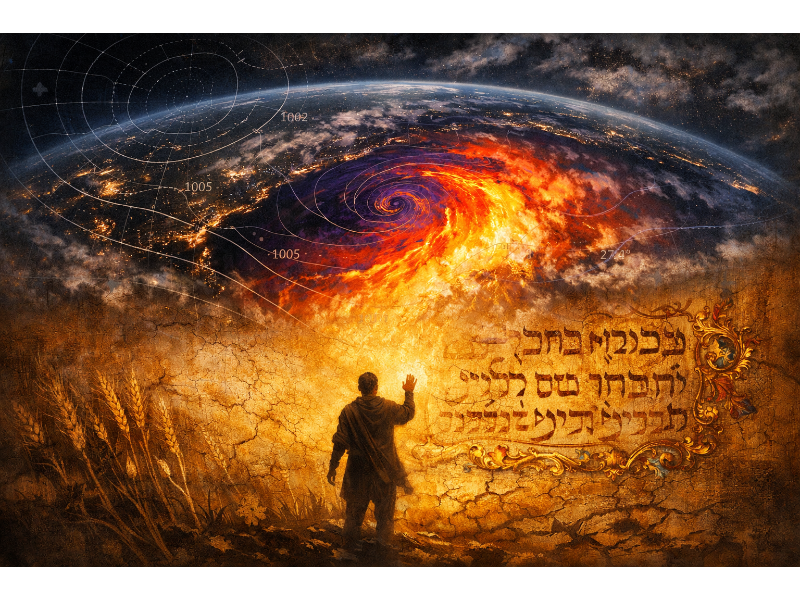
That’s not chaos without meaning. It’s a pattern that was written down thousands of years before anyone could measure a sea-surface-temperature anomaly. A pattern that is fulfilled is a pattern that points back to its Author, and that Author has been reliable every time before. It seems like the Author just might be a little hot under the collar these days!
Let’s all pray for those who will be impacted during this 2026 El Niño heat dome in the west and all the other crazy weather events going on!
Watching with you,
—Samuel