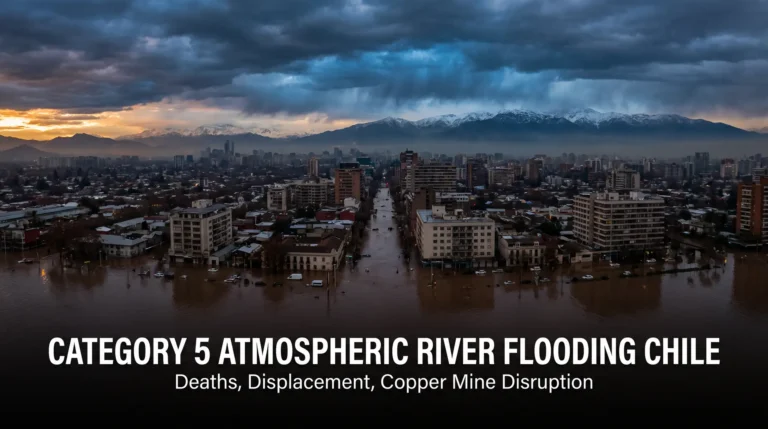
Super El Nino 2026 Weather Impacts: 4 Active Regions and Biblical Prophecy
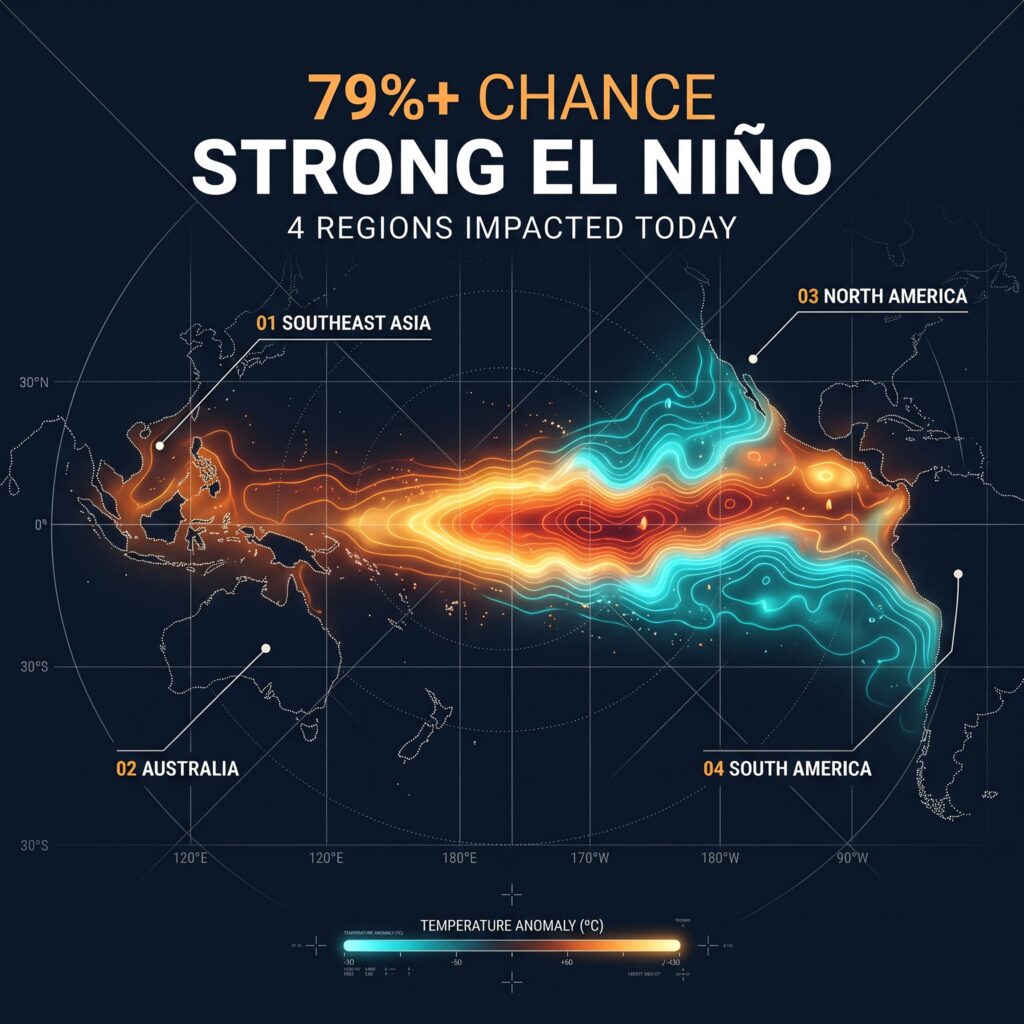
If you step outside this morning expecting normal November weather, you’ve probably noticed the atmosphere isn’t playing by the usual calendar, and the latest Super El Nino 2026 weather impacts show why. Yesterday, NOAA’s Climate Prediction Center confirmed that El Nino continues to strengthen, carrying a greater than 79 percent chance of remaining a strong-to-very-strong event right through early 2027. Just days earlier, the World Meteorological Organization (WMO) reported that 2026 is tracking as one of the four warmest years on record while calling this colliding pattern “off the charts.” And right now, FEWS NET’s Global Weather Hazards Summary shows active flood and drought alerts flashing across four major regions of the map today, November 13. Any one of those headlines could be shrugged off as routine seasonal noise, yet stacked together in the same week, they deserve a calm, careful look.
I want to do something a little different in this report, friend. I’ll give you the numbers, but I’ll also tell you which ones I could confirm in the original reporting, which ones come with an asterisk, and where the headlines have run ahead of the facts. Some of the figures bouncing around social media are bigger than the reporting supports, and you deserve the version you can trust.
Here’s the path we’ll walk: first, we’ll verify what NOAA and the UN actually measured in the Pacific and audit the viral “40-year record” claim; second, we’ll look at four specific regions experiencing active El Nino weather disruptions today, November 13; third, we’ll examine how these extremes fit alongside geopolitical and economic pressures without jumping to sensational conclusions; and finally, we’ll look at what Scripture says to do with all of it, which is neither panic nor a shrug. If you’re new here, our guides to the biblical signs of the end times in 2026 and 2026 global weather events and birth pangs give you the big map. This report is today’s weather.
Confirmed vs. Asterisk: What NOAA and the UN Actually Said
Before we look at the regional maps, let’s separate verified meteorological data from social media exaggeration. When a weather story goes viral, numbers tend to grow three sizes overnight.
- Confirmed: Strong-to-very-strong El Nino through early 2027. In its November 12 ENSO Diagnostic Discussion, NOAA’s Climate Prediction Center confirmed an active El Nino Advisory and projected a greater than 79 percent probability of strong-to-very-strong conditions lasting through January-March 2027.
- Confirmed: Record ocean heat acting as a risk multiplier. According to the World Meteorological Organization, El Nino doesn’t create brand-new heat on its own. Instead, it releases stored heat from oceans that are already at the warmest levels ever measured, turning normal seasonal shifts into high-impact floods and droughts.
- Asterisk: “Off the 40-year charts” vs. final peak strength. You’ll see headlines quoting WMO Secretary-General Celeste Saulo saying this event could be “off the monitoring charts that we have used for the past four decades,” as noted in the United Nations El Nino briefing. Here’s the asterisk: seasonal models project a peak around December 2026, with ensemble forecasts eyeing a +3.8 degree Celsius anomaly in the Nino 3.4 region, but ocean basins are still building toward that peak. We won’t know where 2026-27 ranks against 1997-98 or 2015-16 until the winter peak passes.
- Asterisk: One storm doesn’t prove a whole season. As the U.S. Geological Survey (USGS) notes, El Nino shifts the odds of atmospheric rivers and storm tracks, yet individual storms still depend on local temperatures and cold air pockets.
Zoom out, because the details matter. Even with those asterisks in place, the geographic footprint hitting right now on November 13 is remarkably wide.
4 Regions Experiencing Active El Nino Weather Impacts Today, November 13
Rather than relying on vague winter predictions, let’s look at four specific regions dealing with documented El Nino-linked weather hazards right now, based on FEWS NET’s November 12-18 Global Weather Hazards Summary, CBS News meteorological reporting, and WMO seasonal outlooks.
| Region | Active Weather Hazard (Nov. 13, 2026) | Primary Mechanism & Impact |
|---|---|---|
| 1. Central & Southern Africa | Dual split: Heavy flood threats in East/Central zones; onset of severe dry spells in Southern Africa | Wetter-than-normal October-December rains are flooding vulnerable river basins, while Southern Africa faces November planting-season drought risks. |
| 2. Northern South America & Central America | Active flood warnings across western/northern Colombia, Hispaniola, and parts of Central America | Saturated soils and intense tropical moisture are colliding with contrasting drought pockets in the Amazon and Central American Dry Corridor. |
| 3. American Southwest & Southern Tier | Primed river basins, reservoir surges, and an active Pacific jet stream | Back-to-back autumn rain events have soaked soils across Arizona, New Mexico, and Colorado, setting up heightened flash-flood and winter storm risks. |
| 4. Southeast Asia | Heat stress, rainfall deficits, and localized flash-flood/landslide alerts | Shifted Pacific circulation is driving abnormal warmth, agricultural water strain, and elevated wildfire and smoke-haze hazards across the region. |
Sources: FEWS NET Global Weather Hazards Summary (Nov. 12-18, 2026), WMO Global Seasonal Climate Outlook, and CBS News.
1. Central, East, and Southern Africa
Africa is feeling both ends of the El Nino seesaw at the exact same time. According to FEWS NET’s active hazard map, flood threats are currently active across parts of central and southern Africa as wetter-than-normal conditions drench East Africa during its October-December rainy season. Meanwhile, the WMO Seasonal Climate Outlook warns that broad parts of Southern Africa face rising dryness right as the November planting season begins, putting staple crops and rural water supplies under immediate pressure.
2. Northern South America, Hispaniola, and Central America
Across Latin America and the Caribbean, contrasting weather extremes have already pushed multiple countries to declare national emergencies this year, as CBS News reported yesterday. Today’s UN ReliefWeb hazard assessment flags active flood risks across western and northern Colombia, northern and southern Hispaniola, and parts of Central America. At the same time, neighboring stretches of the Amazon basin and the Central American Dry Corridor are battling steep rainfall deficits, disrupting harvests and regional food transport.
3. The American Southwest and Southern United States
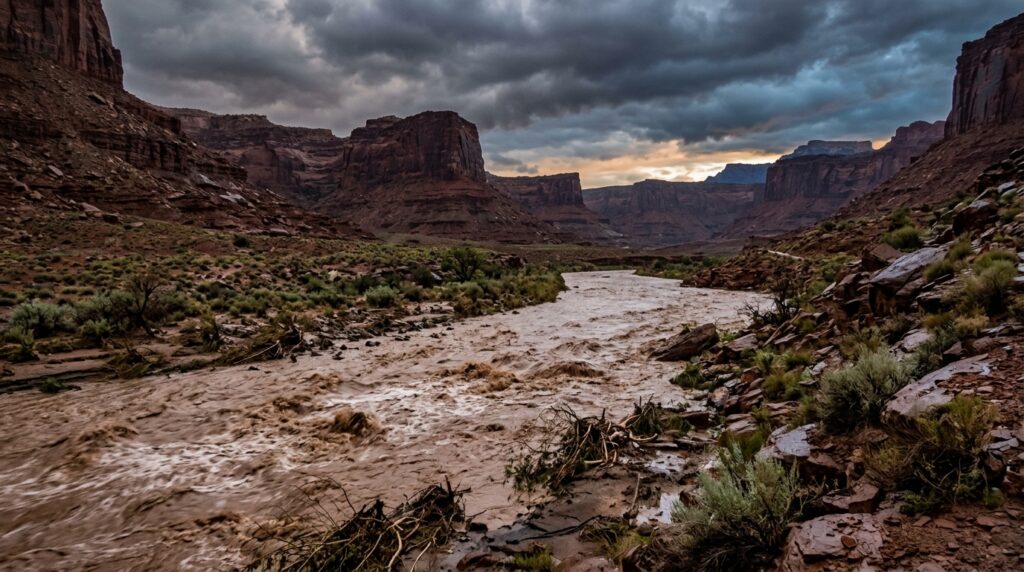
Closer to home, an energized Pacific jet stream is already reshaping North American weather ahead of winter. Reporting from Grist highlights how consecutive autumn storms have saturated soils and pushed rivers high across Arizona, New Mexico, and Colorado, priming canyon terrain for rapid runoff. In its November winter forecast update, Severe Weather Europe notes that this active southern storm track is trending colder and snowier across the Southwest, Plains, and Appalachians, while forecasters also watch a potential mid-winter Polar Vortex disruption that could collide with El Nino later this season.
4. Southeast Asia
On the western rim of the Pacific, warmer waters shifting eastward leave Southeast Asia dealing with distorted rainfall patterns. The United Nations reports that elevated temperatures and rainfall deficits are increasing heat exposure, straining agriculture, and heightening wildfire and smoke-haze risks across the region. Even where localized tropical downpours trigger flash flood and landslide alerts, overall seasonal moisture deficits are testing water storage and rural farming communities.
Why Converging Pressures Matter More Than One Weather Map
Let’s be honest for a second. El Nino isn’t a brand-new invention. Sailors off the coast of Peru named it centuries ago, and the earth has cycled through warm and cool Pacific phases for as long as anyone has kept records. Anyone who tells you a single rainy November proves the end of the world isn’t shooting straight with you.
What makes 2026 worth watching isn’t one storm on a radar screen. It’s how many pressures are lit at once. When a supercharged weather cycle hits at the exact same moment global energy chokepoints are strained by the 2026 Iran war and Hormuz blockade and the global oil crisis, crop failures and shipping delays stop being isolated local problems. They stack onto family grocery bills, supply chains, and fragile governments that already have zero margin for error.
That isn’t a prediction. It’s a reason to stay awake, because “the whole creation groaneth and travaileth in pain together until now” (Romans 8:22, KJV).
What Scripture Actually Says: Hinges, Not Fulfillments
Here’s where I want to be careful, because careful is what a watchman owes you. In Luke 21:25-26, Jesus describes a world shaken by “the sea and the waves roaring; Men’s hearts failing them for fear, and for looking after those things which are coming on the earth” (Luke 21:25-26, KJV). Notice that phrase: looking after those things which are coming on the earth.
I’m not saying NOAA’s November advisory is the final fulfillment of Luke 21. Those verses sit inside the broader prophetic framework of the Tribulation and the return of Christ, and treating every weather bulletin as a prophetic stopwatch is how people burn out their faith. What I am saying is that the mood on the earth is starting to match the mood in the text. Creation is groaning, nations are rattled, and everyday people can feel the instability even if they never open a Bible. We watch the direction of travel loosely and with open hands, testing everything through biblical discernment and comparing current headlines against our library of fulfilled prophecy.

Calm Hands, a Settled Heart: Practical Stewardship
If reading about Super El Nino floods, droughts, and rising food costs leaves a knot in your stomach, take a deep breath, grab a sandwich, and remember who sits on the throne. This stuff doesn’t trouble me at all, because I know who my King is.
Scripture never tells believers to panic over weather forecasts. Instead, Proverbs 22:3 gives us plainspoken wisdom: “A prudent man foreseeth the evil, and hideth himself: but the simple pass on, and are punished” (Proverbs 22:3, KJV). Prudence isn’t prophecy. It’s just good sense.
- Check your household weather basics: Make sure flashlights, backup batteries, drinking water, and basic shelf-stable groceries are stocked before winter storms or supply hiccups hit your area.
- Build margin gradually: Add a few extra cans, rice, or beans to your normal weekly grocery run over the next month rather than clearing shelves in a rush.
- Keep extra to share: When winter power outages or localized flooding hit your street, having extra water, blankets, or food on hand lets you bless an elderly neighbor or young family next door.
Extra to share: that’s stewardship, not fear. That’s weather readiness done the Bible’s way: calm hands, a settled heart.
Even more importantly, remember why we watch. Jesus told His disciples, “And when these things begin to come to pass, then look up, and lift up your heads; for your redemption draweth nigh” (Luke 21:28, KJV). One day, the God of heaven will set up a kingdom that shall never be destroyed (Daniel 2:44, KJV), and the groaning of creation will finally end. For those who belong to Christ, our hope isn’t anchored in weather models or political rescue plans. Scripture teaches that believers are not appointed to wrath (1 Thessalonians 5:9, KJV), that Jesus promises to keep His church from the hour of temptation coming upon the whole world (Revelation 3:10, KJV), and that the Lord Himself will descend to gather His people home (1 Thessalonians 4:16-17, KJV). So be like the Bereans in Acts 17:11 (KJV) and search the Scriptures daily, rightly dividing the word of truth (2 Timothy 2:15, KJV).
If you’re wondering whether you can really trust the Bible in an uncertain world, take a look at the historical evidence the Bible is true and read through every Messianic prophecy Jesus fulfilled. And if you haven’t settled where you stand with God yet, don’t wait for the next storm warning. “For God so loved the world, that he gave his only begotten Son, that whosoever believeth in him should not perish, but have everlasting life” (John 3:16, KJV). You can read clearly how to place your trust in Jesus Christ today on our salvation page.
#ElNino2026 #SuperElNino #BiblicalProphecy
Sources
- NOAA Climate Prediction Center: ENSO Diagnostic Discussion (November 12, 2026)
- World Meteorological Organization (WMO): State of the Climate in 2026 Report (November 9, 2026)
- FEWS NET / UN ReliefWeb: Global Weather Hazards Summary, November 12-18, 2026
- World Meteorological Organization (WMO): Global Seasonal Climate Outlook Informs Humanitarian Action
- United Nations: Focus on El Nino Regional Outlook
- CBS News: What to Know as “Super El Nino” Conditions Take Shape (November 12, 2026)
- U.S. Geological Survey (USGS): Regional Super El Nino Impacts: Southwest U.S.
- Grist: Extreme Flooding in the Southwest Foreshadows a Wild El Nino Winter
- Severe Weather Europe: Winter 2026/2027 Forecast November Update