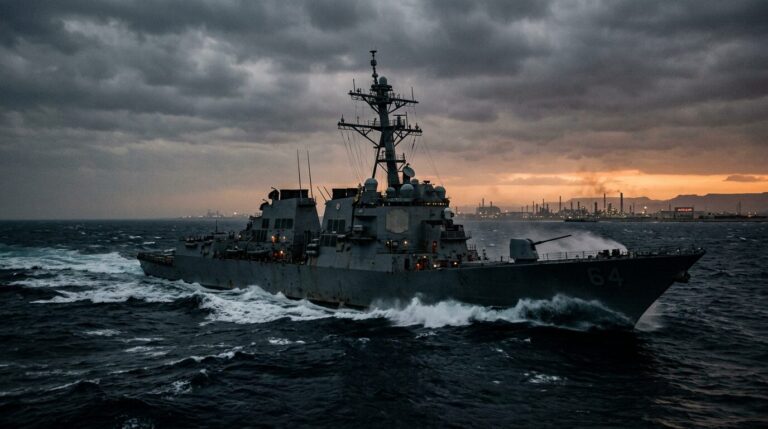
A major Russian strike on August 5 killed at least 17 civilians and highlighted Ukraine’s shrinking ability to intercept ballistic missiles — part of a broader pattern of escalating long-range warfare. Russia Ukraine war Kyiv missile strike August 5th 2026
It’s the middle of the night in Kyiv, and the sky is doing something it was never designed to do. Four Zircon hypersonic missiles. Twenty-four Iskander-M ballistic missiles. A hundred and fifteen drones. All of it aimed at one city, in one night, on August 5, 2026. By morning, according to Associated Press and BBC reporting, at least 17 people were dead and more than 40 injured.
We’ve watched this war grind on for years now, long enough that headlines like this can start to blur together. But this one carries a detail worth sitting with: Ukraine’s air defenses reportedly knocked down most of the drones. Not one of the ballistic missiles was stopped.
So here’s the question we’re going to sit with today: how long can a country keep defending its capital when the one tool that actually works against ballistic missiles is running out? We’re not going to answer that with speculation. We’re going to answer it with what’s actually documented — and then we’re going to talk about where this fits in a much bigger, much older story.

17 Killed and a Shrinking Stock of Interceptors: The August 5 Attack on Kyiv and the Russia Ukraine war Kyiv missile strike August 5th 2026
Let’s start with what we actually know, because in a war this long, it’s easy for facts and rumor to start wearing the same clothes.
On August 5, 2026, Russia launched a combined missile-and-drone assault on Kyiv and the surrounding region. According to Ukraine’s Air Force, reported by Modern Diplomacy, the attack package included four Zircon hypersonic missiles, 24 Iskander-M ballistic missiles, and 115 drones. Ukrainian forces intercepted or suppressed 98 of those drones — a respectable number. But no missiles were destroyed. BBC and CNN both confirmed that Ukraine did not report shooting down a single ballistic missile that night.
That distinction matters more than it might sound. Drones are slow-moving and, relatively speaking, easier to knock out of the sky. Ballistic missiles travel at speeds most defense systems simply cannot match — with one major exception: the Patriot system, and specifically its PAC-3 interceptor. According to Reuters, Kyiv has been actively pressing Washington for more of those interceptors, having reportedly run critically low. This is the Ukraine Patriot missile shortage at the center of this story, and it’s not a small footnote — it may be the single biggest factor determining how many more nights like August 5 lie ahead.
The casualty numbers themselves tell a story too, and it’s a story of scale. The United Nations reported that during the first six months of 2026, 1,396 civilians were killed and 7,978 injured across Ukraine — a 37 percent increase over the same period in 2025, and more than double the toll from 2024 (United Nations in Ukraine). And in June alone, long-range weapons — the missiles and drones that don’t require troops anywhere near the front line — accounted for 45 percent of all civilian casualties, according to the UN Human Rights Monitoring Mission in Ukraine. That made June the deadliest month for civilians since April 2022.
[Visual: UN civilian casualty trend chart, first half of 2026]
We’ll be honest about what we don’t know too. Ukraine has also reported claims about North Korean missile units deploying inside Russia, but that has not been independently confirmed, and we’re not treating it as established here.
A 37 Percent Rise in Civilian Deaths — Why This Phase of the War Feels Different

Now, some of you are asking the fair question: isn’t this just war? Missiles have been falling on Ukrainian cities for years. What makes this particular stretch different from any other bad month?
Here’s the honest answer. Long-range strikes on cities far from the front lines aren’t new. What’s new — or at least, newly documented — is the combination: a documented spike in civilian deaths, a growing reliance on ballistic missiles that Ukraine has almost no way to stop, and a shortage of the one interceptor built specifically for that job.
Danielle Bell, who heads the UN Human Rights Monitoring Mission in Ukraine, put it plainly: “The figures show an alarming escalatory trend with mounting civilian toll, driven by the intensifying use of powerful weapons that are particularly deadly when used in densely populated urban areas” (United Nations). That’s not a wartime press release. That’s a monitoring body with people on the ground, counting.
Is this clustering, or is this one bad night that happened to make headlines? The evidence points toward a pattern, not an outlier. A 37 percent year-over-year rise isn’t a fluke — it’s a trend line, and trend lines are where global military escalation starts to move from a phrase into a documented reality.
We’ve spent our lives hearing that war is unpredictable. And it is, tactically. But there’s a difference between unpredictable when and unpredictable whether. Scripture spoke to the “whether” a long time before any of us were counting interceptors.
“Wars and Rumours of Wars”: What Jesus Said About Times Like These
This is the part of the article we want to slow down for, because it’s easy to reach for Scripture as decoration and much harder — and much more honest — to actually sit with what it says.
In Matthew 24, Jesus’ disciples asked Him privately what sign would mark the end of the age. His answer didn’t start with fear. It started with a warning against fear:
“And ye shall hear of wars and rumours of wars: see that ye be not troubled: for all these things must come to pass, but the end is not yet. For nation shall rise against nation, and kingdom against kingdom: and there shall be famines, and pestilences, and earthquakes, in divers places. All these are the beginning of sorrows.” (Matthew 24:6–8, KJV)
Notice what He didn’t say. He didn’t say “when you hear of wars, know that the end has come.” He said the opposite — “the end is not yet.” What He described instead was a beginning. A wars and rumors of wars Bible prophecy framework that treats conflict not as a single alarm bell, but as the first contraction in something much longer.
Luke’s Gospel records a nearly identical warning, with one detail Matthew doesn’t include: “But when ye shall hear of wars and commotions, be not terrified: for these things must first come to pass; but the end is not by and by. Then said he unto them, Nation shall rise against nation, and kingdom against kingdom.” (Luke 21:9–10, KJV) “Be not terrified.” That’s not a throwaway phrase. Jesus knew exactly what He was describing, and He still led with peace, not panic.
Revelation adds a picture to the pattern. In Revelation 6:4, John describes a red horse: “And there went out another horse that was red: and power was given to him that sat thereon to take peace from the earth, and that they should kill one another: and there was given unto him a great sword.” Bible students have long connected that red horse with organized, large-scale bloodshed — the taking of peace from the earth. We want to be careful here, because it would be easy to point at Kyiv and say “there’s the red horse.” We’re not going to say that. What we can say is this: the pattern of peace being systematically removed from a region, replaced by sustained and escalating violence, is consistent with the kind of world Revelation describes. Consistent with. Not proof of. That distinction matters, and we’re not going to blur it just because it makes for a punchier sentence.
Here’s Samuel’s honest read on this. I’ve been tracking prophetic convergence for a long time, and my position — held with appropriate humility — is that we’re living inside what Jesus called “the beginning of sorrows,” a season that I believe opened with the COVID-19 disruptions of March 2020 and has been picking up speed ever since. This latest attack on Kyiv doesn’t prove that. But it fits inside it the way one more data point fits inside a trend line.
I know some of you will read it differently, and that’s worth acknowledging honestly. Plenty of thoughtful believers hold that Jesus was describing general, recurring conditions of a fallen world — not a specific end-times countdown — and that every generation has had its wars, its rumors, its reasons to think the times were unique. That’s a fair reading, and it deserves to be heard, not dismissed. Others read the apocalyptic imagery in Revelation symbolically rather than as a literal sequence of future events. I don’t hold that view, but I respect the people who do, and I’d rather represent it honestly than knock down a strawman.
And here’s what I don’t know, because some of this really is sealed: I don’t know if this war widens. I don’t know if this is one thread among many or the specific thread Scripture had in mind. I don’t know the day or the hour — nobody does, and anyone who tells you otherwise is trying to sell you something. What I do know is that the pattern Jesus described two thousand years ago still matches, with uncomfortable precision, what’s happening on our screens tonight.

Missiles, Drones, and a Widening Web of Military Pressure
This attack doesn’t happen in isolation, and it’s worth naming why.
The war effort behind it is increasingly powered by autonomous and coordinated technology — drone swarms, electronic warfare, networked missile targeting. That’s a different kind of war than the one fought a generation ago, and it belongs to a different sign category than the missiles themselves: drones and hypersonic missiles in modern warfare represent the growing role of centralized, tech-driven systems in how nations now fight.
At the same time, the humanitarian numbers keep climbing in the same direction. The UN’s documented 37 percent rise in civilian deaths for the first half of 2026 isn’t an isolated statistic tied to one bad night — it’s the backdrop against which this attack happened (United Nations in Ukraine).
Put those together — a war getting more technologically sophisticated, and a civilian toll getting worse rather than better despite years of diplomatic effort — and you get something bigger than a single headline. You get a pattern.
This is not chaos. It is pattern. And pattern implies Author.
Watching the Skies Without Fear
So what do we do with all of this?
If this stirs something in you — a little unease, a little urgency — that’s okay. That’s actually the right response. Jesus didn’t tell us to feel nothing when we hear of wars. He told us not to be troubled by them, which is a very different instruction. There’s a difference between watching soberly and living anxiously, and we get to choose which one we practice.
We don’t know the day or the hour of the rapture of the church, and we’re not going to pretend otherwise by dressing up urgency as a countdown. What we do know is that we’re told to watch, to stay ready, and to keep our eyes up rather than down. That’s not a burden. That’s actually kind of a relief, if you let it be.
And if you’re reading this and you’re not sure where you stand with any of this — the war, the prophecy, the whole framework — that’s a fair place to be too. The invitation isn’t to have it all figured out. It’s to take seriously the possibility that the God who described this pattern two thousand years ago is still worth listening to now.

Closing
Here’s the sentence I want you to walk away with: a shortage of missile interceptors over Kyiv is a military and humanitarian crisis first — but it’s also one more thread in a pattern Jesus told us to expect, and not to fear.
This is not chaos. It’s prophecy being lived out in real time, and that should do something for our confidence, not our anxiety — because if the Author got this part right, the rest of what He promised is worth trusting too. That includes the part about a King who’s coming back, and a hope that doesn’t run short of interceptors.
Have you accepted Jesus as your personal savior? If not, they today is a great day to do just that. Visit our Salvation page now.
Watching with you, —Samuel
Sources:
- United Nations in Ukraine, “Civilian Casualties Soar in Ukraine in the First Half of 2026 Amid Escalating Attacks and Intensifying Use of Deadly Weapons” — https://ukraine.un.org/en/319320-civilian-casualties-soar-ukraine-first-half-2026-amid-escalating-attacks-and-intensifying
- UN Human Rights Monitoring Mission in Ukraine, “Protection of Civilians in Armed Conflict — June 2026” — https://ukraine.ohchr.org/en/Protection-of-Civilians-in-Armed-Conflict-June-2026
- Associated Press, “Russian missile and drone barrage in Ukrainian capital region kills 17” — https://apnews.com/article/ukraine-war-russia-kyiv-patriot-ballistic-missile-64f8e53f9650d4104bb7375361abd990
- BBC News, “Russia launches ballistic missile and drone strike on Kyiv” — https://www.bbc.com/news/articles/c330pxyvzzyo
- CNN, “No Russian ballistic missiles shot down by Ukraine in night of attacks that killed 17” — https://www.cnn.com/2026/08/05/europe/russia-ukraine-kyiv-attack-intl-hnk
- Reuters, “US presses on with Ukraine Patriot missile talks, sources say, despite Trump’s doubts” — https://www.yahoo.com/news/articles/us-presses-ukraine-patriot-missile-050157895.html
- Institute for the Study of War, “Russian Offensive Campaign Assessment, August 3, 2026” — https://understandingwar.org/research/russia-ukraine/russian-offensive-campaign-assessment-august-3-2026/
- Institute for the Study of War, “Russian Offensive Campaign Assessment, August 1, 2026” — https://understandingwar.org/research/russia-ukraine/russian-offensive-campaign-assessment-august-1-2026/
- Modern Diplomacy, “Can Ukraine Defend Kyiv as Russia Intensifies Missile Strikes?” — https://moderndiplomacy.eu/2026/08/05/can-ukraine-defend-kyiv-as-russia-intensifies-missile-strikes/