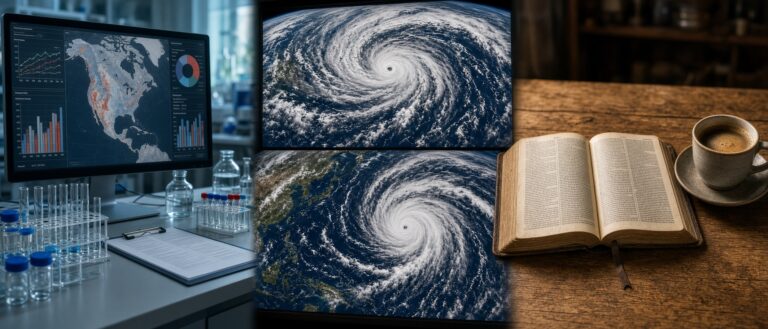
If you’ve checked the news lately and felt like the weather forecast wandered straight into the financial pages, you’re not imagining things. The 2026 El Nino crisis isn’t just a line on a meteorological map anymore. Within a single week in November, corporate executives logged more than 600 El Nino warnings on quarterly earnings calls, Colombia’s hydroelectric reservoirs slipped to 77.14% ahead of its dry season, and food economists warned that diesel costs and Pacific heat will push American grocery bills higher into 2027. Any one of those headlines might be easy to shrug off over morning coffee. Stacked together in the same seven days, they deserve a calm, careful look.
My friend, I want to take a slightly different approach with this report.. I’ll give you the hard numbers across all five El Nino pressure points, but I’ll also tell you which ones I could confirm in the original reporting, which ones come with an asterisk, and where viral headlines have run ahead of the facts. Some of the figures bouncing around social media sound bigger than the primary data supports, and you deserve the version you can trust.
Here’s the path we’ll walk: first, what meteorologists are actually seeing in the Pacific; second, why boardrooms from Germany to Peru are sweating; third, what’s happening to Bogota’s power grid, your local grocery aisle, and the hidden groundwater under the Colorado River; and finally, what Scripture says to do with all of it, which is neither panic nor a shrug. If you’re new here, our guides to 2026 global weather events and birth pangs and the biblical signs of the end times in 2026 give you the big map. This report is today’s weather.
Record Heat and a Pacific Ocean Running Hot
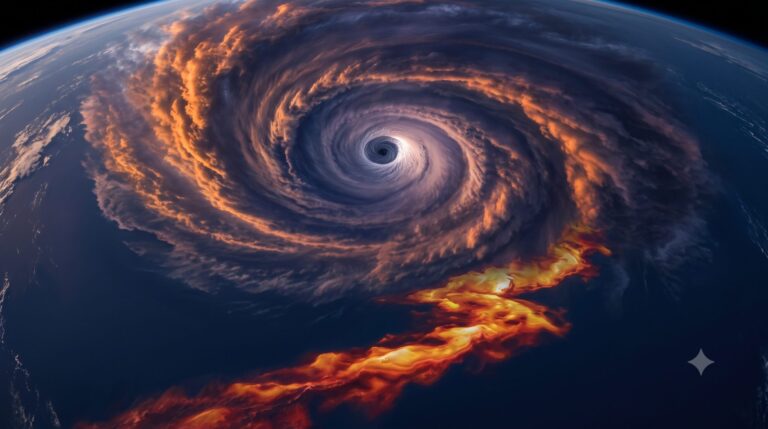
Before we talk about grocery receipts or power grids, we need to check the engine driving the whole cycle. On November 12, 2026, the NOAA Climate Prediction Center reported that sea surface temperature anomalies in the eastern equatorial Pacific have pushed past +4.0 degrees Celsius. Across the monitoring zones, the numbers climbed sharply: +2.5 degrees Celsius in Nino-3.4, +3.6 degrees Celsius in Nino-3, and +4.4 degrees Celsius in Nino-1+2. Deeper below the surface, water temperatures ran more than +10.0 degrees Celsius above normal.
Those aren’t ordinary warm patches. According to NOAA’s November ENSO Diagnostic Discussion, there’s a greater than 79% chance that a strong-to-very-strong El Nino continues through January to March 2027. Even more striking, forecasters now put roughly 60% odds on this becoming a historic event that exceeds every El Nino recorded since 1950 during the October-to-December and November-to-January windows. Colombia’s Ministry of Environment, citing NOAA’s assessment as reported by The City Paper Bogota, also noted a 61% probability that El Nino conditions persist all the way to May 2027.
The heat is already showing up in the global averages. Data from the European Union’s Copernicus Climate Change Service, detailed by Earth.com, confirmed that October 2026 was the warmest October ever measured in the ERA5 record. Global average surface air temperatures hit 15.35 degrees Celsius, beating October 2023 by 0.05 degrees and sitting 1.75 degrees Celsius above the estimated pre-industrial baseline. In the key Nino-3.4 patch of the equatorial Pacific, October temperatures averaged 29.94 degrees Celsius (+3.21 degrees above normal), topping the peaks of the massive 1982-83, 1997-98, and 2015-16 El Ninos. Along the Peruvian coast and west of the Galapagos, ocean anomalies reached 6 to 7 degrees Celsius above average.
On November 9, 2026, the World Meteorological Organization warned that global sea surface temperatures were running at their highest or second-highest levels on record, with El Nino expected to peak around December 2026 and carry elevated temperatures well into 2027. Copernicus’s statistical modeling now gives 2026 a greater than 99% chance of finishing above the 1.5-degree Celsius mark for the full calendar year, with roughly an 80% chance of ranking as the second-warmest year on record and a 20% chance of tying or passing 2024.
Here’s the Watchman’s asterisk, because precision matters. Global averages don’t mean every backyard is baking. Copernicus noted cooler-than-average October temperatures across southern South America, Greenland, northern Africa, western Australia, Greece, and western Turkiye. And NOAA itself reminds readers that even during a very strong El Nino, classic regional weather swings are more likely, not guaranteed. Weather models give probabilities, not crystal balls.
Wall Street’s 600 Warnings and a Tangled Supply Chain
Normally, corporate chief financial officers like talking about margins, interest rates, and new product launches. This November, they couldn’t stop talking about the Pacific Ocean. According to Bloomberg data published by Insurance Journal and Claims Journal on November 23, 2026, executives at publicly traded companies around the world mentioned El Nino more than 600 times on third-quarter earnings calls in November alone. That’s more mentions in a single month than at any point in the past decade, even though the world went through three other El Nino cycles during those ten years, including the big one that wound down in 2016.
“This is not just any El Nino,” said Mekala Krishnan, who advises corporate leaders on climate risk at McKinsey, as quoted by Insurance Journal. “This is the super El Nino.”
What caught my eye wasn’t just the count of mentions. It was how wide the footprint is across basic industries that keep everyday life running. Look at what companies actually told investors this month:
- Agriculture and seeds: German chemical giant Bayer AG reported in November that sales in its core crop protection unit (pesticides and herbicides) dropped this year partly because of the strong El Nino, according to Insurance Journal. U.S. seed producer Vylor Inc. told analysts that historic European drought combined with El Nino disruptions across the Asia Pacific shaved $60 million off its earnings.
- Mining and raw materials: Denver-based Newmont Corp., the world’s largest gold miner, warned on its October earnings call that El Nino drought could squeeze water supplies at its Papua New Guinea mine during the fourth quarter. Meanwhile, Vancouver-based Pan American Silver Corp. ran into the exact opposite extreme: heavier-than-normal rainfall in Argentina snarled transportation and complicated ore processing, per Claims Journal.
- Banking and small-business credit: In Peru, where El Nino typically dumps floods on the north while parching the south, Credicorp (owner of the country’s largest bank) told analysts on November 10 that it’s slowing down new loans to small and medium-sized businesses because they’re more exposed to weather shocks.
- Compounding geopolitical stress: All of this landed on top of European summer heat waves that already evaporated $128 billion in economic output, plus ongoing supply chain bottlenecks and higher production costs tied to the conflict in the Middle East. As we’ve tracked in our coverage of the 2026 Iran war and the Ezekiel 38 Hormuz blockade and the 2026 global oil crisis in the Strait of Hormuz, fragile global trade routes don’t have much slack left. Krishnan summed up the mood on corporate desks in six words: “It is everything, everywhere, all at once.”
Now for the honest asterisk. Not every company gets hurt by a strong El Nino. A milder Northern Hemisphere winter can soften heating demand and pull natural gas prices lower in North America and Europe. Canada’s largest natural gas producer, Tourmaline Oil Corp., described El Nino sentiment as “a bit of a wall of worry,” while TD Cowen analyst Jason Gabelman noted in Insurance Journal that warmer winter weather could actually give European utilities some breathing room after Middle East conflicts sent imported gas prices surging. Even in agriculture, KeyBanc analyst Salvator Tiano pointed out that while weaker planting may slow fertilizer sales through early 2027, tighter harvests could push crop prices up later in the year. Markets always have winners and losers. What makes November’s 600-plus mentions worth watching is how many boardrooms are quietly tightening credit and bracing for volatility at the same time.
Bogota’s Reservoirs and the Tightening Power Grid
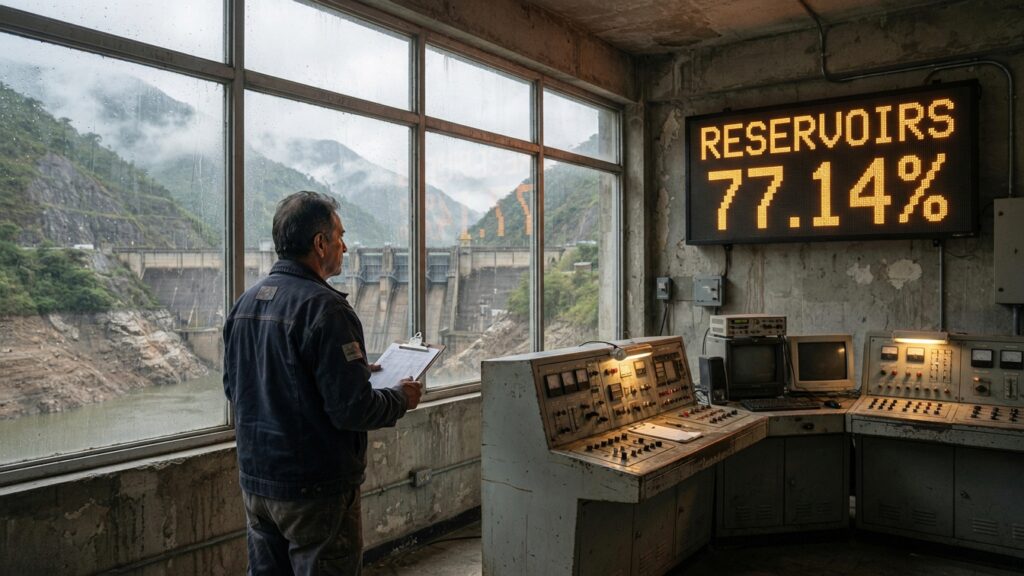
South America is already feeling the pinch in real time, and Colombia’s capital gives us a front-row look at how weather collides with aging infrastructure. On November 20, 2026, The City Paper Bogota reported that Mayor Carlos Fernando Galan urged households and businesses across the capital to cut back on electricity use, warning that Colombia’s national energy supply faces real strain as the peak months of El Nino approach.
Here are the verified numbers behind the warning. Colombia relies heavily on hydroelectricity to keep the lights on. According to figures from national grid operator XM published by the Ministry of Environment on November 12, aggregate storage across reservoirs connected to Colombia’s National Interconnected System stood at 78.74% of useful capacity on November 11. The national government wanted storage above 80% by November 30 to build a cushion before the dry season runs from December 2026 through March 2027. Instead, XM’s daily figures showed storage slipping further to roughly 77.14% by November 18, a trend confirmed on November 23 by Colombia One.
Speaking to Noticias Caracol on November 19, Galan laid out why a two-point dip below the 80% target matters so much. Colombia isn’t just waiting on rain. New power generation and transmission projects have been delayed while demand keeps climbing. Normally, when hydroelectric dams lose inflow, thermal power plants step in to pick up the slack. Galan warned, however, that limited natural gas supplies could stop those thermal plants from running at full capacity right when the country needs them most. He specifically asked Bogota residents to trim electricity use during the daily evening peak between 6 p.m. and 9 p.m., unplugging idle appliances and avoiding running heavy equipment all at once as Christmas lighting and holiday commerce ramp up.
Let’s apply the Watchman’s asterisk here too, because headlines about “electricity rationing” can spook readers fast. First, Bogota is NOT under mandatory power blackouts right now. Galan made clear that his call is about voluntary conservation and preparation, not an announced schedule of cuts, and that the District government doesn’t even hold legal authority to impose mandatory electricity rationing (that power belongs to national energy authorities). Second, Galan clarified a point that trips up plenty of international readers: this warning is about Colombia’s national hydroelectric reservoir network, NOT simply the Chingaza reservoir system that supplies most of Bogota’s drinking water. Still, when a major capital city asks millions of residents to dim the lights between 6 p.m. and 9 p.m. before the dry season has even started, you’re looking at a grid with very little margin for error.
The Grocery Aisle Squeeze: Diesel Meets El Nino
If Bogota feels far away, walk into your nearest supermarket. According to Grocery Dive on November 16, 2026, California Polytechnic State University agribusiness professor Ricky Volpe told a briefing hosted by FMI (The Food Industry Association) that persistently high diesel prices and a powerful El Nino are set to push U.S. food-at-home prices up faster than average at least into early 2027.
“There’s not a whole lot that’s moving in the right direction in terms of keeping food prices flat or down right now,” Volpe said during the briefing, adding that it would surprise him to see food prices flatten out or decline over the next four or five months. The U.S. Bureau of Labor Statistics reported that grocery inflation rose 0.4% in October 2026, the fastest monthly jump since April. Volpe called that 0.4% monthly increase “pretty substantial,” noting that if prices kept climbing at that same pace every month for a year, it would add up to roughly a 5-percentage-point annual increase.
What’s driving it? Behind every carton of eggs, box of cereal, or pound of ground beef sits a chain of wholesale costs tracked by the Producer Price Index: freight, diesel fuel, cold storage, and raw commodities. All of them have been climbing. Volpe pointed specifically to four everyday commodities sitting right in El Nino’s crosshairs: palm oil (used across baked goods and cereals), rice, cocoa, and coffee. Even when the United States is a major domestic producer of a crop like rice, global harvest shocks still ripple straight back to American checkout scanners. As Volpe put it, whether the U.S. is a net importer or exporter, global swings in availability hit domestic shelf prices.
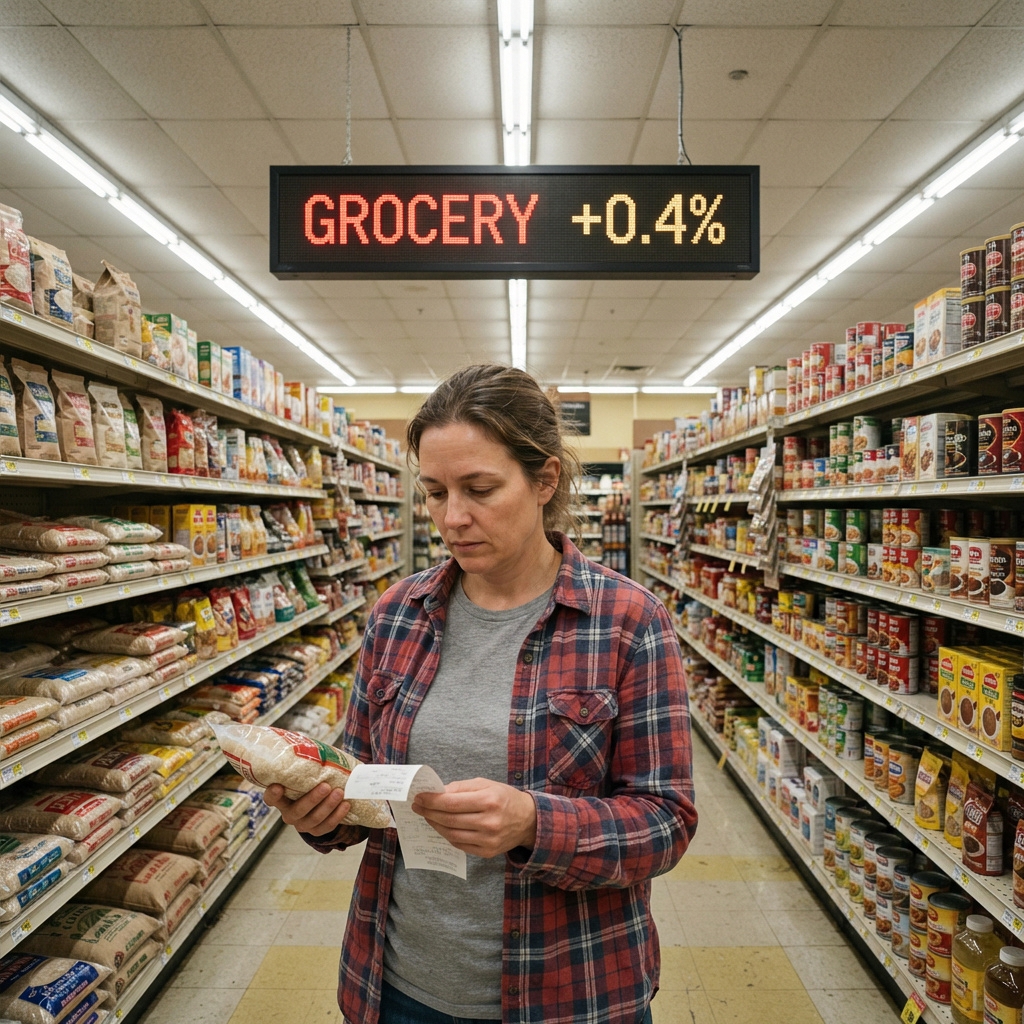
That hits families right where they already feel stretched. FMI’s latest Grocery Shopper Trends survey, presented by vice president Steve Markenson during the same Grocery Dive briefing, found that 62% of polled shoppers say their income isn’t keeping up with inflation. Yet here’s an encouraging human detail most doom-scrolling posts leave out: more than 70% of those same shoppers said they’re “doing OK so long as they stick to their budget.” People are frustrated, yes, but they’re adapting, planning, and watching their carts.
And here’s the Watchman’s asterisk on the inflation math. You might see social media posts claiming October’s BLS report proved “5% official grocery inflation.” Not quite. The 5% figure is an annualized projection of October’s 0.4% single-month jump. The BLS did not publish an official year-over-year October inflation figure because it didn’t capture comparison data for the same period in 2025 due to the federal government shutdown. That doesn’t make the 0.4% monthly jump painless, and it doesn’t shrink your grocery receipt, but it’s important to know the difference between one hot month and a twelve-month official print.
The Colorado River’s Hidden Deficit Below Ground
Now let’s head to the American Southwest, where the fifth El Nino story carries the sharpest irony of all. You’d think torrential El Nino rainstorms pounding Arizona and the Southwest would be great news for a parched river basin. They’re not solving the real problem.
As Bloomberg Opinion columnist Mark Gongloff detailed in the Las Vegas Sun on November 18, 2026, the Colorado River supports 40 million people and more than 5 million acres of farmland, yet it has lost 20% of its flow this century. Its two flagship surface reservoirs, Lake Mead and Lake Powell, each sit at roughly 27% of full capacity, following record-low elevations noted in Bureau of Reclamation post-2026 planning documents. This fall’s El Nino-fueled downpours did lift Lake Powell 22 feet above its mid-September record low of 3,517 feet, but Powell still sits 162 feet below full capacity. Downstream, Lake Mead is just 2.5 feet above its late-October record low and 180 feet below maximum storage. Worse, those intense storms killed four people and damaged homes and roads across the Southwest.
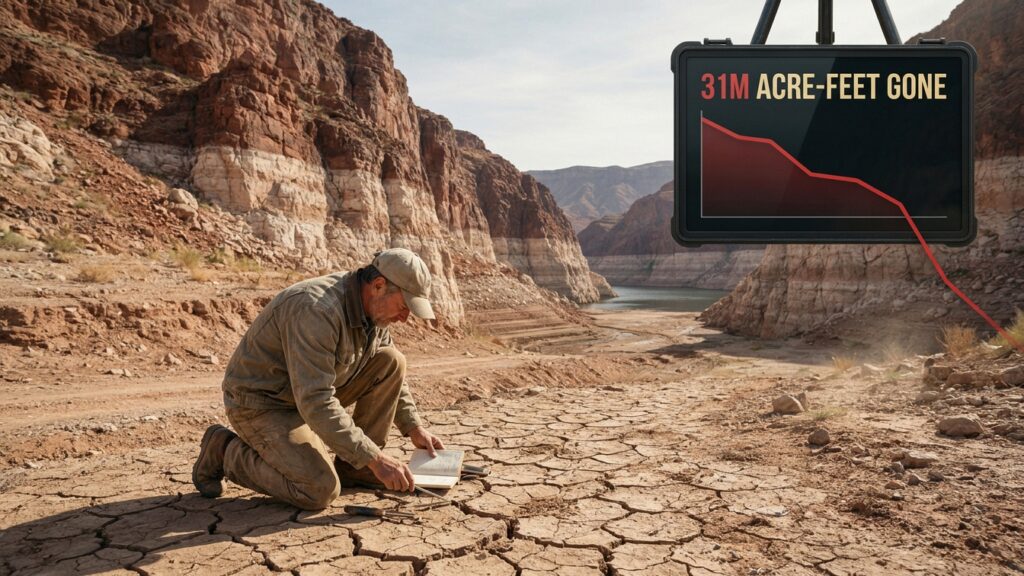
Still, the real shock isn’t the white bathtub rings you can see from a boat ramp. It’s what’s vanished underground. According to a study of NASA GRACE satellite data by Virginia Tech and Indiana University researchers published in October 2026 in the journal Water Resources Research (cited by the Las Vegas Sun), the Colorado River basin has lost 31 million acre-feet of groundwater since 2012 alone. To put that number in human terms, an acre-foot is about 325,851 gallons. Thirty-one million acre-feet is more water than Lake Mead can hold at full capacity, and it accounts for the vast majority of the 35 million acre-feet the entire watershed lost over that stretch. Separate NASA GRACE research published in 2025 found the Lower Colorado basin lost 28 million acre-feet of groundwater since 2003, while U.S. Geological Survey estimates show California’s Central Valley lost 128 million acre-feet between early development and 2019.
Why can’t a big wet El Nino refill that underground tank? Pacific Institute co-founder Peter Gleick explained it plainly: violent storms dump months of rain in days, so water races across parched ground and runs off instead of soaking slowly down into deep aquifers. Even worse, pumping water out of underground caverns causes the land above to sink, shrinking the aquifer’s storage space permanently. Earth system scientist Hrishikesh Chandanpurkar gave an analogy every household budgeter understands immediately: “Rain is income, evaporation is rent, and the runoff you need for ecosystems and the water cycle to continue are the taxes.” Deep groundwater, he said, is the family trust fund. When it shrinks, we’re living beyond our means.
Again, let’s keep the Watchman’s asterisk front and center. Neither Lake Mead nor Lake Powell is at “dead pool” (where water stops flowing downstream) or “power pool” (where Hoover and Glen Canyon dams stop generating electricity) today. A 2026 study in Nature also noted that huge reserves of deep underground water still exist, though much of it lies too deep or carries too many dissolved minerals to pump cheaply. So the Southwest isn’t running dry tomorrow morning. What this data proves is that a single wet season won’t erase a structural water deficit built up over decades.
The Five-Front El Nino Convergence at a Glance
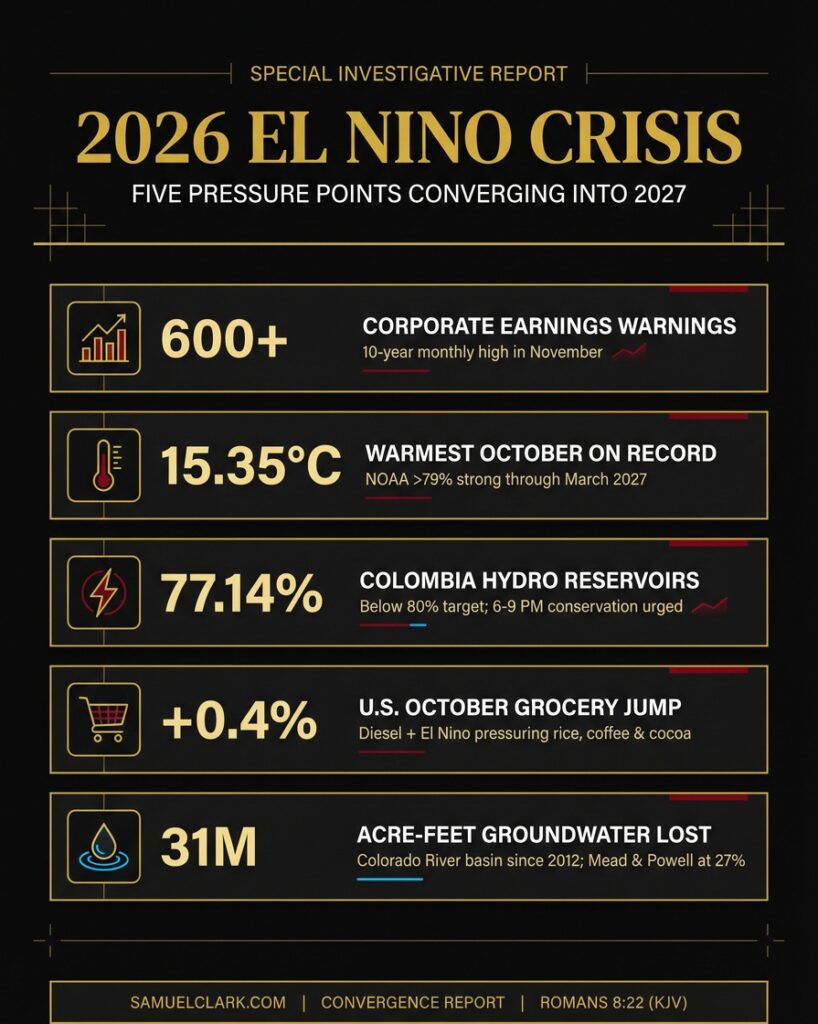
| Pressure Point | Verified Primary Metric | Risk Window Into 2027 | The Watchman’s Asterisk |
|---|---|---|---|
| Global Pacific Heat | Oct 2026 warmest on record (15.35°C); Nino-3.4 hit +3.21°C (Earth.com / Copernicus; NOAA) | >79% strong-to-very-strong through Jan-Mar 2027; 61% persistence to May 2027 | Warmth isn’t uniform globally; NOAA stresses regional impacts are probabilities, not guarantees |
| Corporate Supply Chains | 600+ El Nino mentions on Q3 earnings calls in Nov, a 10-year monthly high (Insurance Journal) | Tighter SME credit in Peru; crop, gold, and silver output volatility into 2027 | Milder northern winter could ease heating natural gas costs for European utilities |
| Bogota Power Grid | XM hydro reservoirs fell from 78.74% (Nov 11) to ~77.14% (Nov 18), below 80% target (The City Paper Bogota) | Dry season Dec 2026 to Mar 2027; peak conservation urged 6 p.m. to 9 p.m. | No mandatory blackouts announced; national hydro grid is separate from Chingaza drinking water |
| U.S. Grocery Prices | Oct 2026 grocery CPI rose 0.4% (fastest since April); 62% say income lags inflation (Grocery Dive) | Faster-than-average food-at-home hikes into early 2027 (palm oil, rice, cocoa, coffee) | BLS published no YoY Oct rate due to 2025 federal shutdown gap; 5% is an annualized projection |
| Colorado River Basin | 31M acre-feet groundwater lost since 2012; Mead & Powell near 27% capacity (Las Vegas Sun) | Post-2026 water-cut talks; intense El Nino runoff fails to recharge deep aquifers | Both lakes remain above dead pool and power pool right now |
Sources compiled from NOAA CPC, Earth.com (Copernicus), Insurance Journal, The City Paper Bogota, Grocery Dive, and the Las Vegas Sun as of November 23, 2026.
Watchman’s Opinion: Five Pressure Points, One Groaning Creation
Watchman’s Opinion Note: The section below shares Samuel Clark’s personal perspective and prophetic commentary, kept separate from the verified news reporting above.

I’ve been watching and documenting this El Nino for quite some time now, and I believe it’s going to have real, far-reaching impacts all across the earth. These five stories aren’t isolated flukes. They’re a continuation of a pattern we’ve already watched unfold all year in 2026, from the recent Florida floods and king tides pushing ashore on both coasts to the parade of typhoons and hurricanes churning across the Pacific. People ought to take the potential impacts seriously.
This isn’t abstract theory for me, either. It’s already reshaped our own travel plans in a big way as we’ve been deciding where to go and where not to go in South America. We were planning to head to Paraguay, but the odds of heavy impacts and flooding there are just too high right now. We were also looking closely at Colombia, yet drought pressures and reservoir warnings are already rearing their heads. Even Ecuador was on our shortlist, and we’ve taken that off the table too because of expected El Nino impacts. When a weather cycle starts redrawing real family itineraries across an entire continent, you don’t brush it off.
So why am I paying attention? Because of convergence. Not one isolated storm, not one bad quarter, but how many foundational systems are lighting up at the exact same time with almost zero buffer left. When Paul wrote to the believers in Rome, he didn’t describe a planet gliding peacefully toward human perfection. He wrote, “For we know that the whole creation groaneth and travaileth in pain together until now” (Romans 8:22, KJV). Jesus used that exact same birth-pang image in Matthew 24:7-8 (KJV): “For nation shall rise against nation, and kingdom against kingdom: and there shall be famines, and pestilences, and earthquakes, in divers places. All these are the beginning of sorrows.”
I’m not saying a 0.4% jump in October grocery prices is the black horse of Revelation 6:5-6 (KJV), where “A measure of wheat for a penny, and three measures of barley for a penny” describes full-blown Tribulation scarcity. I’m not claiming El Nino is a fulfilled prophecy on a wall chart. What I am saying is that when you watch power grids, water tables, shipping lanes, and food supply chains all tighten simultaneously, you’re watching how fragile our modern comfort really is. Read Luke 21:25-26 (KJV) slowly: “And there shall be signs in the sun, and in the moon, and in the stars; and upon the earth distress of nations, with perplexity; the sea and the waves roaring; Men’s hearts failing them for fear, and for looking after those things which are coming on the earth.” Notice the mood in that verse. “Distress of nations, with perplexity.” Even Wall Street consultants are using words like “wall of worry” and “everything, everywhere, all at once.” I’m not saying any earnings call is fulfilling Luke 21. I’m saying the mood on the earth is starting to match the mood in the text.
That’s why we watch loosely and with open hands, testing every headline against Scripture rather than chasing clicks or panic, just as we lay out in our guides to biblical discernment and fulfilled prophecy and discernment. A warning light isn’t a countdown. It’s a reminder to wake up, check your priorities, and make sure your anchor isn’t tied to a shaky supply chain.
Calm Hands, a Settled Heart: Putting God First When Pressures Stack
If reading about shrinking reservoirs, tightening power grids, and rising grocery bills leaves a knot in your stomach, take a deep breath, grab a sandwich, and remember who sits on the throne. This stuff doesn’t trouble me at all, because I know who my King is.
Scripture never tells believers to hoard in terror, and it never tells us to sleepwalk through obvious warnings either. Proverbs 22:3 (KJV) puts it in plain everyday wisdom: “A prudent man foreseeth the evil, and hideth himself: but the simple pass on, and are punished.” Prudence isn’t prophecy, and practical preparation isn’t fear. It’s simple stewardship so your family stays steady and you have extra to share if a neighbor hits a rough month. Here are a few calm, grounded steps you can take over the next few weeks:
- Build a steady pantry buffer: Pick up a little extra of the shelf-stable basics your family actually eats, especially items directly exposed to El Nino supply swings like rice, cooking oils, coffee, dry beans, and oats. Buy an extra bag or two on normal grocery trips instead of clearing a shelf in panic.
- Keep drinking water on hand: Whether you live in a drought basin or a flood zone where storms knock out treatment plants, storing a week or two of clean drinking water and a simple gravity filter is cheap peace of mind.
- Plan for brief power hiccups: Keep rechargeable lanterns, a backup battery pack for phones, and a manual can opener where you can actually find them in the dark. Trim unnecessary evening peak power waste too; it’s good stewardship of your own budget.
- Hold extra to bless someone else: If your pantry and budget have a little margin, you’re in a position to drop off a bag of groceries for a widowed neighbor or a young family down the street when food prices pinch in early 2027. Extra to share is stewardship, not fear. That’s preparedness done the Bible’s way: calm hands, a settled heart.
Above every practical step sits the main thing: put God first. Jesus spoke straight into our worry over food, bills, and tomorrow in Matthew 6:33 (KJV): “But seek ye first the kingdom of God, and his righteousness; and all these things shall be added unto you.” When the world’s systems rattle, believers don’t stare down at the cracks in the ground. Jesus told us in Luke 21:28 (KJV), “And when these things begin to come to pass, then look up, and lift up your heads; for your redemption draweth nigh.”
Human grids fail. Aquifers run low. Supply chains tangle. Yet Daniel 2:44 (KJV) reminds us that “the God of heaven set up a kingdom, which shall never be destroyed.” As Bereans who search the Scriptures daily (Acts 17:11, KJV) and rightly divide the word of truth (2 Timothy 2:15, KJV), we hold to the blessed hope that Jesus Christ is coming to catch away His church before the coming wrath (1 Thessalonians 4:16-17, KJV; 1 Thessalonians 5:9, KJV; Revelation 3:10, KJV). If you’re still kicking the tires on whether you can trust the Bible at all, take a quiet evening to read our walkthroughs on the evidence the Bible is true and every messianic prophecy Jesus fulfilled.
And friend, if you aren’t sure where you stand with God today, don’t wait for the next headline to settle the biggest question of your life. “For God so loved the world, that he gave his only begotten Son, that whosoever believeth in him should not perish, but have everlasting life” (John 3:16, KJV). You can read the plain, simple gospel and take that step right now on our Salvation page. Keep your eyes up, keep your hands calm, and put God first today.
Sources
- NOAA Climate Prediction Center: ENSO Diagnostic Discussion (November 12, 2026)
- Earth.com (Copernicus Climate Change Service): October Broke a Global Heat Record, and El Nino Is Still Strengthening (November 17, 2026)
- World Meteorological Organization: State of the Climate in 2026 (November 9, 2026)
- Insurance Journal (Bloomberg): Companies’ El Nino Anxiety Is Surging as Weather Perils Loom (November 23, 2026)
- Claims Journal (Bloomberg): Companies Haven’t Been This Worried About El Nino in a Decade (November 23, 2026)
- The City Paper Bogota: Bogota Faces Electricity Rationing Risk as El Nino Threatens Energy Supply (November 20, 2026)
- Colombia One: Colombia’s Reservoir Levels Drop Below 80% as El Nino Threatens Energy Supply (November 23, 2026)
- Grocery Dive: Grocery Inflation Is Set to Go Up as Input Costs Rise (November 16, 2026)
- Las Vegas Sun (Bloomberg Opinion): Colorado River’s Problems Run Too Deep for El Nino to Solve (November 18, 2026)
- U.S. Bureau of Reclamation: Future Colorado River Operations Decision Documents (2026)
#ElNino2026 #FoodInflation #BibleProphecy