The short version
Equinor cyberattack November 2026 is confirmed and ongoing. That sentence alone changes the story. On Tuesday, Secretary of State Marco Rubio stood in Manila and told reporters there was zero evidence the recent wave of American outages was linked, or caused by malicious actors at all. The National Security Agency said its classified network was degraded during routine maintenance. Apple said an internal update caused its outage. Chase said a software bug caused the bank delays. Every explanation was separate. Every explanation was benign.
In the same 24 hours, two cyberattacks were confirmed. Not rumored. Not user reports. Confirmed. Equinor, the Norwegian oil and gas group, said it detected an ongoing cyberattack against some of its IT systems. And a supply-chain attack through Optimizely injected malicious code into websites belonging to roughly 178 organizations, swapping crypto wallet addresses and skimming payment-card data.
That is why this article exists. Not to claim we can prove a coordinated attack. We cannot. But to say plainly: when officials tell you there is nothing to see, and in the same breath two real attacks are confirmed, trust is the casualty.
Equinor Cyberattack November 2026: What Was Confirmed and What Was Not
This is the H2 that carries the focus keyword outside the opening SEO title block. Everything below is split the way you want it: confirmed versus not confirmed, fact versus opinion.

Secretary of State Marco Rubio, speaking in Manila on November 18 local time, said: “We have zero evidence whatsoever. We have no indication, no evidence, and no reason to believe at all that any of these incidents are related to each other,” Rubio added, “We are not under systemic attack. One has nothing to do with the other.”
Director of National Intelligence Jay Clayton said a software patch had stopped some systems coming back up as expected after NSA maintenance, and there was no sign of a cyberattack. Senator Mark Warner said there was no indication the outages resulted from a coordinated cyberattack. The Department of Homeland Security said investigators do not believe a cyberattack caused the bank outages. That is the official line. We are going to test it against what is confirmed, not against rumor.
Confirmed Cyberattack 1: Equinor Is Still Under Attack
Norwegian oil and gas group Equinor said Tuesday it detected an ongoing cyberattack against some IT systems, but that the attack had not affected operations and production. The Norwegian National Security Authority said it was aware of the incident.
Wednesday morning brought an important clarification: the company clarified it is not a virus attack, so there is no risk of it spreading. No signs of impact on employees, partners, or suppliers. Work continues to neutralize the attack and restore full integrity of affected systems. No timeline was given. Internal email and some IT applications were disrupted earlier.
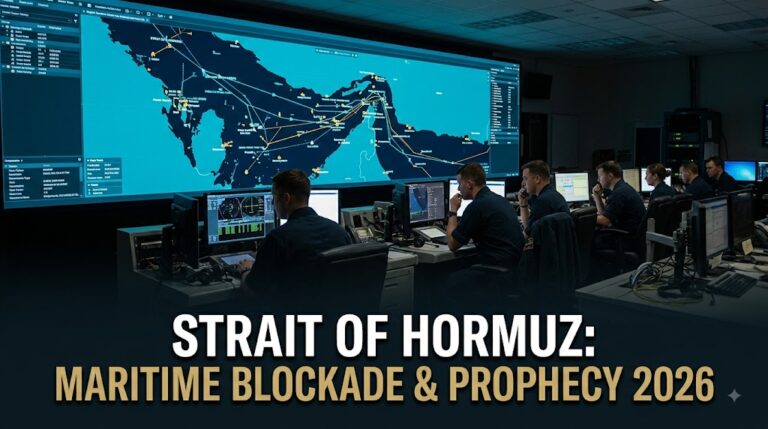
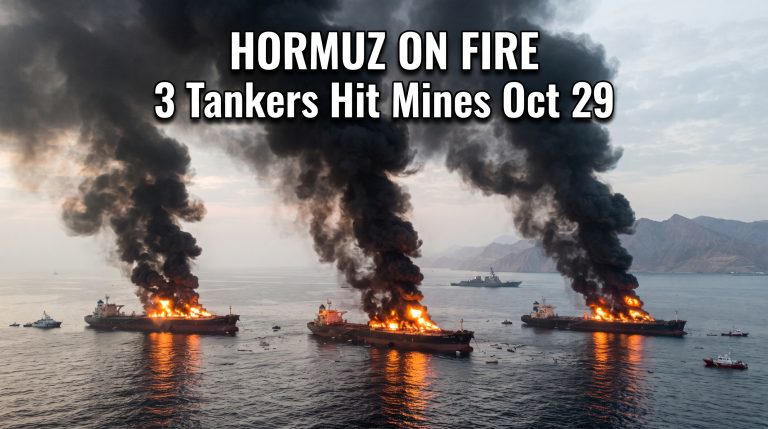
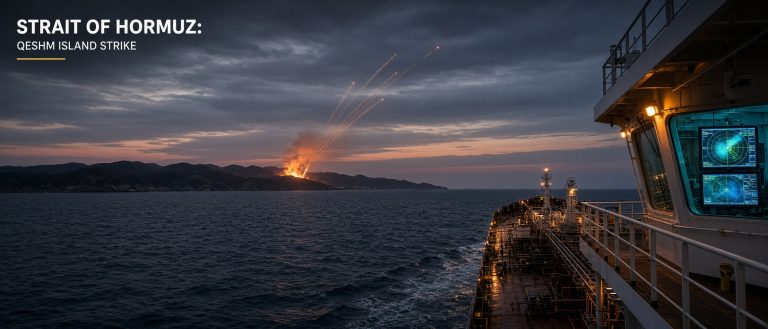
Equinor is a major European gas supplier with UK-related operations. It is the prominent active energy-sector cyber incident right now, and it is happening while war pressure is building in the Gulf, where energy flows through the Strait of Hormuz. We are not claiming a link. We are noting the timing, because timing matters when you are watching patterns.
Confirmed Cyberattack 2: Optimizely Hit 178 Websites

On November 16, attackers exploited a vulnerability in Optimizely’s Experimentation platform, tied to the account/signup flow, and injected malicious JavaScript into customer projects. The code reached sites belonging to roughly 178 organizations, including the BBC, CNN, HSBC, Equifax, Zoom, Salesforce, IKEA, and Ledger.
The payload swapped cryptocurrency wallet addresses to redirect payments to the attacker, skimmed payment-card data entered in forms, and stole cookies and screenshots and attempted iOS exploit kits on some devices. Most malicious code was removed by late Monday UTC. Attacker wallets received roughly $7,040 in about nine hours on November 16. Optimizely fixed the flaw, removed the injected code, revoked tokens and sessions, and notified customers.
Here is the distinction that changes everything: the affected organizations’ own systems were not directly breached. It was the third-party script. That is why this attack is provable, while the others are deniable. A compromised vendor is harder to wave away than a single company’s bug, because one flaw touched 178 separate brands at once.
Follow-Up Tracker: Every System That Was Out, Where Is It Now?
This is the follow-up you asked for. Not a new list of rumors. A status check on every system from the last week.
| System | Status Nov 18 AM | Official explanation |
| NSA / NSANet | Still degraded / restoration ongoing | Temporary degradation during scheduled routine maintenance / software patching |
| Apple | Restored ~5:46 PM ET Nov 17 | Internal update, explicitly NOT cyberattack |
| Marriott | Resolved | Technical issue, review found no indication cybersecurity-related |
| Charles Schwab | Resolved quickly | Brief webpage loading issue, trading stayed via app |
| Banks (Chase + others) | Resolved, transactions normal | Software bug in on-premise hardware, no evidence cyber-related |
| NWS / NOAA | Resolved 11:05-11:45 AM ET Nov 17 | Routine network maintenance |
| 911 / Bandwidth | Resolved, 2h 11m | 911 Address Provisioning & Lookup only, NOT nationwide 911 outage |
| Microsoft 365 | Restored | Months-old bug, not cyberattack |
| FAA | Resolved | Router upgrade, no indication cyberattack |
| United | Resolved | Tech failure, no indication cybersecurity-related |
| Gmail | NOT confirmed as outage | Google found no evidence of broad disruption; user reports only |
| Equinor | ONGOING cyberattack | Confirmed cyberattack, not virus, no spread risk |
| Optimizely / 178 sites | Largely contained | Confirmed supply-chain cyberattack |
NSA: The Story That Keeps Shifting
The NSA said its classified internal network, NSANet, experienced temporary degradation during scheduled routine maintenance, while mission-critical capabilities remained fully operational. CNN reported the NSA closed its campus to most employees Tuesday night, reverting to essential personnel only as it worked to restore the network.
Late November 17 reporting described restoration as ongoing, with no full-restoration time given. Reporting also linked the patching to PHP vulnerability patching. The NSA says mission operations stayed functional. But a classified network degraded, staff sent home, restoration incomplete, and the public told not to worry, is exactly the pattern that erodes trust.
Apple, Marriott, Schwab, Banks: Restored, But the Script Is the Same
Apple said an internal software update triggered widespread outages November 17 affecting iCloud sign-in, App Store, Apple Music, Apple Pay, AppleCare, and some retail and internal systems. By around 6 p.m. Eastern, Apple’s status page showed the listed outages resolved, and Apple ruled out a cyberattack.
On November 16, JPMorgan Chase said a software bug in on-premise hardware delayed transactions, affecting Chase, Bank of America, Wells Fargo, U.S. Bank, and Zelle users. Chase confirmed transactions were posting normally by Monday evening. Banks were back to normal by Tuesday morning.
Listen to the language. Maintenance. Bug. Internal update. Routine. Separate. Distinct. Not malicious. Not connected. Not systemic. Each one, alone, is believable. All of them, together, in five days, across banks, airlines, the NSA, Apple, weather, 911 provisioning, and Microsoft, is a lot to ask people to swallow without a question. Frequency is not proof. But frequency is a signal.
Correction We Owe You: Gmail Was Not a Confirmed Outage
In earlier coverage, Gmail appeared in lists of outages. That was not accurate enough. Google said it found no evidence of a broad Gmail disruption. Google’s Workspace dashboard listed no incidents. User reports alone do not establish a general outage. We are correcting that here, because if we want officials to tell the truth, we have to tell it first, even when it weakens our own list.
The same discipline applies to 911. The Bandwidth incident was a 911 Address Provisioning and Lookup incident, lasting about 2 hours 11 minutes. Some calls may have been rerouted for manual processing. It was not a nationwide 911 outage. Do not share it as one.
And the UK note: no new major UK energy company cyberattack matching this wave was identified as of Wednesday morning. There is an older confirmed incident in recent coverage, a small UK power facility taken offline for four days in July 2026 after a suspected Iran-linked cyberattack, limited to one small-scale generator with no wider impact. Recent power cuts in northwest England November 17 were attributed to local underground cable faults, not cyberattacks.
ARTEX: Why AI Changes Everything About This Threat
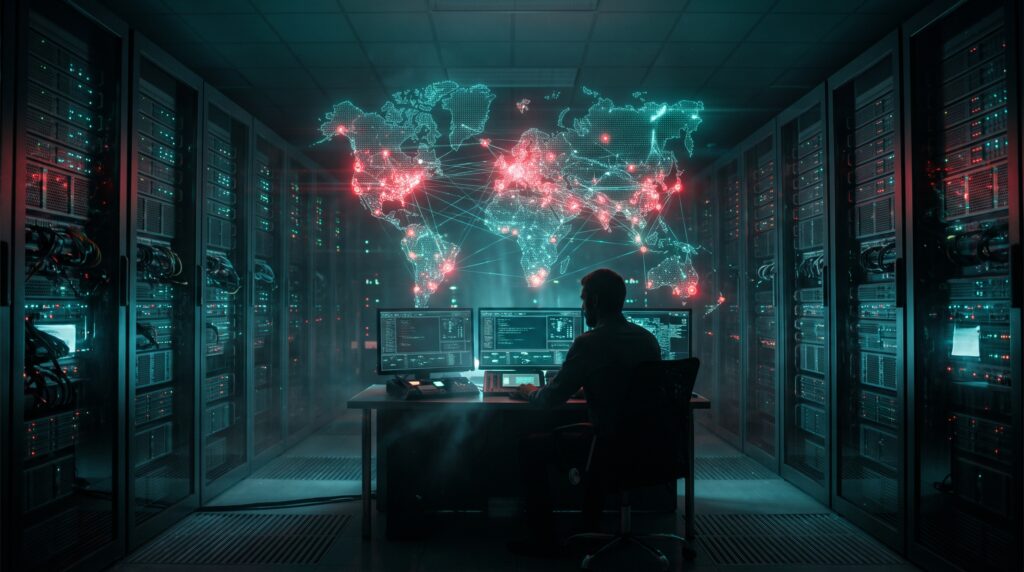
ARTEX is an open-source, AI-driven, autonomous penetration testing framework released on GitHub in July 2026 by a user known as Autumn-27. It does not include its own AI model. It plugs into external models, including DeepSeek, Claude, GPT, GLM, Grok, and Kimi, and uses coordinated agents to run reconnaissance, exploitation, privilege escalation, and data theft with little human input.
In a FBI Flash notice published November 13, the Bureau said a variety of malicious actors have used ARTEX to conduct campaigns targeting organizations globally since at least August 2026. The FBI warned ARTEX can reach privileged access in under three hours.
CrowdStrike said China-linked group VAPOR PANDA used ARTEX to target more than 200 organizations worldwide in under two weeks. GMO analysis tied ARTEX to breaches exposing data at about 80 Japanese insurers, financial firms, and logistics companies, and to a campaign against South Korean banks.
More than 1,465 hosts running an exposed ARTEX console were observed as of November 4, and more than 1,600 as of early November. The creator took the original repository down in October and converted it to closed source after the Korean bank hack, but forks still circulate.
American frontier models are largely closed. They run behind APIs, with guardrails, with kill switches. Chinese open-weight models, DeepSeek, Qwen, GLM, Kimi, can be downloaded, run offline, modified, and used without that kill switch. That does not make open models evil. It makes them available. And when you pair an available model with an autonomous framework like ARTEX, you have given anyone with a laptop the ability to run what used to require a team of hackers.
We are not saying ARTEX caused NSA, Apple, Equinor, or Optimizely. We cannot prove that, and we will not claim it. We are saying the FBI is warning about this tool right now, in November 2026, while officials are telling you there is zero evidence of anything malicious. Both things can be true at once.
OPINION BOX: Distress of Nations, Perplexity, and Deception
This is opinion. Clearly labeled. Not news. Not proof. My take, and I own it.
I do not trust them anymore. I do not mean one party, one president, one agency. I mean the entire U.S. government complex, the companies that depend on it, and the media that repeats its lines without asking a second question. When every failure gets the same four words, maintenance, bug, update, routine, and every question gets the same answer, zero evidence, I stop hearing information and I start hearing a script.
I have heard that script before. Fifteen days to flatten the curve. Stay home, stay safe. Trust the science. Trust the experts. Trust us, we will tell you when it is over. And then the goalposts moved, the stories changed, the people who asked questions were called conspiracy theorists, and years later the quiet corrections came out in footnotes nobody read.
Jesus did not start with wars. He did not start with earthquakes. He started with deception. In Matthew 24:3-4, when the disciples asked for the sign of His coming, He said, Take heed that no man deceive you. That is verse 4. Before the wars and rumors of wars in verse 6. Before the famines and pestilences and earthquakes in verse 7. Deception first. Deception as the doorway.
And then Luke gives us the other half. In Luke 21:25-26, Jesus says there will be signs in the sun, and in the moon, and in the stars, and upon the earth distress of nations, with perplexity, the sea and the waves roaring, men’s hearts failing them for fear, and for looking after those things which are coming on the earth. Distress of nations. Perplexity. Hearts failing for fear. That is not a single event. That is a condition. A state of being. A world where nations do not know what to do next, and people can feel it in their chest before they can name it.
That is what this week feels like. Not one outage. Not one attack. A condition. Banks glitching. Flights grounded. The NSA degraded. Apple down. Weather service down. 911 provisioning down. Energy under attack in Norway. One hundred seventy-eight websites poisoned through one vendor. And a government that looks at all of it and says, with a straight face, zero evidence, not systemic, nothing to see.
I am not claiming this is a coordinated attack. I cannot prove that, and I will not say it. What I firmly believe, and I will say it plainly, is this is an ongoing threat, and it will be an ongoing threat. AI has changed the math. Tools like ARTEX mean attacks can be run faster, cheaper, and by more people than ever before. Open models mean the guardrails that were supposed to protect us do not apply to everyone. Complexity means one bug can cascade across banks, airlines, and hospitals. And the people in charge have shown, again and again, that they will not tell us the truth until they are forced to, if they tell us at all.
So no, I do not believe the denials. I believe the pattern. I believe the frequency. I believe the two confirmed attacks sitting in the middle of a week of denials. I believe we are in birth pangs, and birth pangs do not get better by pretending they are not happening. They get stronger, closer together, and harder to ignore, until the world has to admit what is happening.
Just as predicted. Stay ready. Keep looking up.
What to Watch Next
1. Equinor: Does the company give a timeline for full restoration? Does it name an actor, or a method? Does production stay unaffected?
2. Optimizely: Do any of the 178 organizations report customer losses beyond the $7,040 in crypto wallets? Do regulators open an inquiry into third-party script risk?
3. NSA: Does the agency give a full-restoration time? Does it publish a timeline of the patch and the degradation?
4. ARTEX: Does the FBI update its Flash? Do more campaigns surface tied to ARTEX, especially in finance or energy?
5. Hormuz / Gulf: Does the energy pressure from the Gulf war plus Equinor change gas or oil flows in a way officials cannot wave away as maintenance?
We will update this tracker. If a claim here is corrected by a primary source, we will correct it in the open, same as we did with Gmail and 911.
Sources – Verified Links, Mapped to Sentences
Rubio: zero evidence, not systemic attack – NY Post
Equinor ongoing cyberattack, production unaffected – Reuters via KRRO
Optimizely supply-chain attack, 178 organizations – CoinDesk
NSA NSANet degradation, campus closed – CNN
Apple internal update, restored, no cyberattack – MacObserver
Chase software bug, banks restored – FXStreet
NWS 11:05-11:45 AM ET, routine maintenance – Preppershop / KSNT
FBI FLASH Nov 13, ARTEX abuse since August 2026 – Infosecurity Magazine
ARTEX privileged access under 3 hours, FBI warning – MLQ
VAPOR PANDA, 200+ orgs in under 2 weeks – CyberNoz / CrowdStrike
ARTEX tied to Japanese breaches, 80 firms – Japan Cyber Watch / GMO