Global crisis preparation used to sound like a hobby for people with buckets of rice in the garage. Then came one very strange news cycle. Intel lost nearly 29% of its value in a single day, the U.S. Army rehearsed burying 2,400 war dead in 24 hours, and ten American cargo planes were reported landing in southern Israel. Any one of those headlines you could shrug off. Stacked together, with a midterm election on Tuesday and a possible strike on Iran waiting behind it, they deserve a calm, careful look.
I want to do something a little different in this report, friend. I will give you the numbers, but I will also tell you which ones I could confirm in the original reporting, which ones come with an asterisk, and where the headlines have run ahead of the facts. Some of the figures bouncing around social media are bigger than the reporting supports, and you deserve the version you can trust.
Here is the path we will walk: what governments are telling families to keep at home, what the Army is rehearsing, how fragile the market looks, what the next few days could hold in Washington and Tehran, and what Scripture says to do with all of it, which is neither panic nor a shrug. If you are new here, our guides to the biblical signs of the end times in 2026 and the 2026 Iran war and the Ezekiel 38 Hormuz blockade give you the big map. This report is today’s weather.
Global Crisis Preparation Goes Mainstream: UK, German and French 72-Hour to 10-Day Advice
One European tech site opened its 72-hour emergency kit guide by asking why emergency radios are flying off the shelves. That tells you something before a single government document does: ordinary people are noticing.
Let’s be precise about what is actually new, though, because most of this advice is not. The UK did launch a fresh three-year “Be Ready” campaign on October 22, asking households to keep 72 hours of supplies at home, according to that same guide. But Germany’s civil protection office, the BBK, has long urged households to aim for ten days, with three days as a starting point. France’s “Tous responsables” kit, announced in November 2025, is built on 72 hours. Sweden’s September campaign repeated its one-week standard rather than raising it. That same comparison warns against a mistake many headlines make: treating a page’s publication date as the date the advice changed.
| Country | Recommended minimum | What the guidance asks for |
| United Kingdom (Be Ready) | 3 days (72 hours) | 3 litres of water per person per day, a wind-up or battery FM radio, a charged power bank, a torch, printed copies of key documents, and cash |
| France (Tous responsables) | 72 hours | A three-day kit covering food, drink, warmth and basic care |
| Germany (BBK) | 10 days; 3 days as a starting point | About 2 litres of water per person per day, food, a battery or wind-up radio |
| Sweden | At least 1 week | Household readiness without public help |
| Japan | At least 3 days, ideally about a week | Household food reserves |
| European Commission | 72 hours (non-binding) | Essential supplies for a minimum of three days |
Sources: Pillitteri · NationsPrepare · BBK
What these lists share is the threat model: blackouts, cyberattacks on payment systems, severe weather and hostile states. Cash and a battery radio show up on nearly every list for a plain reason. When card terminals and mobile networks go down, coins, banknotes and a wind-up radio are what is left.
One fair word before we move on. A government publishing a checklist is not predicting tomorrow’s emergency. It has simply stopped assuming the lights will always stay on. A family with three days of water and a flashlight is better off in any ice storm, and prudence is not prophecy. But it does say something about a world that has started looking over its shoulder. Hold that thought. We will come back to it in Luke 21.
Operation Dragon Covenant: The Army Rehearses Burying 2,400 Dead in 24 Hours
Earlier this month, in the Fayetteville and Fort Bragg area of North Carolina, soldiers from the 3rd Corps Sustainment Command and the 20th Engineer Brigade ran Phase II of Operation Dragon Covenant, according to Clash Report. Combat engineers, chaplains, preventive medicine teams and fatality management specialists practiced temporary battlefield burial, a procedure the Army says it has not used on a large scale since the Korean War.
The details are sobering precisely because they are so practical. Engineers used D6 bulldozers to dig and refill trenches holding mock remains, skeletal models and water containers, in a way that keeps real remains intact so they can be identified and returned to families later. Army doctrine describes a burial plot of five parallel trenches holding 100 bodies, and in earlier trials crews with standard backhoes needed about three hours to finish a single trench, El Cronista reports. With bulldozers, the Army concluded that one engineer company working nonstop could dig and cover graves for up to 2,400 bodies in 24 hours. The drill also showed that some of the Army’s own burial standards needed updating.
The stated goal, per Army Times, is a workable method for temporary mass interment in a high-intensity conflict, the kind of war where fallen soldiers cannot be flown home right away. Armies rehearse worst cases. That is their job, and a drill is not a prediction. It is a window into what planners think a large modern war could look like, and it deserves our prayers, especially for the men and women who would do this work. The same theme runs through our look at modern missile warfare and wars and rumors of wars: planners are preparing for industrial-scale attrition.
Intel’s 29% Plunge, a $1 Trillion Friday, and the 49% Margin Debt Warning

Friday was rough. The Nasdaq Composite fell 2.86%, its worst day since June, according to CNBC’s figures as summarized by Traders Agency, while the Nasdaq 100 dropped 3.4% and shed more than $1 trillion in market value, close to what traders call correction territory, NBC News reported. The seeds were sown Thursday, when Amazon and Intel both reported earnings that failed to reassure investors. You may see “a $2 trillion Friday” online. The reporting I can find says roughly $1 trillion on Friday and more than $2 trillion for the whole month, as Reuters tallied it.
Chipmakers took the worst of it:
Intel: down nearly 29% after a weak current-quarter outlook, with revenue in its client computing and physical AI group falling 5% year over year to $8.1 billion. NBC News reported it was Intel’s worst single-day drop on record, in data going back to the 1980s.
Sandisk: down 13%, even though it beat fiscal first-quarter estimates and announced an eight-for-one forward stock split.
AMD, Broadcom and Nvidia: AMD fell close to 11%, Broadcom 5% and Nvidia 4%.
The common thread, per Reuters, is doubt about whether enormous AI spending can pay off quickly enough.
Zoom out, because the details matter. A Yahoo Finance analysis counts roughly $5 trillion in market value lost by AI and chip stocks since October 6. The same piece notes the rest of the market has held up far better, with most S&P 500 sectors gaining in October. So this is a sharp unwinding in one crowded corner, not yet a collapse of everything.
Underneath sits a leverage warning worth knowing about. Over the past year, margin debt, which is money borrowed against a brokerage portfolio to buy more stock, rose 49%. According to Fundstrat Global Advisors, as reported by The Motley Fool, whenever margin debt growth has topped 45% since 1960, the market has declined five out of six times, an 83% record. That is a warning light, not a countdown, and the columnist who wrote it says he is not panicking, just getting more defensive.
Still, borrowed money and bad news are a risky pairing. Brent crude has been trading around $117 to $118 a barrel as tensions flared around a tanker attack near Hormuz, a story we follow in our report on the global oil crisis in the Strait of Hormuz and Red Sea. When prices are high and investors are leveraged, forced selling can speed up fast.
Tuesday’s Midterms and the Post-Election Iran Strike Window
On Tuesday, November 3, Americans vote in a midterm election that will shape the last two years of this presidency. A late-October Reuters/Ipsos poll showed Democrats leading the generic congressional ballot 47% to 36% among registered voters, with President Trump’s approval at 32%, up slightly from a record low the week before. The Guardian’s analysis argues the vote has become a referendum on Trump’s second term.
A national poll does not decide individual seats, so here is the actual scoreboard, per The Indian Express. Republicans hold the House 218 to 214, with two vacancies and one independent who caucuses with them. Republicans hold the Senate 53 to 47. Democrats need a net gain of four Senate seats for a majority, and a net gain of three produces a 50–50 tie that Vice President JD Vance would break. Only 35 Senate seats are on the ballot, and Republicans are defending 22 of them. History leans against the party in the White House: Democrats lost roughly 54 House seats in 1994 and 63 in 2010, and Republicans about 40 in 2018.
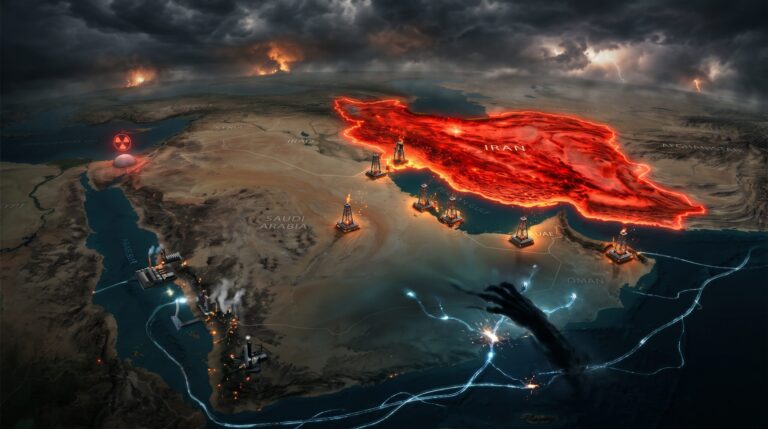
Why does the calendar matter beyond Capitol Hill? Because of what is moving in the Middle East, and when people think it might be used. Axios reported, as relayed by Iran International, that Israeli Prime Minister Benjamin Netanyahu is pressing Trump to strike Iran right after the election, while Trump, for now, wants negotiations to play out. Both things can be true at once, and nobody outside the room knows which way it will go.
Ten Cargo Planes, KC-135 Tankers at Ramon, and Iran’s “No Red Lines” Warning

On Thursday, CENTCOM Commander Adm. Brad Cooper briefed President Trump on options for potential strikes on Iran at the White House, with Defense Secretary Pete Hegseth and Joint Chiefs Chairman Gen. Dan Caine in the room. Millet News, citing The Wall Street Journal, adds that the meeting followed a Wednesday session with Vice President Vance.
Meanwhile, the physical movements are real, but let’s separate what is reported from what is confirmed:
Cargo planes: Israel’s public broadcaster KAN reported that ten U.S. military cargo aircraft landed at the Ovda and Nevatim air bases in the southern Negev, departing from Fort Bliss in Texas, one of the Army’s major air defense centers. More aircraft were reportedly sent to Jordan, Saudi Arabia and Qatar. The cargo was not disclosed, and Washington had not officially confirmed the deployments.
The wider buildup: KAN also reported roughly 20 U.S. warships already in the region, with another carrier and a Marine unit expected in November, and an Israeli official said the two countries are coordinating while no final decision has been made.
Tankers at Ramon: Wisevoter reports that photographs shared on social media show U.S. KC-135 aerial refueling tankers parked at Ramon Airport, with about 25 reportedly operating there, a figure it says has not been independently verified. Israel also restricted nighttime operations at Ramon starting November 1, but cites staffing, not the military presence. So I would not read too much into any single photo. Even so, long-range sorties depend on tankers, which is why analysts watch them.
Tehran is not staying quiet. On Saturday, responding to German Chancellor Friedrich Merz’s complaint that the war has cost Europe more than €100 billion in higher energy prices, Foreign Minister Abbas Araghchi wrote on X that this is “nothing compared to the Earth-shattering blow Iran’s Powerful Armed Forces will deal against those who dare harm our people. Red lines are a thing of the past.” The same remarks were carried by The New Region. On Sunday, Mohammad Mokhber, an adviser to Iran’s Supreme Leader, wrote on his personal account that the geography of a threat no longer determines the geography of Iran’s response. An IRGC spokesman added that the force would unveil “new capabilities and targets” if attacked again, according to Iran International.
There is also a diplomatic track. Qatari mediators held more than 12 hours of talks in Tehran on Friday, per Shafaq News, and Iran confirmed receiving a message from Vice President Vance, though Trump denied directing Vance to open negotiations, saying the message concerned medical supplies and other assistance, Millet News reported.
Let me say plainly what I think. A buildup like this can be pressure for a deal just as easily as the prelude to a strike. I cannot tell you which one it is, and neither can anyone outside the room.
Luke 21’s Failing Hearts, Ezekiel 38’s Hooks, and the Perilous Times of 2 Timothy 3

Now let’s step back and read the week through Scripture. Start with how Paul described the atmosphere of the closing season:
“This know also, that in the last days perilous times shall come.” (2 Timothy 3:1, KJV)
Jesus gave His disciples the texture of those days in the Olivet Discourse. Notice that He did not only describe events. He described what they do to people:
“And there shall be signs in the sun, and in the moon, and in the stars; and upon the earth distress of nations, with perplexity; the sea and the waves roaring; Men’s hearts failing them for fear, and for looking after those things which are coming on the earth: for the powers of heaven shall be shaken.” (Luke 21:25–26, KJV)
Read verse 26 slowly: “looking after those things which are coming on the earth.” When ministries of civil defense in London and Berlin publish kit lists, when a trillion dollars leaves the market in a single session, and when capitals brace for a strike, that is a world looking after what is coming. I am not saying any government is fulfilling prophecy. I am saying the mood on the earth is starting to match the mood in the text.
Then there is the double track of peace talk running beside war preparation. Paul wrote:
“For when they shall say, Peace and safety; then sudden destruction cometh upon them, as travail upon a woman with child; and they shall not escape.” (1 Thessalonians 5:3, KJV)
I am not claiming the talks in Doha are Paul’s “peace and safety.” I am noting that a world which talks peace while moving cargo planes is the kind of world he describes.
Next, Persia. Ezekiel 38 describes a latter-days coalition against Israel, and God says to its leader:
“And I will turn thee back, and put hooks into thy jaws…” (Ezekiel 38:4, KJV)
Persia heads the list of allies in the next verse (Ezekiel 38:5). Here is where I want to be careful, because careful is what a watchman owes you. A strike on Iran would not be the Ezekiel 38 invasion. That prophecy describes a coalition coming against Israel, not Iran being attacked. Persia’s place on that list is a hinge to keep watching, not a fulfillment to declare.
The money story deserves the same care. Governments tell families to keep cash because card networks can fail, which shows how fragile our electronic systems are. Every outage becomes an argument for more centralized control. Revelation describes a future system built on exactly that kind of control:
“And that no man might buy or sell, save he that had the mark, or the name of the beast, or the number of his name.” (Revelation 13:17, KJV)
Revelation 18:11–17 then pictures the merchants of the earth weeping when that commercial order collapses. I do not think the radio in your closet has anything to do with the mark of the beast. But I watch the direction of travel, loosely and with open hands, as we explain in our guide to biblical discernment.
Now the honest counterpoint. During the Cold War of the 1950s through the 1980s, Western governments ran civil defense drills, stocked fallout shelters and kept enormous forces on alert, and the age did not end. A bad Friday for chip stocks and an Army burial drill are not a date-setting crystal ball. What stands out to me this week is how many pressures are lit at once: civil defense advice, wartime logistics, leveraged markets, and a war that is paused, not over. I cannot point to another week when all of those were burning together. That is not a prediction. It is a reason to stay awake, because “the whole creation groaneth and travaileth in pain together until now” (Romans 8:22, KJV).
How Believers Can Prepare Practically Without Fear While Looking Up
If reading about ten-day rations, battlefield bulldozers and tankers in the Negev leaves a knot in your stomach, take a deep breath, grab a sandwich, and remember who sits on the throne. This stuff does not trouble me at all, because I know who my King is.
The Bible never tells believers to panic. It commends calm, practical prudence:
“A prudent man foreseeth the evil, and hideth himself: but the simple pass on, and are punished.” (Proverbs 22:3, KJV)
So here is a simple starting point, drawn from the UK and German guidance above. Do it calmly, over a few weeks, and do it so you can help your neighbors:
Water first: roughly two to three liters per person per day, the range the German and UK lists use.
Food that needs no cooking: three days to start, a week or two as you are able.
Light and news: a flashlight, a battery or hand-crank radio, and a charged power bank.
Cash in small bills, in case card machines are down.
Medicine and paperwork: a buffer of your prescriptions and paper copies of key documents.
Extra to share: that is stewardship, not fear.
That is global crisis preparation done the Bible’s way: calm hands, a settled heart. And look at what Jesus told His followers right after describing the roaring seas and failing hearts:
“And when these things begin to come to pass, then look up, and lift up your heads; for your redemption draweth nigh.” (Luke 21:28, KJV)
While markets lose trillions and capitals brace for the next shock, Daniel reminds us that God is setting up a kingdom “which shall never be destroyed… and it shall stand for ever” (Daniel 2:44, KJV). In my own study, I hold to the blessed hope of the pre-tribulation Rapture, that the Lord Himself will descend from heaven with a shout and catch away His church (1 Thessalonians 4:16–17) before the final seven-year hour of trial, because “God hath not appointed us to wrath, but to obtain salvation by our Lord Jesus Christ” (1 Thessalonians 5:9; see also Revelation 3:10). I also recognize that other faithful, Bible-believing followers of Jesus read the timing differently. Don’t take my word for it. Open your Bible, search the Scriptures daily like the noble Bereans (Acts 17:11), and study to show yourself approved unto God (2 Timothy 2:15). Our library of fulfilled biblical prophecy and discernment resources shows how God’s Word has held up across thousands of years.
If this week has you wondering whether the Bible really is the Word of God, take a few minutes to look at the evidence that the Bible is true and trace every messianic prophecy Jesus fulfilled. A ten-day kit in your closet can get you through a power outage, but only Jesus Christ can save your soul for eternity. As John 3:16 promises:
“For God so loved the world, that he gave his only begotten Son, that whosoever believeth in him should not perish, but have everlasting life.” (John 3:16, KJV)
Don’t wait another day to settle your eternity. Learn how you can receive forgiveness of sins and unshakable peace with God through the saving gospel of Jesus Christ right now.
Sources
Pasquale Pillitteri — “Cyber Attack Emergency Kit, What to Buy for 72 Hours” (Oct 31, 2026). Read the source
NationsPrepare — “Household emergency supplies by country”. Read the source
BBK (German Federal Office of Civil Protection) — “Vorsorgen für Krisen und Katastrophen (official guide, PDF)”. Read the source
BBK (German Federal Office of Civil Protection) — “Essen und Trinken bevorraten”. Read the source
Army Times — “Army practices digging temporary battlefield graves” (Oct 26, 2026). Read the source
Clash Report — “U.S. Army trains to bury 2,400 war dead in 24 hours”. Read the source
El Cronista — “2,400 fallen soldiers in 24 hours: The US Army is practicing temporary mass burials, something it hasn’t needed since the Korean War”. Read the source
NBC News — “Tech stocks wipe out $1 trillion in value as concerns deepen about the AI boom” (Oct 30, 2026). Read the source
Traders Agency (reporting CNBC) — “AI-Spending Fears Spark Broad Tech Selloff as Nasdaq Posts Worst Day Since June, Semiconductors Lead Losses” (Oct 30, 2026). Read the source
Reuters — “Nasdaq faces $2 trillion wipeout in October as AI spending fears deepen” (Oct 30, 2026). Read the source
Yahoo Finance — “AI stocks just lost $5 trillion — but history says the stock market’s sweetest stretch starts now”. Read the source
The Motley Fool — “The Stock Market Just Flashed a Warning Signal That’s Been Right 83% of the Time Since 1960” (Oct 14, 2026). Read the source
The Wall Street Journal — “Brent Crude Prices Rise After Strait of Hormuz Tanker Attack”. Read the source
Reuters — “Trump approval rises from record low to 32% ahead of midterm election, Reuters/Ipsos poll finds” (Oct 26, 2026). Read the source
The Guardian — “Are the US midterms going to see a blue wave of Democrats winning seats, or a blue flood?” (Nov 1, 2026). Read the source
The Indian Express — “US midterms 2026: How Republicans and Democrats stand in Congress”. Read the source
Iran International — “Live blog (reporting Axios on the Trump–Netanyahu call, and IRGC statements)” (Nov 1, 2026). Read the source
The Wall Street Journal — “Top admiral briefs Trump on Iran attack options” (Oct 30, 2026). Read the source
Millet News (citing The Wall Street Journal) — “US weighs renewed strikes on Iran as military deployments expand across Middle East” (Oct 30, 2026). Read the source
Anadolu Agency (citing KAN) — “US deploys 10 military cargo planes to Israel amid preparations for possible strike on Iran: Report” (Oct 30, 2026). Read the source
Wisevoter — “US Tankers Gather at Israel’s Ramon Airport” (Nov 1, 2026). Read the source
Shafaq News — “Iran’s Araghchi: Red lines are a thing of the past” (Oct 31, 2026). Read the source
The New Region — “Araghchi warns no more ‘red lines’ in response to attacks” (Oct 31, 2026). Read the source
WANA News Agency — “Mokhber: Iran’s Response Is No Longer Limited by the Geography of Threats” (Nov 1, 2026). Read the source