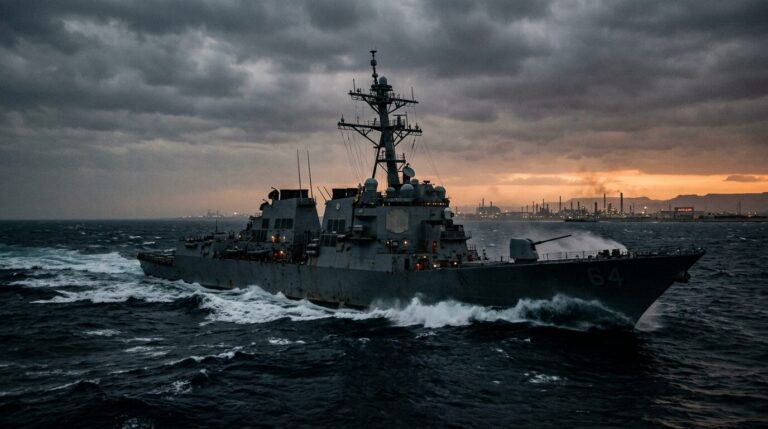
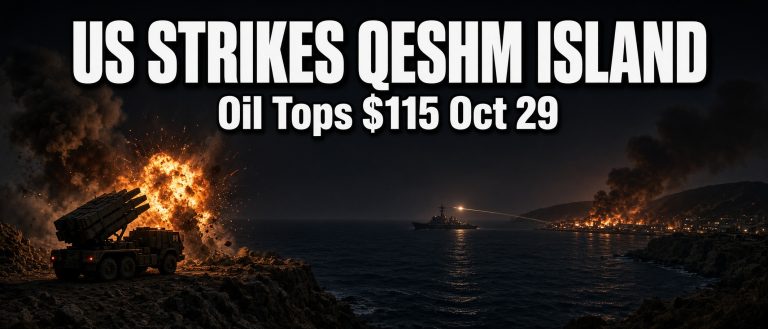
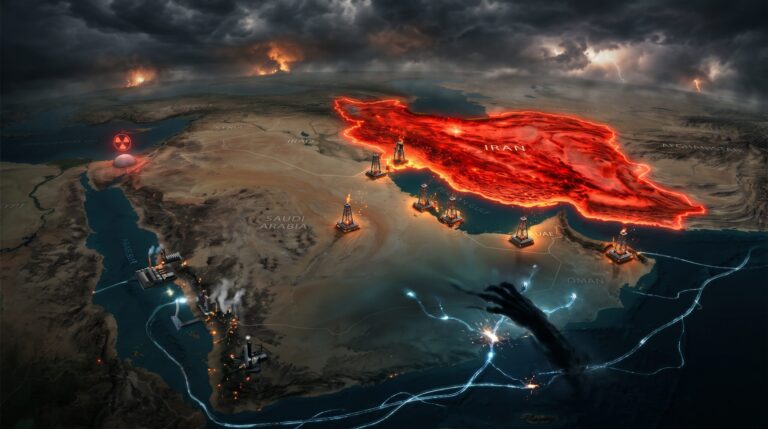
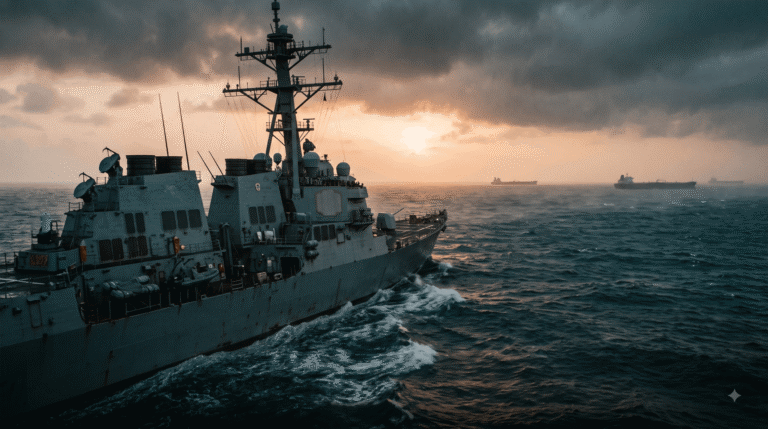
A US Iran strike plan used to be the kind of phrase that lived inside classified Pentagon binders until a crisis was already over. Then came a 24-hour news cycle that put all the moving parts out in the open at once. American forces struck surface-to-air missile batteries on Iran’s Qeshm Island in the Strait of Hormuz, U.S. Central Command readied a three-carrier strike option for as early as Wednesday, and Polish Prime Minister Donald Tusk mobilized counterterrorist and border forces along the Russian frontier at Kaliningrad after a midnight provocation. Any one of those dispatches would be enough to fill a week of diplomatic cables. Stacked together on a single Tuesday, they deserve a calm, careful look.
I want to do something a little different in this report, friend. I will give you the facts and the military ledger, but I will also tell you which claims I could confirm in the original wire reporting, which ones come with an asterisk, and where viral commentary has stitched three-week-old quotes onto today’s calendar. Some of the commentary bouncing around online treats a full-scale regional war—or even a nuclear exchange—as a foregone conclusion by Friday, and you deserve the version you can actually verify.
Here is the path we will walk: what really happened on Qeshm Island Monday night, what the three-carrier CENTCOM plan does and does not mean, why Tehran’s seven conditions for reopening the Strait of Hormuz are colliding with Qatari mediation, why a widely shared threat against Israel’s Dimona nuclear reactor needs a calendar check, what triggered Poland’s Kaliningrad border alert, and what Scripture tells us to do with all of it—which is neither panic nor a shrug. (If you are looking for civic information on Election Day itself, you can check government portals at USAGov Voting and Elections and the Federal Election Commission Election Results and Voting Information resource.) If you are new here, our guides to the biblical signs of the end times in 2026 and the 2026 Iran war and the Ezekiel 38 Hormuz blockade give you the big map. This report is today’s weather.
The US Iran Strike Plan, the Qeshm Island Attack, and Three Carriers in the Region
Late Monday night, explosions lit up Qeshm Island on the northern flank of the Strait of Hormuz. According to The Guardian and Fox News, U.S. Central Command carried out limited strikes targeting Iranian surface-to-air missile batteries that had fired at an American aircraft the day before. Inside Iran, early social media posts blamed Israel, before Tehran acknowledged the strike was American and Israel stated it had no role in the operation.
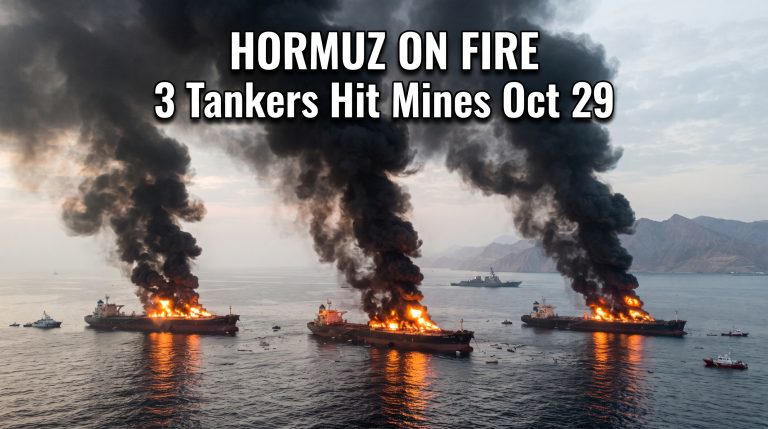
On the water below, the pressure has not let up. Earlier Monday, the United Kingdom Maritime Trade Operations (UKMTO) center reported that a commercial vessel transiting the Strait of Hormuz was struck by an “unknown projectile” that punctured its hull, though all crew members were safe, as documented by The Times of Israel. And just before the weekend, on Friday evening, the Qatari liquefied natural gas carrier Al Mayeda was hit by unidentified objects in the Persian Gulf on the very day Qatari mediators were holding peace talks in Tehran, according to vessel owner Nakilat via Iran International.
Now let’s separate what is confirmed from what comes with an asterisk regarding the larger US Iran strike plan:
- The Qeshm Island strike was narrow and defensive: U.S. officials told The Times of Israel that Monday’s action was not the start of a renewed air campaign, and The Guardian notes that similar limited exchanges have occurred at least three times since major combat paused, as both sides jostle for leverage over the waterway.
- CENTCOM’s Wednesday option is a contingency plan, not a signed order: Citing U.S. officials, The New York Times reported Tuesday—as carried by Middle East Eye and LIGA.net—that U.S. Central Command has prepared a plan to strike Iran beginning as early as Wednesday while three American aircraft carriers are positioned in the region and moonless nights offer favorable tactical conditions before one carrier rotates home later in November. Crucially, that same reporting notes there is no consensus inside the administration: some cabinet officials want to give the naval blockade and economic sanctions more time to work, while others doubt Tehran will bend without military force.
- Trump’s mixed public signals: Speaking on Tuesday, President Donald Trump said he is “not looking to kill lots of people” in Iran and called the Qeshm Island strike a “minor attack,” according to Anadolu Agency. At the same time, he told interviewers that “we have them totally where we want,” suggested there is “a very good chance we make a deal,” and yet added that the United States might still “have to go after Pickaxe Mountain”—a fortified underground complex near Natanz—claiming such a strike could be finished rapidly, per The Guardian.
- The Washington–Jerusalem debate and the nuclear rumor: While the Associated Press via PBS NewsHour and Axios reported that Israeli Prime Minister Benjamin Netanyahu has urged Trump to authorize another wave of strikes on Iran, Israel’s UN envoy Danny Danon publicly denied that Jerusalem is pressuring Washington—and flatly rejected commentator Tucker Carlson’s online claim that a nuclear strike against Iran is under consideration, calling the rumor “delusional” and stating that “no one is even discussing it in the US, nor in Israel,” according to Iran International.
Both tracks are visible at the same time: three carrier strike groups in theater and active back-channel messages in Doha. Let me say plainly what I think. Military plans sit on the shelf so a president has options, and a narrow window before a carrier rotates home is a real operational clock. Still, a contingency plan is not an execution order, and nobody outside the situation room knows whether the next 72 hours bring sorties or another round of Qatari shuttle diplomacy.
Mohsen Rezaei’s “Not Convincing” Verdict and Iran’s 7 Conditions for the Strait of Hormuz
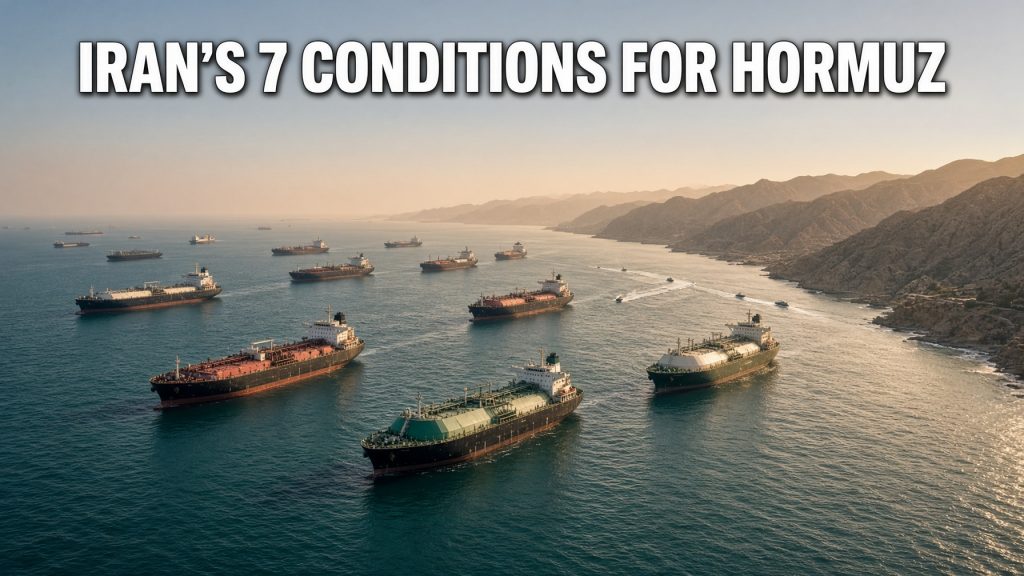
If Washington is signaling both strength and openness to a deal, Tehran is signaling that its price tag has not come down. Last week, Vice President JD Vance sent a letter to Mohsen Rezaei—the former Islamic Revolutionary Guard Corps (IRGC) commander who became secretary of Iran’s Supreme National Security Council in August 2026—proposing a restart to negotiations, and even offered to meet him in Doha or Istanbul, according to Iran International and The Guardian.
On Tuesday, Rezaei delivered his public answer on X: “America’s response to Iran’s rights and demands was not convincing, and they must fully and explicitly address Iran’s seven conditions and act upon them; only in this case will the Strait of Hormuz be reopened,” as reported by Türkiye Today and Argus Media. Iran’s deputy foreign minister, Kazem Gharibabadi, added after the Qeshm Island strike that “we are still in a state of war” and do not tie Iranian foreign policy to foreign political calendars.
To see why negotiators in Qatar and Oman are struggling to bridge the gap, look at Tehran’s seven demanded conditions side by side with where the diplomatic track actually stands:
| Iran’s 7 Conditions (SNSC Framework) | What Tehran Demands Upfront | Reported U.S. & Mediation Status (Nov. 2026) |
|---|---|---|
| 1. Regional Ceasefire on All Fronts | Complete halt to military operations across the Middle East, including Lebanon and Gaza | U.S. describes Qeshm Island strike as defensive; Israel says military remains ready to act if needed |
| 2. End of U.S. Naval Blockade | Immediate lifting of the American maritime blockade on Iranian ports and coastal waters | Some U.S. cabinet members favor maintaining the blockade to pressure Tehran’s economy |
| 3. Removal of Oil & Economic Sanctions | Full lifting of U.S. sanctions on Iran’s oil sector and banking system | Iran offers a revised plan to reopen Hormuz within 48 hours only after economic constraints are lifted |
| 4. Release of Frozen Foreign Assets | Unfreezing billions of dollars in Iranian funds held in foreign banks under U.S. restrictions | Discussed in Qatari-mediated drafts, but tied by Washington to nuclear commitments |
| 5. Withdrawal of U.S. Forces | Complete withdrawal of U.S. military forces and carrier groups from the Middle East | Three U.S. aircraft carriers currently deployed in the region with additional air-defense assets |
| 6. War Reparations & Reconstruction | Financial compensation for infrastructure damage sustained during the eight-month conflict | Rejected by Washington; Iran’s own gas production remains down roughly 130 million cubic meters per day |
| 7. Formal Security Guarantees | Binding U.S. pledge to halt further strikes and internal interference; nuclear talks only after Hormuz reopens | U.S. demands upfront, irreversible commitments on Iran’s 400 kg of highly enriched uranium and Pickaxe Mountain |
Sources: Türkiye Today · The Guardian · Iran International · Argus Media
Zoom out for a moment, because the economic pain behind that table is real on both sides of the Gulf—a reality we track closely in our coverage of the global oil crisis in the Strait of Hormuz and Red Sea. On Monday, global oil prices actually fell more than 7% on hopes that Qatari mediators had secured a draft understanding to reopen the waterway within two days, per The Times of Israel. And inside the region, the war has battered energy infrastructure on both shores: according to Kpler and official data compiled by Iran International, March missile strikes knocked out Trains 4 and 6 at Qatar’s Ras Laffan LNG complex—slashing Qatari third-quarter LNG exports to less than a quarter of pre-war levels—while strikes on four Iranian gas plants left roughly 130 million cubic meters per day of Iranian domestic gas capacity offline heading into winter, threatening shortages across 11 Iranian provinces.
So when viral commentary insists that “there will never be a deal,” hold that claim with an asterisk. Rezaei himself acknowledged in October that the blockade hurts Iranian families, even as he argued that “economic pain and strategic collapse are not the same thing.” Tehran is squeezing the Strait to force sanctions relief without giving up its 400 kilograms of highly enriched uranium upfront; Washington is massing carriers to force nuclear concessions before lifting the blockade. That is a high-stakes standoff, and a single miscalculation can turn a bargaining chip into a wider war—but the mediation channel in Doha has not closed yet.
Checking the Calendar on the Dimona Nuclear Threat and Tehran’s Revolution Square Billboards
Here is where a watchman has to slow down and check the dates, because two frightening details circulating in today’s commentary are being presented without their actual timeline.
First, you may read today that an Iranian lawmaker on parliament’s National Security and Foreign Policy Committee, Ahmad Bakhshayesh Ardestani, “said on Tuesday” that Tehran could target Israel’s Dimona nuclear facility—the Shimon Peres Negev Nuclear Research Center—if Iran is bombed again. Did Ardestani say, “If Iran is bombed, there is the possibility of a reciprocal response and targeting the Dimona facilities in Israel”? Yes, he did. But he said it on Tuesday, October 13, 2026—three weeks ago—as documented at the time by The Boston Report (citing Iran International and The Wall Street Journal). Because October 13 was also a Tuesday, several blogs and aggregators copied the sentence into November 3 dispatches as if it broke this morning.
Second, what about the warnings to sever undersea internet cables, strike Gulf desalination plants, and hit regional energy hubs, along with the new billboard in Tehran’s Enghelab (Revolution) Square? As The Boston Report notes, the threat to target undersea cables and regional data centers was voiced by Mohsen Rezaei on Iranian state broadcaster Press TV back in mid-October, and telecommunications analysts noted at the time that cutting cables in the shallow Gulf would primarily disrupt regional traffic rather than severing the global internet. Meanwhile, the actual billboards installed in Tehran’s Enghelab and Tajrish Squares on Tuesday, November 3—photographed by Associated Press photographer Vahid Salemi and reported by The Times of Israel—depicted U.S. and Israeli leaders in torn suits and behind bars alongside revenge slogans for slain Supreme Leader Ali Khamenei.
Does a three-week-old date make a threat against Dimona or Gulf water plants harmless? Of course not. Satellite imagery analyzed by the Institute for Science and International Security confirms that Iran has been piling earth berms and passive defenses around Natanz and Pickaxe Mountain while restocking missile lines, per The Boston Report. The risk of regional escalation is very real. We simply do not need to recycle October quotes as Tuesday breaking news to see how serious the standoff is.
Poland’s Kaliningrad Border Alert: “Individuals with Flashlights” vs. World War III Headlines
Now let’s shift north to NATO’s eastern flank, where another headline is being framed online as proof that a shooting war between NATO and Russia is hours away.
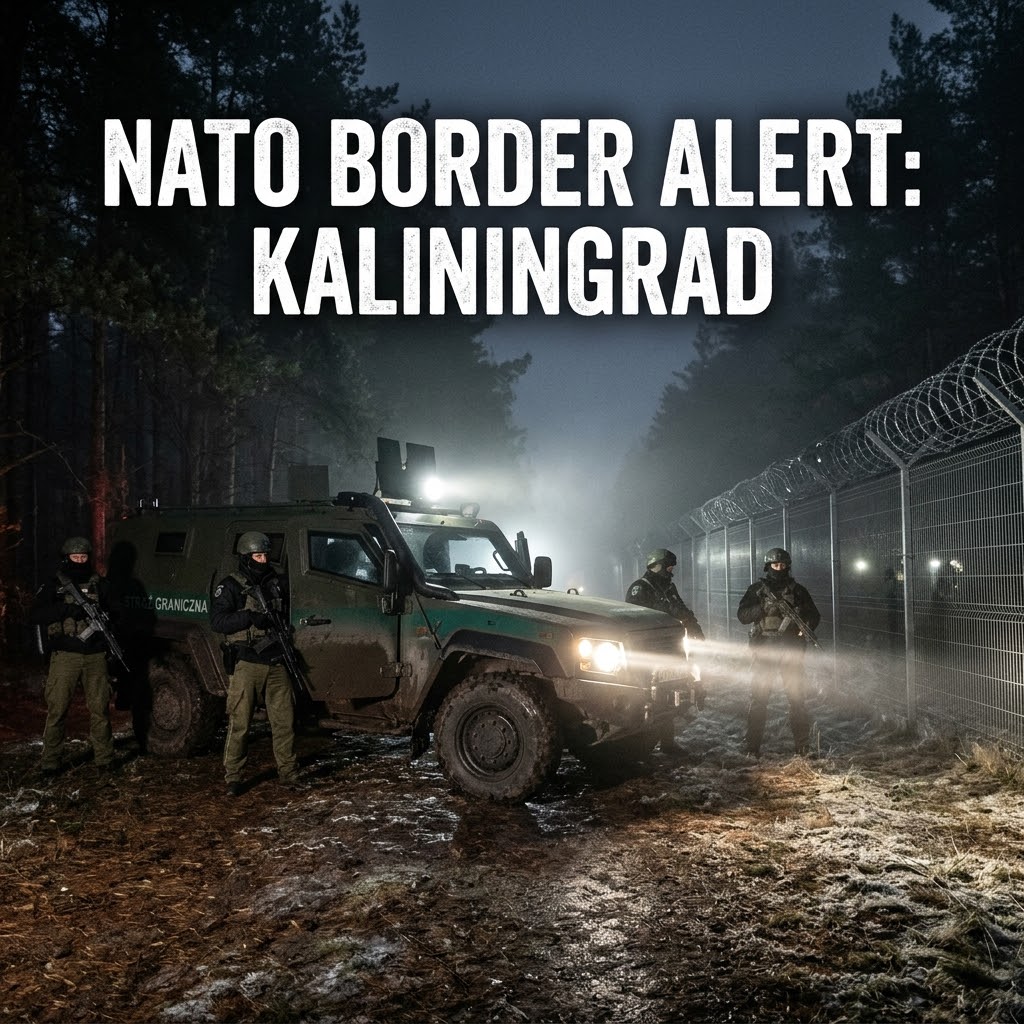
On Tuesday morning, Polish Prime Minister Donald Tusk told a cabinet meeting in Warsaw that Poland had deployed “significant police, border guard, and counterterrorist forces” to its northern border with Russia’s Kaliningrad exclave. According to CBS News and The Moscow Times, Tusk explained that Polish and allied NATO intelligence services had warned for several weeks that acts of sabotage, diversion, or provocation could occur along the Russian border during the first half of November.
What actually happened just after midnight on Tuesday? Read Tusk’s exact words from the cabinet meeting, as quoted by The Moscow Times:
“Just after midnight, I received a report from the Border Guard that troubling movement had been spotted along the Polish-Russian border — individuals with flashlights… Poland swiftly mobilized the necessary forces and assets to the area.”
Look at the contrast between the wire report and the viral commentary. Poland did not mobilize armored divisions against a Russian tank column crossing from Kaliningrad. Border guards spotted “individuals with flashlights” probing the frontier after allied intelligence flagged potential November sabotage plots, and Warsaw sent police, border guards, and counterterrorist units to lock down the sector. In fact, Reuters reported inside that same Moscow Times dispatch that the Pentagon has quietly urged several European NATO allies to temper overly alarming public rhetoric toward Moscow so that hybrid-warfare friction does not spiral due to miscalculation.
Hybrid sabotage, drone probes, and border provocations along NATO’s frontier are serious security challenges, and they fit the broader pattern we examine in our study on modern missile warfare and wars and rumors of wars. Still, calling a midnight border-guard deployment against men with flashlights “World War III playing out step by step” is the kind of overheated framing that exhausts readers instead of equipping them.
Luke 21’s Roaring Seas, Ezekiel 38’s Hooks, and the “Peace and Safety” Paradox

When we strip away the recycled dates and the breathless adjectives, what remains is still sobering enough to make any thoughtful student of Scripture sit up straight. Start with Paul’s plain warning to Timothy about the character and pressure of the closing season:
“This know also, that in the last days perilous times shall come.” (2 Timothy 3:1, KJV)
In the Olivet Discourse, Jesus described the global atmosphere when multiple pressures converge across the nations at once:
“And there shall be signs in the sun, and in the moon, and in the stars; and upon the earth distress of nations, with perplexity; the sea and the waves roaring; Men’s hearts failing them for fear, and for looking after those things which are coming on the earth: for the powers of heaven shall be shaken.” (Luke 21:25–26, KJV)
Notice the phrase “distress of nations, with perplexity.” The Greek word behind perplexity (aporia) means having no straightforward way out. When Gulf states watch LNG tankers take projectile damage in the Strait of Hormuz while mediators shuttle back and forth to prevent an attack on their own desalination and oil facilities, and when Washington weighs a three-carrier strike window against the risk of a wider energy shock alongside global weather events and biblical birth pangs, you are looking at textbook geopolitical perplexity. I am not saying Tuesday’s headlines fulfill Luke 21. I am saying the diplomatic gridlock in the Gulf looks a great deal like the mood Jesus told His followers to expect.
Then look at the paradox of high-level peace letters running side by side with carrier strike plans. Paul wrote to the church in Thessalonica:
“For when they shall say, Peace and safety; then sudden destruction cometh upon them, as travail upon a woman with child; and they shall not escape.” (1 Thessalonians 5:3, KJV)
I am not claiming that a Qatari draft memorandum or a letter to Tehran is the final prophetic cry of “peace and safety.” I am noting that a world where leaders talk optimistically about a two-day waterway deal on Monday morning and bomb surface-to-air missile batteries on Qeshm Island on Monday night is the exact kind of world Paul describes.
Next, Persia and Russia. In Ezekiel 38, the prophet describes a future northern coalition led by Gog of the land of Magog coming against a restored Israel, and God declares:
“And I will turn thee back, and put hooks into thy jaws, and I will bring thee forth, and all thine army, horses and horsemen, all of them clothed with all sorts of armour, even a great company with bucklers and shields, all of them handling swords: Persia, Ethiopia, and Libya with them; all of them with shield and helmet:” (Ezekiel 38:4–5, KJV)
Here is where I want to be careful, because careful is what a watchman owes you. A U.S. or Israeli strike on Iran’s nuclear sites at Pickaxe Mountain or Natanz would not be the battle of Ezekiel 38. Ezekiel 38 describes a massive coalition—including Persia—marching against the mountains of Israel, where God Himself intervenes to judge the invaders. What we are watching in 2026, as Iranian security chiefs consult with Moscow while American carriers patrol the Arabian Sea, is the alignment of the stage and the hardening of the actors. Persia’s posture is a hinge to keep watching with biblical discernment, not a fulfillment to declare prematurely.
And what about the choke point in the Strait of Hormuz, where a fifth of the world’s seaborne oil and a massive share of liquefied natural gas sit hostage to seven political conditions? Revelation 18:11–17 pictures the merchants and shipmasters of the earth weeping when a fragile global commercial order comes crashing down in a single hour. Today’s tanker strikes and war-risk insurance spikes are not Revelation 18, any more than a border incident in Kaliningrad is Armageddon. They simply remind us how quickly modern global trade can seize up when a 21-mile-wide maritime corridor closes.
Now the honest historical counterpoint. During the 1987–1988 “Tanker War” (Operation Earnest Will) and Operation Praying Mantis, the U.S. Navy fought direct surface engagements with Iranian forces in the Persian Gulf, tankers burned in the Strait of Hormuz, and Cold War flashpoints simmered across Europe—yet the world did not end in 1988. A skirmish on Qeshm Island and three carriers in theater are not a crystal ball for setting dates. What makes November 2026 distinct is the convergence: an eight-month war that has already shuttered much of Hormuz traffic, direct strikes between nuclear-threshold rivals, a 400-kilogram stockpile of highly enriched uranium, and simultaneous hybrid friction along NATO’s eastern border. That is not a countdown clock. It is a reason to stay spiritually awake while “the whole creation groaneth and travaileth in pain together until now” (Romans 8:22, KJV).
How Believers Can Stand Steady With Calm Hands and a Settled Heart
If reading about three aircraft carriers, Qeshm Island airstrikes, and Dimona reactor warnings leaves a knot in your stomach, take a deep breath, grab a sandwich, and remember who sits on the throne. This stuff does not trouble me at all, because I know who my King is.
Scripture never calls Christians to doom-scrolling or panic. It calls us to clear-headed stewardship and quiet trust:
“A prudent man foreseeth the evil, and hideth himself: but the simple pass on, and are punished.” (Proverbs 22:3, KJV)
When energy chokepoints and military timetables dominate the news, here is how you can practice calm, biblical stewardship this week without giving an inch to fear:
- Audit your information diet first: Before sharing a headline about nuclear threats or troop deployments, check whether the quote happened today or three weeks ago, and whether a military plan is an approved order or a staff option. Truth is a believer’s first line of defense.
- Keep a modest fuel and pantry buffer: Because Strait of Hormuz headlines can swing oil and fuel prices 7% in a single session, topping off your vehicle’s gas tank at the half-full mark and keeping a two-week pantry rotation of everyday staples at home is simple household wisdom.
- Maintain basic utility resilience: Keep a working flashlight, a battery or hand-crank radio, a charged power bank, and a small reserve of cash in small bills on hand for ordinary grid hiccups or winter weather.
- Pray specifically for peace and for those in harm’s way: Pray for American service members aboard those carriers, for families in Israel, Iran, Lebanon, and Poland, and for wisdom among leaders and mediators (1 Timothy 2:1–2).
- Keep extra on hand for a neighbor: We prepare so we can be the calmest, most generous house on the block when others are anxious.
That is watchman stewardship done the Bible’s way: calm hands, a settled heart. And look at the command Jesus gave right after describing the roaring waves and failing hearts:
“And when these things begin to come to pass, then look up, and lift up your heads; for your redemption draweth nigh.” (Luke 21:28, KJV)
While superpowers trade ultimatums over a narrow strait of water, the prophet Daniel reminds us that the God of heaven is setting up a kingdom “which shall never be destroyed: and the kingdom shall not be left to other people, but it shall break in pieces and consume all these kingdoms, and it shall stand for ever” (Daniel 2:44, KJV). In my own study of Scripture, I hold to the blessed hope of the pre-tribulation Rapture—that the Lord Himself will descend from heaven with a shout and catch away His bride (1 Thessalonians 4:16–17) before the final seven-year hour of trial breaks upon the earth, because “God hath not appointed us to wrath, but to obtain salvation by our Lord Jesus Christ” (1 Thessalonians 5:9; see also Revelation 3:10). I also recognize that other faithful, Bible-believing followers of Jesus read the timing differently. Don’t take my word for it. Open your Bible, search the Scriptures daily like the noble Bereans (Acts 17:11), and study to show yourself approved unto God (2 Timothy 2:15). You can explore how God’s prophetic Word has stood the test of history in our library of fulfilled biblical prophecy and discernment resources.
If today’s headlines have you asking whether the Bible can truly be trusted, take a few minutes to examine the evidence that the Bible is true and trace every messianic prophecy Jesus fulfilled. Diplomatic deals can collapse and carrier groups can sail home, but Jesus Christ offers an anchor for your soul that no war can shake. As John 3:16 promises:
“For God so loved the world, that he gave his only begotten Son, that whosoever believeth in him should not perish, but have everlasting life.” (John 3:16, KJV)
Don’t wait another day to settle where you stand with God. Learn how you can receive forgiveness of sins and eternal peace through the saving gospel of Jesus Christ today.
- #StraitOfHormuz
- #IranWar
- #BibleProphecy
Sources
- The Guardian — “US strikes Iran’s Qeshm Island as Vance voices optimism about a deal” (November 3, 2026) Read the source
- The Times of Israel — “US carries out ‘defensive’ strikes on Iran’s Qeshm island in Strait of Hormuz; UKMTO reports projectile hit on vessel” (November 3, 2026) Read the source
- Fox News — “US strike on Iran’s Qeshm Island in Strait of Hormuz in response to fire on US aircraft” (November 3, 2026) Read the source
- Anadolu Agency — “Trump says ‘not looking to kill lots of people’ in Iran following minor attack on Qeshm Island” (November 3, 2026) Read the source
- Middle East Eye / The New York Times — “US Central Command has plans to strike Iran as early as Wednesday when three aircraft carriers are in the region” (November 3, 2026) Read the source
- LIGA.net / The New York Times — “NYT: US prepared plan to strike Iran with three aircraft carriers deployed; no consensus yet inside administration” (November 3, 2026) Read the source
- PBS NewsHour / Associated Press — “U.S. launches new attacks on Iranian targets days after Netanyahu pressed Trump for more strikes” (November 3, 2026) Read the source
- Iran International — “Israel denies pressing Trump for Iran strikes amid diplomatic push; Qatari LNG carrier Al Mayeda struck; Mohsen Rezaei profile” (November 2–3, 2026) Read the source
- Türkiye Today — “Iran says US response ‘not convincing,’ links Hormuz reopening to seven conditions” (November 3, 2026) Read the source
- Argus Media — “Iran official Mohsen Rezaei downplays talk of peace deal, demands seven conditions for Strait of Hormuz” (November 3, 2026) Read the source
- The Boston Report / Wall Street Journal / Iran International — “Iran Fortifying Nuclear Sites at Natanz and Pickaxe Mountain as Lawmaker Ahmad Bakhshayesh Ardestani Raises Dimona Threat” (October 13 / Updated October 25, 2026) Read the source
- The Moscow Times — “Poland Accuses Russia of ‘Flashlight’ Provocation Along Kaliningrad Border as Tusk Mobilizes Forces” (November 3, 2026) Read the source
- CBS News — “Poland launches major border operation as activity in Russia’s Kaliningrad fuels sabotage and provocation fears” (November 3, 2026) Read the source