Iran US War Updates for August 12th 2026: Watching the Convergence in the Gulf
Tensions across the Middle East reached a dangerous new threshold today as fragile diplomatic channels struggled under the weight of escalating maritime exchanges in the Persian Gulf. From the quiet negotiation rooms of Muscat to the volatile shipping lanes of the Strait of Hormuz, August 12th, 2026, presents an alarming snapshot of a region balancing on a razor’s edge.
If reading today’s news gives you a sense of tightness in your chest, I want to ask you to do something simple first: take a breath. If the talk of naval blockades, missile readiness, and catastrophic military escalation gives you genuine anxiety, don’t force yourself to swallow it all at once—grab a sandwich, step away for a minute, and come back when you are ready. Fear is a terrible landlord, and we refuse to sign a lease with it.
I don’t track these iran us war updates to sell panic or churn out sensationalized headlines. That kind of baloney helps nobody. Instead, we are going to do what we always do on this workbench: lay out the verified facts, look at the baseline numbers, and sit with what they actually tell us. The question we are asking isn’t “When is the end coming?”—Jesus was explicit that no man knows the day or hour. The question is whether today’s developments are just another rough patch of human history, or part of the specific, converging pattern Jesus told us to watch. Let’s inspect the evidence together.
185,000 Conflicts and a Locked Strait: Today’s Military Reality
To understand why today’s developments in the Persian Gulf matter, we have to start with the raw, checkable evidence. We don’t build an argument on rumors or social media speculation; we build it on primary data from the institutions that measure these things for a living.
According to independent conflict monitors at ACLED, the global security landscape leading into this month has logged more than 185,000 political-violence events in a single twelve-month window. The International Committee of the Red Cross reports active armed conflicts worldwide now exceed 130—roughly double the count from fifteen years ago. Sit with that number for a moment. Double.
Against that broader backdrop, today brought three major tactical developments across the Middle Eastern theater:
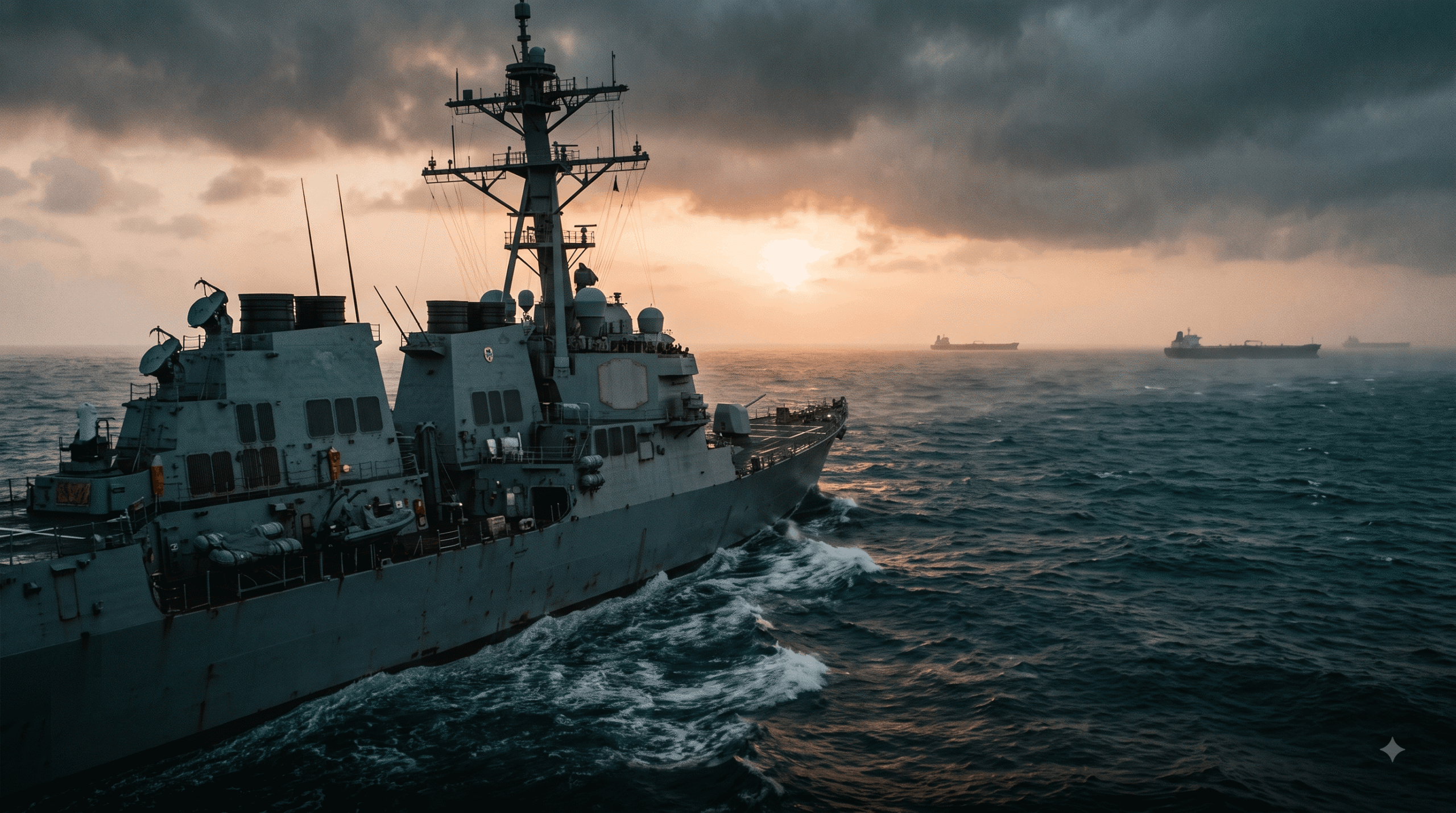
Warning Shots in the Strait of Hormuz: Early this morning, naval units operated by Central Command engaged a commercial tanker in the Strait of Hormuz. According to official advisories, the vessel failed to respond to radio warnings and altered course toward restricted littoral zones. Naval assets fired warning shots across the bow—a stark reminder of how fragile safety has become in a chokepoint that handles nearly 20% of the world’s petroleum liquids.
Bab el-Mandeb Drone Engagements: Simultaneously, Houthi forces launched a fresh wave of loitering munitions toward commercial transport vessels near the Bab el-Mandeb Strait. By striking shipping corridors near the Horn of Africa at the same time the Persian Gulf is interdicted, regional proxy movements have created a dual-chokepoint crisis for international commerce.
Stalled Muscat Negotiations: Backchannel diplomatic talks mediated by Omani officials in Muscat hit a severe impasse today. Iranian delegates continue to demand an immediate end to maritime interdictions and the release of frozen sovereign assets before discussing security guarantees. American negotiators, meanwhile, maintain that proxy hostilities must cease entirely before economic relief is placed on the table.
At the exact same time, energy analysts at the U.S. Energy Information Administration confirm that commercial maritime transit through Hormuz has dropped to historic lows. Shipping conglomerates are actively rerouting vessels around the Cape of Good Hope, adding thousands of miles and weeks of transit time to global trade routes. The Persian Gulf military tension is no longer a distant diplomatic dispute—it is a physical bottleneck affecting global energy flow in real time.
Breaking the Baseline: Why Today’s Gulf Friction Stands Out
A thoughtful reader has every right to ask a fair question at this point: isn’t the Middle East always in turmoil? Nations have fought over trade routes and territory for thousands of years. Is today’s 2026 middle east crisis really any different from the crises of 1973, 1980, or 1991?
That pushback deserves an honest answer. If we treat every military skirmish as an unprecedented wonder, we lose our credibility as watchmen. Friction in the Gulf, on its own, is not a miracle. It is what happens when powerful nations compete for narrow waterways and strategic leverage.
What makes our present moment fundamentally different from past historical baselines is not merely the presence of conflict, but two specific structural shifts:
First, there is the geographical scope of regional proxy escalation. In prior decades, a standoff in the Persian Gulf was largely contained to the immediate littoral states. Today, military planners are tracking simultaneous tactical links between Iranian naval posturing, Houthi missile launches in the Red Sea, militia logistics along the Iraqi border, and elevated air-defense readiness across Saudi Arabia. The entire region functions as a single, interconnected electrical grid—flip a switch in Tehran, and sparks fly in Beirut, Sana’a, and Baghdad simultaneously.
Second, consider the fragility of the global economic infrastructure receiving this shock. In previous generations, energy markets had substantial structural buffers. Today, as verified by financial tracking at the Atlantic Council, over 146 nations are actively developing Central Bank Digital Currencies and real-time financial tracking networks. Our global supply chains are hyper-optimized, digitalized, and operating with zero margin for error. When maritime transit locks down in Hormuz today, it triggers instantaneous algorithmic shocks across global exchanges, compounding fuel costs and feeding worldwide inflationary pressures within minutes.
When military conflict, regional proxy integration, and global economic fragility line up in the exact same hour, we are no longer looking at an isolated headline. We are watching a structural departure from the baseline. Which leads us, naturally, to ask what Scripture has to say about such an hour.
Wars, Rumors, and the Olivet Roadmap
When the disciples pulled Jesus aside on the Mount of Olives and asked Him what signs would precede His coming and the end of the world, He did not offer a complex political treatise. He gave them a simple, clear roadmap.
Look at what He listed right at the front of that discourse:
“And ye shall hear of wars and rumours of wars: see that ye be not troubled: for all these things must come to pass, but the end is not yet. For nation shall rise against nation, and kingdom against kingdom: and there shall be famines, and pestilences, and earthquakes, in divers places. All these are the beginning of sorrows.”
— Matthew 24:6-8
Notice the exact phrase He used: nation shall rise against nation, and kingdom against kingdom. The ancient Greek word behind “nation” there is ethnos—peoples against peoples, ethnic groups against ethnic groups. He was describing both international warfare between organized states and internal fracturing inside borders.
And notice, too, the word He used to describe the overall pattern: sorrows. In the original text, that word refers specifically to birth pangs.
Anyone who has ever been in a delivery room knows how labor works. Birth pangs do not arrive as a single, isolated event and then vanish. They come in distinct waves. They start manageable, but as the moment of birth draws near, two things happen simultaneously: they come closer together, and they hit with far greater intensity.
Now, let me be as clear as I know how to be, because this is where a lot of prophecy culture loses the plot. I am not telling you that today’s headlines out of the Persian Gulf are the final, definitive fulfillment of Matthew 24. I don’t set dates, and anyone who hands you a calendar with a specific day pinned on it is selling something. Jesus settled that line once and for all:
“But of that day and hour knoweth no man, no, not the angels of heaven, but my Father only.”
— Matthew 24:36
Our posture is not calculation—it is observation. Samuel’s read of these events, held with appropriate theological humility, is that today’s strait of hormuz conflict represents one more severe contraction in the birth-pang pattern. Faithful scholars can disagree on the precise timing of regional battles, and those alternative views deserve a fair hearing. Some read these military movements purely through the lens of historical geopolitical cycles; others view them as immediate precursors to Ezekiel 38. We don’t need to force a premature conclusion. What we do need to do is keep our eyes open and recognize the season we are standing in.
This Is Not Isolated: When Unrelated Needles Move Together
Here is where the camera pulls back, and where the evidence on our workbench gets really interesting.
If today’s news were only about military ships in the Persian Gulf, a skeptic could fairly look at it, shrug, and move on. But a watchman’s job is to look at the whole room, not just one window. The central argument we make on this site is not about any single headline—it is about convergence.
Look at what else is putting maximum readings on the gauges in this exact same window of history:
Notice what those four institutions have in common: absolutely nothing. The U.S. Navy doesn’t consult with NOAA. The World Food Programme isn’t coordinating its spreadsheets with central bank engineers in Europe. These are completely independent secular entities, measuring unrelated global systems, each reporting historic intensity in the exact same hour.
That is what we mean by a convergence of end times signs. Unrelated needles moving into the red at the exact same time is not chaos. It is pattern. And pattern implies an Author.
This stuff doesn’t trouble my sleep for a second, and I’ll tell you why: a world building systems it doesn’t understand is still a world held firmly by the One who described those systems two thousand years ago.
Holding Our Peace on the Wall
So, what do we actually do with this information? How does a thoughtful, Bible-believing Christian carry today’s iran us war updates into tomorrow morning?
First, we check our posture. If watching end times geopolitics makes you angry, combative, or terrified, then you are holding it wrong. The signs Jesus gave were never meant to drive the church into a bunker or turn us into paranoid doom-sayers. They were given so that when we saw these things begin to come to pass, we would stand up, lift up our heads, and know that our redemption is drawing near (Luke 21:28).
Second, we cultivate a steady, active watchfulness. To be a watchman on the wall doesn’t mean you stop living your life, loving your family, or doing good work in your neighborhood. It simply means you keep your eyes open. You maintain a quiet, unbothered heart because you know how the book ends.
Finally, we let the weight of what we are watching sharpen our sense of purpose. Fulfilled prophecy isn’t a party trick to win arguments on the internet—it is the living proof that the God who wrote the past can be trusted with every single detail of what lies ahead.
The One Thing to Carry
If you remember nothing else from today’s update, carry this: the escalating military friction in the Middle East is not happening in a vacuum—it is part of a broader, documented convergence that Jesus specifically told His followers to recognize.
The same book that nailed the rebirth of Israel in 1948, the alignment of ancient empires, and the exact character of our age is the book that holds the promise of Christ’s return for His own. That is not a reason for dread. It is the brightest hope on the horizon.
To see how today’s Middle Eastern headlines fit into the foundational timeline of Scripture, explore our dedicated tracker on Israel in Bible Prophecy: The Clock on the Wall. If you want to understand the technological infrastructure taking shape alongside these conflicts, read our breakdown of The Beast System Framework. And if you want to explore the full global picture, visit our main hub for Prophecy News & Geopolitics.
If watching these converging signs has stirred a deeper question in your heart about where you stand with God, don’t leave that question unsettled. Start here today with The Message of Hope and Salvation.
Earthquakes in Divers Places: Venezuela Catastrophe and Triple Convergence In a heartbreaking and profoundly sobering twenty-four-hour sequence across South America, the…