It’s a Stalemate, Not a Checkmate: Inside the Israel-Iran War’s Dangerous Holding Pattern
When someone tells you a chess game is “effectively over” while both players still have their queens on the board and their fingers hovering over the clock, you don’t pack up the pieces. You lean in and watch the next move. That’s where we find ourselves in the Israel Iran war stalemate as it enters its eighth month. In the span of a single news cycle, President Donald Trump declared the conflict “effectively over” militarily, Iranian officials repeated seven hardline conditions that Washington flatly rejected, and commercial tankers kept taking hits in the Strait of Hormuz, pushing Brent crude back above $92 a barrel. Any one of those headlines on its own might be easy to shrug off. Stacked together, they deserve a calm, careful look.
I want to do something a little different in this report, friend. I’ll give you the numbers, but I’ll also tell you which ones I could confirm in the original reporting, which ones come with an asterisk, and where the headlines have run ahead of the facts. Some of the talking points bouncing around social media sound like the war is wrapped up and peace is right around the corner, and you deserve the version you can trust.
Here’s the path we’ll walk: we’ll unpack what Washington actually means by “militarily over,” look at why Tehran refuses to budge on its seven demands, check the real-world damage in the Strait of Hormuz, and look at what Scripture says to do with all of it, which is neither panic nor a shrug. If you’re new here, our guides to the biblical signs of the end times in 2026 and the 2026 Iran war and the Ezekiel 38 Hormuz blockade give you the big map. This report is today’s weather.
What “Militarily Over” Actually Means in Washington
If you’ve been scratching your head wondering how a war can be “over” when there’s no signed peace treaty, you’re not alone. When President Trump says the war is “effectively over,” he isn’t talking about a handshake in Geneva or a formal ceasefire. He’s describing a military pause.
Washington has shifted from active airstrikes to a strategy of indefinite economic strangulation. U.S. Secretary of State Marco Rubio recently explained to Reuters that the administration doesn’t see its choices as strictly “returning to war” or “signing a peace deal.” Instead, the White House is taking a third path: holding off on major new combat operations while keeping a strict naval counter-blockade and heavy financial sanctions locked in place. As Rubio put it, the U.S. believes prolonged economic pressure will eventually force Tehran to bend because, in his words, “eventually you have to eat.”
There’s also a political reality here. Following major Democratic wins in the recent U.S. midterm elections, which Trump acknowledged were partly driven by voter fatigue over the conflict, the White House has a strong domestic incentive to avoid restarting expensive, unpopular military strikes.

Iran’s Seven Conditions and the Diplomatic Brick Wall And The Israel Iran War Stalemate
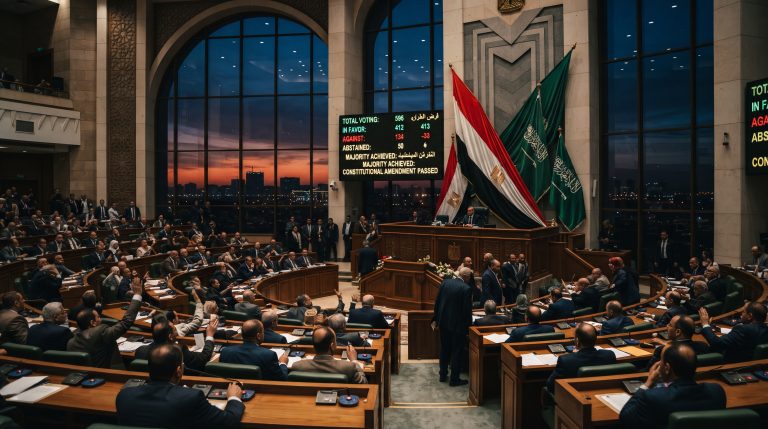
On the other side of the table, Tehran isn’t playing along with the idea that the war is winding down. Iranian Foreign Minister Abbas Araghchi and Supreme National Security Council Secretary Mohsen Rezaei have both reiterated that Iran will only agree to a peace deal and reopen the blockaded Strait of Hormuz if the U.S. accepts seven longstanding conditions. Those demands include ending fighting on all fronts (including Israel’s conflict with Hezbollah in Lebanon), lifting oil sanctions, unfreezing Iranian assets, and ending the U.S. counter-blockade on Iranian ports.
Washington’s answer? Not a chance. Rubio flatly dismissed Iran’s terms as “unacceptable,” framing them as a demand for “reparations” and “pallets of cash” that won’t happen. Meanwhile, Associated Press reporting notes that Qatari and Pakistani mediators are still trying to keep a diplomatic channel open, even as Iranian officials dismiss reports of active talks as “imaginary.”
| Strategic Area | Washington’s Position | Tehran’s Position |
|---|---|---|
| Status of the War | “Effectively over” militarily; shifted to economic pressure. | Ongoing until all seven conditions are met. |
| Strait of Hormuz | Maintains counter-blockade on Iranian ports. | Keeps strait blockaded; 37+ ship attacks recorded in October. |
| Military Posture | “No need” for major new strikes right now. | Lifted 2,000 km missile range limit; threatens U.S. bases. |
Table comparing current U.S. and Iranian positions based on public statements reported by Reuters and the Associated Press.
The Strait of Hormuz: Confirmed Numbers vs. Market Hype
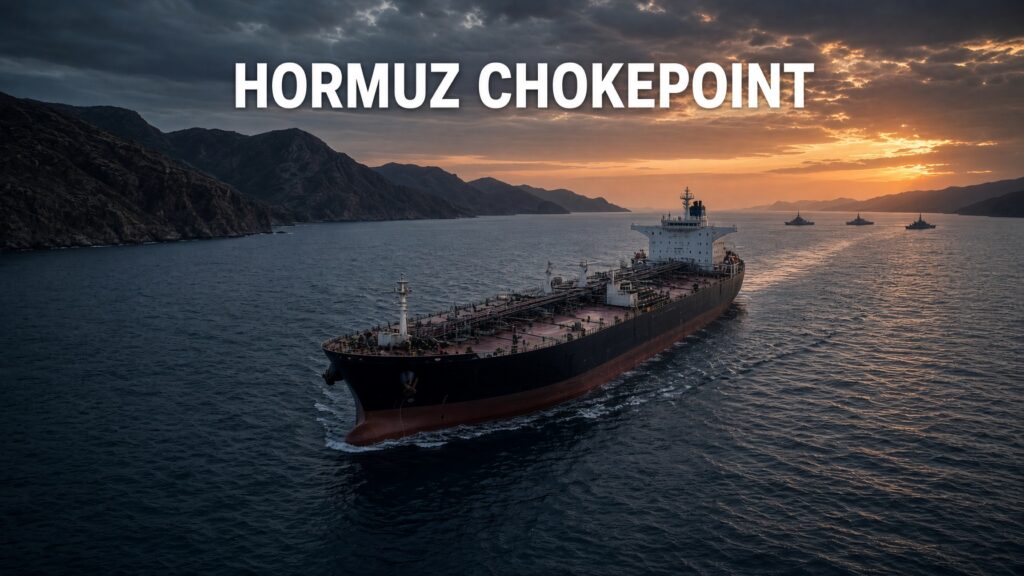
Let’s separate what’s confirmed from what’s hype in the energy markets, because the Strait of Hormuz is where this stalemate hits everyday families at the gas pump. You might see claims online that oil is about to hit $150 overnight. Here’s what the actual data shows:
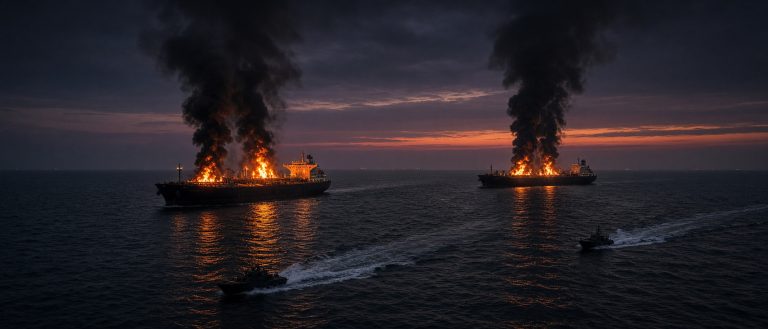
- Confirmed Shipping Attacks: Maritime monitors recorded at least 37 attacks on commercial vessels in and near the strait in October, the highest monthly total since the war began. As of November 10, the International Maritime Organization (IMO) has logged 133 confirmed incidents since the conflict started, resulting in 25 seafarer deaths, with thousands of crew members still stranded inside the Persian Gulf.
- November Volatility: Fresh November incidents, including two tankers catching fire after hitting naval mines and another vessel struck by an unidentified projectile off Oman (tracked by UKMTO), pushed Brent crude back above $92 per barrel and U.S. West Texas Intermediate (WTI) to roughly $86.20 to $86.57 per barrel.
- The Asterisk on Oil Prices: Even with those attacks, crude remains well below its late-October peaks, when Brent topped $110 and WTI exceeded $100. Traders are treating the Hormuz attacks as a short-term risk premium rather than a runaway rally, largely because global demand fears, rising U.S. crude inventories, and alternative Middle Eastern export flows are weighing the market down.
Still, don’t let the calmer crude numbers fool you into thinking supply chains are fine. Exporters like Saudi Arabia and the UAE are rerouting oil through westward pipelines, offshore ship-to-ship transfers in the Gulf of Oman, and long voyages around Africa’s Cape of Good Hope. Even if a truce were signed tomorrow, normalizing traffic through Hormuz would take months of mine-clearing and sky-high war-risk insurance adjustments. You can read more about how these chokepoints work in our global oil crisis 2026 guide.
Regional Flashpoints: Why the IDF Isn’t Standing Down
While Washington talks about a pause, the Israel Defense Forces (IDF) aren’t acting like the war is over. They’re actively preparing for two primary scenarios: either a large-scale U.S. offensive to force an end to the conflict, or a surprise Iranian retaliatory attack against U.S. and Israeli bases across the Middle East. Armies rehearse worst cases. That’s their job, and a drill isn’t a prediction.
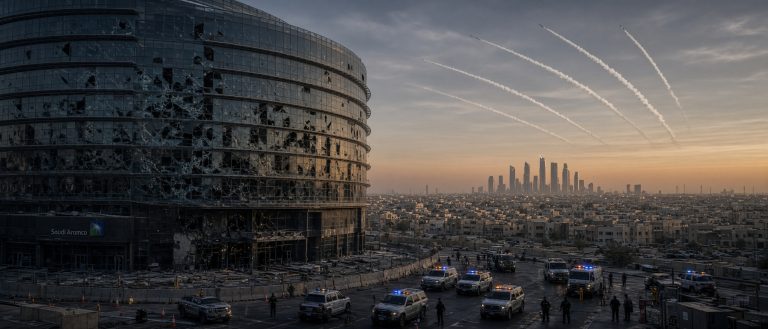
At the same time, Iran has formally abandoned its self-imposed 2,000-kilometer ballistic missile range limit, signaling an effort to develop longer-range capabilities. Proxy fighting hasn’t stopped either, with Israeli operations continuing against Hezbollah in Lebanon and Gaza, and clashes escalating between Saudi-led forces and Iran-backed Houthi rebels in Yemen. Meanwhile, the Gulf Cooperation Council (GCC) just approved a new military command headquarters in Kuwait, and U.S. and U.K. authorities have charged three Iran-linked operatives accused of plotting attacks against a Royal Air Force base in England.
Let me say plainly what I think. A stalemate like this can be pressure for a deal just as easily as the prelude to a wider strike. Both things can be true at once, and nobody outside the room knows which way it’ll go.
What Scripture Says: Hinges, Not Fulfillments
Hold that thought. Let’s bring this back to Scripture, because a watchman’s job isn’t to hype headlines. It’s to read the times with steady eyes.
First, look at Luke 21:25-26 (KJV): “And there shall be signs in the sun, and in the moon, and in the stars; and upon the earth distress of nations, with perplexity; the sea and the waves roaring; Men’s hearts failing them for fear, and for looking after those things which are coming on the earth: for the powers of heaven shall be shaken.”
Read verse 26 slowly: “looking after those things which are coming on the earth.” I’m not saying any government or blockade is fulfilling that verse today. I’m saying the mood on the earth, a world watching shipping lanes, missile ranges, and stalled talks with a knot in its stomach, is starting to match the mood in the text.
Next, Persia. In Ezekiel 38:4-5 (KJV), God lists Persia among the nations that will one day march against Israel. Here’s where I want to be careful, because careful is what a watchman owes you. A standoff or even a strike involving Iran wouldn’t be the Ezekiel 38 invasion. That prophecy describes a specific coalition coming against Israel, not Iran being squeezed by sanctions. Persia’s place on that list is a hinge to keep watching, not a fulfillment to declare.
And what about the talk of peace deals and “effectively over” wars? In 1 Thessalonians 5:3 (KJV), Paul writes: “For when they shall say, Peace and safety; then sudden destruction cometh upon them, as travail upon a woman with child; and they shall not escape.” I’m not claiming the Qatari mediation efforts are Paul’s “peace and safety.” I’m noting that a world that talks peace while moving warships and lifting missile limits is the kind of world he describes. We watch the direction of travel, loosely and with open hands, as we explain in our guide to biblical discernment.
Now, an honest counterpoint. The world has seen tense standoffs before. During the Cold War, families built fallout shelters and watched naval blockades unfold in real time without the end of the age arriving that Tuesday. History reminds us not to treat every crisis as a countdown. What makes today worth watching isn’t one single headline, it’s how many pressures are lit at once across energy, diplomacy, and regional flashpoints. That isn’t a prediction. It’s a reason to stay awake, because “the whole creation groaneth and travaileth in pain together until now” (Romans 8:22, KJV).
Calm Hands, a Settled Heart
If reading about stalled peace talks and tanker attacks leaves a knot in your stomach, take a deep breath, grab a sandwich, and remember who sits on the throne. This stuff doesn’t trouble me at all, because I know who my King is.
Proverbs 22:3 (KJV) gives us the baseline for practical wisdom: “A prudent man foreseeth the evil, and hideth himself: but the simple pass on, and are punished.” Prudence isn’t prophecy, and preparing isn’t panic. If you want a calm, neighbor-loving checklist for your household this week:
- Keep your fuel and pantry topped off: Not out of fear, just sensible stewardship in case shipping bottlenecks bump local prices.
- Check in on your neighbors: Extra to share is stewardship, not hoarding.
- Filter your news intake: Stick to primary reporting and step away from sensationalist social media clips.
Above all, remember what Jesus told us in Luke 21:28 (KJV): “And when these things begin to come to pass, then look up, and lift up your heads; for your redemption draweth nigh.” Daniel 2:44 (KJV) reminds us that God’s kingdom will stand forever, long after every earthly stalemate is forgotten. As Bereans (Acts 17:11, KJV) who rightly divide the word of truth (2 Timothy 2:15, KJV), we hold to the blessed hope of 1 Thessalonians 4:16-17 (KJV), knowing God has not appointed us to wrath (1 Thessalonians 5:9, KJV) and has promised to keep His own from the hour of temptation (Revelation 3:10, KJV).
If you’re still sorting out what you believe about all of this, you don’t have to take my word for it. You can look at the evidence the Bible is true and read through every messianic prophecy Jesus fulfilled. And if you’ve never placed your trust in Jesus Christ, John 3:16 (KJV) is still the clearest invitation ever written: “For God so loved the world, that he gave his only begotten Son, that whosoever believeth in him should not perish, but have everlasting life.” You can read more about taking that step on our salvation page.
Sources
- Reuters Middle East Coverage: Reporting on U.S. Secretary of State Marco Rubio’s statements, sanctions strategy, and global oil market reactions.
- Associated Press Middle East Hub: Reporting on Iranian Foreign Minister Abbas Araghchi, the seven conditions, and Qatari/Pakistani mediation efforts.
- International Maritime Organization (IMO): Confirmed incident counts (133 incidents, 25 seafarer deaths) and stranded crew data in the Persian Gulf.
- United Kingdom Maritime Trade Operations (UKMTO): Maritime incident advisories for the Strait of Hormuz and Gulf of Oman.
#IsraelIranWar #StraitOfHormuz #BibleProphecy