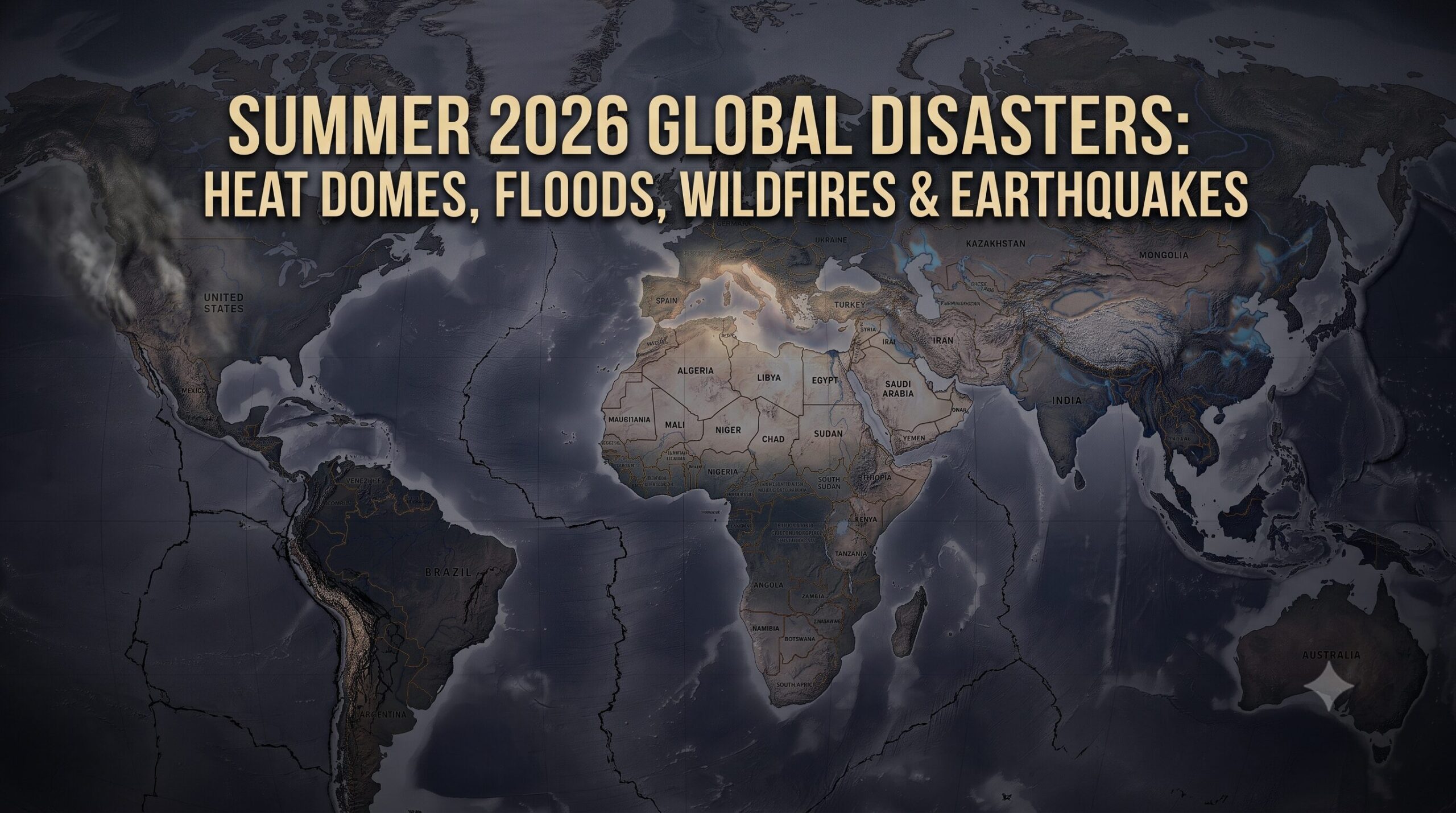
Is the Whole Earth Groaning? Inside the Heat, Floods, Fires, and Earthquakes That Hit Five Continents in Summer 2026
On July 4th, My wife and I took a get-away to Eastport, Maine. We stepped into 96-degree heat with a heat index near 100°F — in a place where the Atlantic Ocean’s cold influence normally keeps summer temperatures moderate, even pleasant. Eastport doesn’t get hot. It just doesn’t. But there it was: a temperature reading that shouldn’t exist in that geography, in that season, on that calendar day. I have lived in Maine my whole life and never have I seen heat like this right on the coast, especially in Eastport, Maine. Is 2026 global weather events birth pangs increasing or just a strange year?
That single anomaly — a coastal Maine town hitting near-triple digits — would have been a headline in any other year. But this year, it was a footnote. Because while Maine was breaking records, Europe was burning, the American West was in flames, China was flooding, and the earth itself was shaking in three different oceans.
This isn’t a story about one disaster. It’s a story about nine of them, happening at the same time, across five continents, in a way that stretches the meaning of the word “coincidence.”
What’s Actually Happening
Let me walk you through the data. Numbers matter here. They’re the only thing that can capture the scale of what we’re seeing.
The Heat Domes: Three in July, a Fourth in August a 2026 global weather events birth pangs?
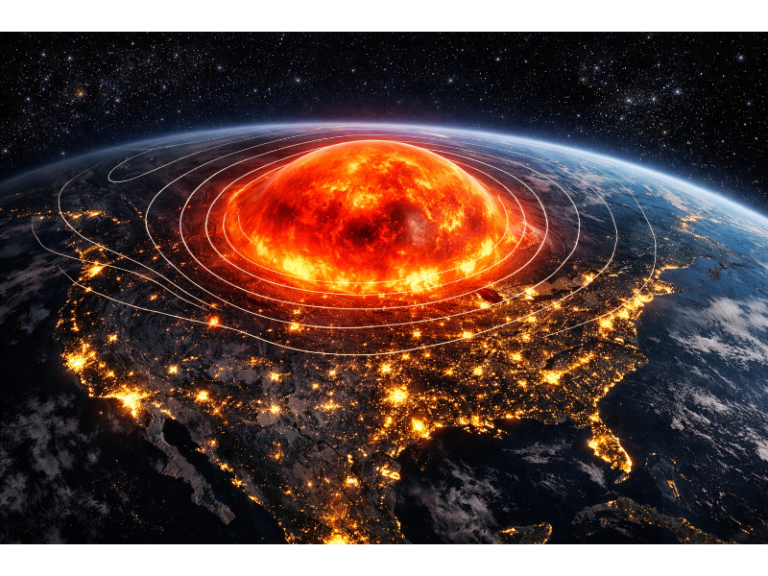
The summer of 2026 didn’t deliver one heat wave — it delivered at least three major heat domes in July alone, each striking a different part of the country in succession, followed by a fourth emerging in early August.
The first heat dome anchored over the East Coast during the Fourth of July weekend, July 2–4. According to Weather on This Day’s NOAA records, Atlantic City, New Jersey, hit 105.9°F on July 4 — the hottest day in its 56-year temperature record. Newark reached 105°F, Washington D.C. and Philadelphia both cleared 102°F, and New York City’s Central Park touched 100°F for the first time since 2012. That’s one region, one weekend, multiple records shattered.
But in typically cool northeastern coastal areas, the anomaly was even sharper. According to Central Maine reporting, the Downeast Maine region near Eastport hit 96°F on July 4, with heat index values climbing near 100°F across eastern Maine. Fryeburg broke a 2014 record, Augusta tied one from 1963, Bangor tied one from 1941, and Caribou tied one from 2014. Communities that have been recording temperatures for decades were tying or breaking records set 50, 80, even 100 years ago — in a single day.
A week later, the second heat dome parked over the northern Plains. According to Weather on This Day’s heat recap, eastern Montana hit 116°F, breaking a wall of records from 2002. Then, after a brief mid-month lull, the third and most severe heat dome settled over the Southwest and Rockies for the final full week of July (July 22–28), delivering the month’s most destructive blow: over 1,024 daily temperature records fell in just those seven days alone. According to the Arizona Republic, Phoenix’s airport recorded 116.9°F on July 24 — its hottest day on record — with an overnight low of only 97°F that same night, tying the warmest low ever recorded since observations began in 1895.
Across the entire month of July, nearly 3,000 daily temperature records fell nationally — 2,608 heat records and 350 cold records — with Wyoming alone breaking 297 daily heat records. According to IBTimes, July 2026 has likely become the warmest month on record in the contiguous United States, a record not broken since the 1930s Dust Bowl era.

And as August began, the heat didn’t relent — a fourth heat dome was building over the western United States. According to CNN, by August 1–2, an unusually intense heat dome was bringing dangerous temperatures to the West, where approximately 45 million people were placed under heat alerts. Most were in California, Nevada, and Arizona, though heat alerts stretched north to the Canadian border. Forecasters warned that dozens of record highs were likely to be set from California to Montana over the weekend of August 1–3.
The Wildfires: A Continent on Fire
The heat didn’t just break records. It set fires. Again is this 2026 global weather events birth pangs on steriods?
In Spokane, Washington, the Spokane Complex Fire — three separate blazes named Old Trails, Fairview, and Autumn Lane — tore through northwest Spokane over the first weekend of August, jumping the Spokane River and pushing into neighborhoods inside city limits. According to the Seattle Times and AP News, as of August 2, the fires had burned 7,708 acres combined and were listed at 0% contained, driven by north-northwest winds gusting to 35 mph. Between 600 and 700 structures were destroyed — homes, outbuildings, and businesses — and roughly 60,000 people were evacuated from the region. Spokane Mayor Lisa Brown called it “really the worst natural disaster our region has faced,” and Senator Maria Cantwell described it as “the top fire in the nation.”
But Spokane is not an isolated event — it’s one fire inside a national system that is already stretched to its ceiling. According to the National Interagency Fire Center, as of August 2, the U.S. was at National Preparedness Level 5 — the highest tier that exists, meaning nearly all national firefighting resources are already committed. So far this year, 45,835 fires have burned more than 5.2 million acres, exceeding the 10-year average for both fire count and acreage. On a single day in early August, 257 new fires were reported and firefighters were actively working 99 large fires, backed by nearly 28,000 personnel, 576 crews, and 212 helicopters.
While the American West burned, Canada was burning even harder. More than 800 wildfires were actively burning across the country by mid-July, with large clusters near the Ontario–Minnesota border. According to AP News and NBC News, the smoke didn’t stay in Canada — it settled over the U.S. Midwest and Northeast, from Milwaukee and Detroit to Washington, D.C., and New York City. More than 100 million Americans were placed under air quality alerts, with AQI readings topping 300 in parts of Michigan, Ohio, and Wisconsin — levels high enough that health officials told people to stay indoors entirely. According to the EPA, cities like Chicago and Pittsburgh briefly had some of the worst air quality of any major city in the world.
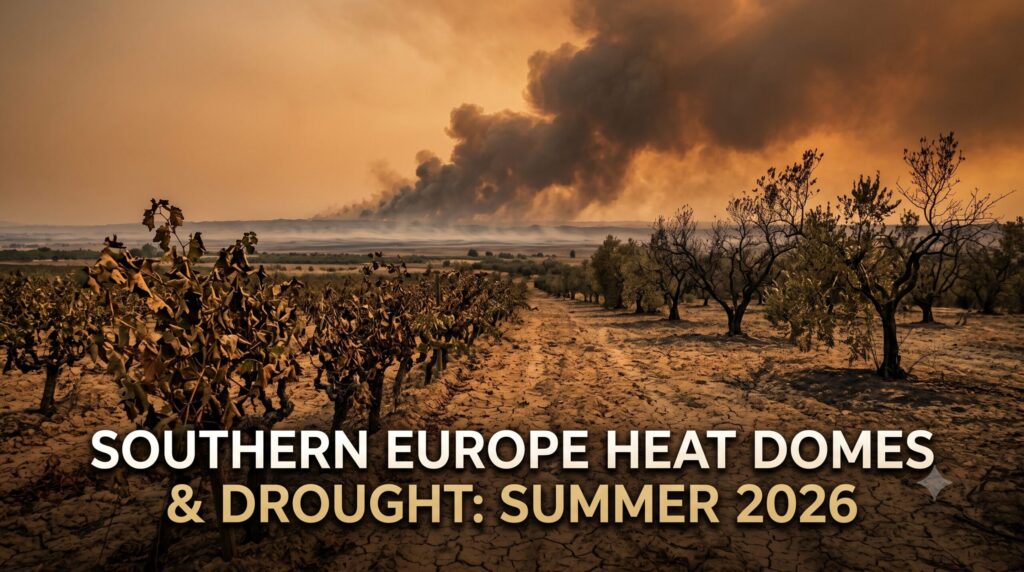
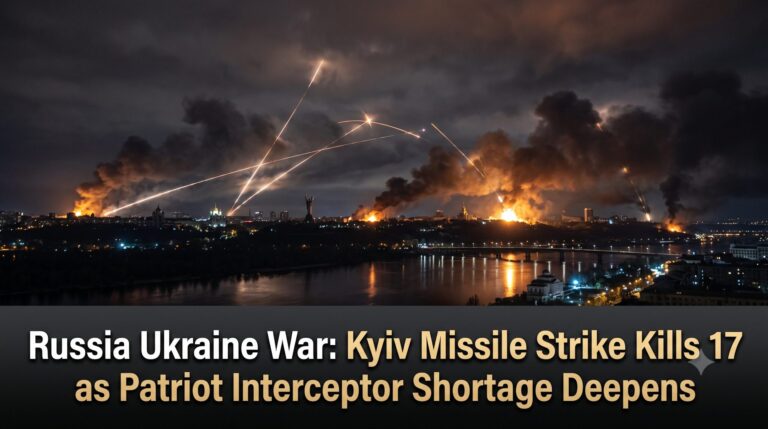
Across the Atlantic, Europe was experiencing its worst wildfire season on record. France has now burned through more than 160,000 hectares (about 617 square miles) of land — its largest wildfire year on record, with months of the fire season still ahead. Spain logged over 450 square miles burned in just the last two weeks of July alone. According to CNN and Mappr, Greece paid the heaviest human cost: three firefighters were killed battling blazes on Crete in late July, and on August 2, two firefighting helicopter crew members — one Greek, one Danish — died when their aircraft collided while responding to a fire near Athens. That fire, near Porto Germeno, had burned over 11,100 hectares and destroyed more than 100 homes by early August, with over 1,000 people evacuated, some by boat.
The Floods: Water Without Warning
While one part of the world burned, another part drowned. Multiple events converging in 2026 global weather events birth pangs
In Gansu Province, China, flash floods and torrential rain that began July 26 in Weiyuan County damaged infrastructure and inundated mountain communities. According to IQAir, a Level IV emergency response remained active as of August 2, with 305 rescue personnel and 68 vehicles deployed. 207 people were trapped and 174 had been rescued. More than 64,600 people were evacuated in neighboring Sichuan province as the rains spread. Adding to the strain, Super Typhoon Dolphin is forecast to bring further heavy rainfall to China’s southeastern coast — meaning the country is bracing for a second blow before the first has fully passed.
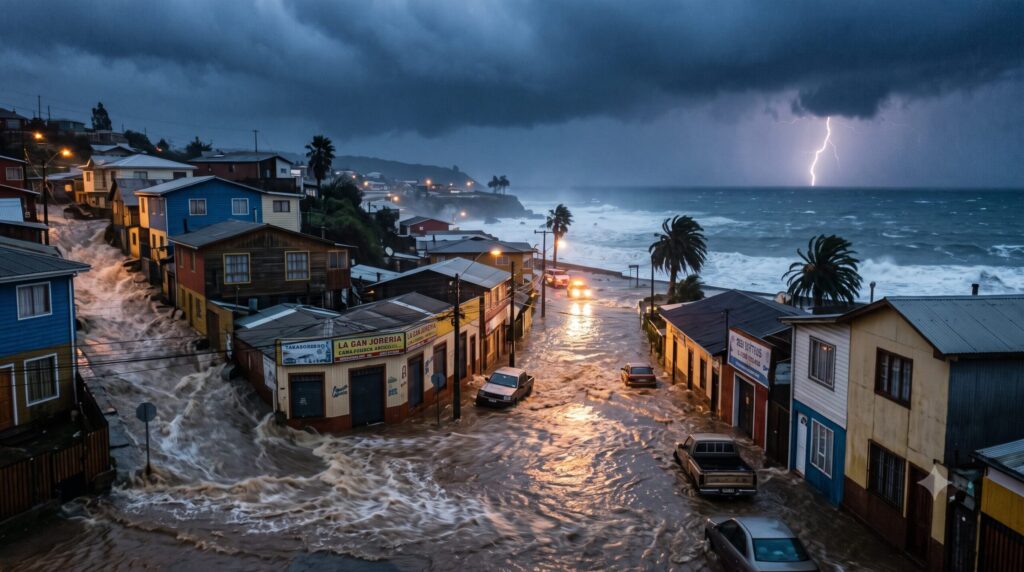
Between July 6 and 9, a category 3–4 atmospheric river struck central and southern Chile, dropping up to 200mm of rain and triggering landslides, flooding, and major transport disruptions. According to Discovery Alert, the storm’s reach extended into the global economy: Chile produces roughly a quarter of the world’s mined copper, and the flooding forced emergency ministerial meetings and the temporary suspension of operations at some of the country’s most productive mines — proof that these disasters carry weight well beyond the region where the rain actually falls.
The Earthquakes: The Ground Itself Moved
And then the earth shook.
On June 24, a M7.2 earthquake struck northern Venezuela, followed just 39 seconds later by a M7.5 mainshock — a rare “seismic doublet” that devastated Caracas and the coastal state of La Guaira. According to Euronews, one month later, Venezuela’s government reported an official toll of 5,546 dead, 16,740 injured, and $19.6 billion in damage, with 190 buildings fully collapsed. More than 23,800 people remained in temporary camps a month later, and officials had stopped updating the number still missing.
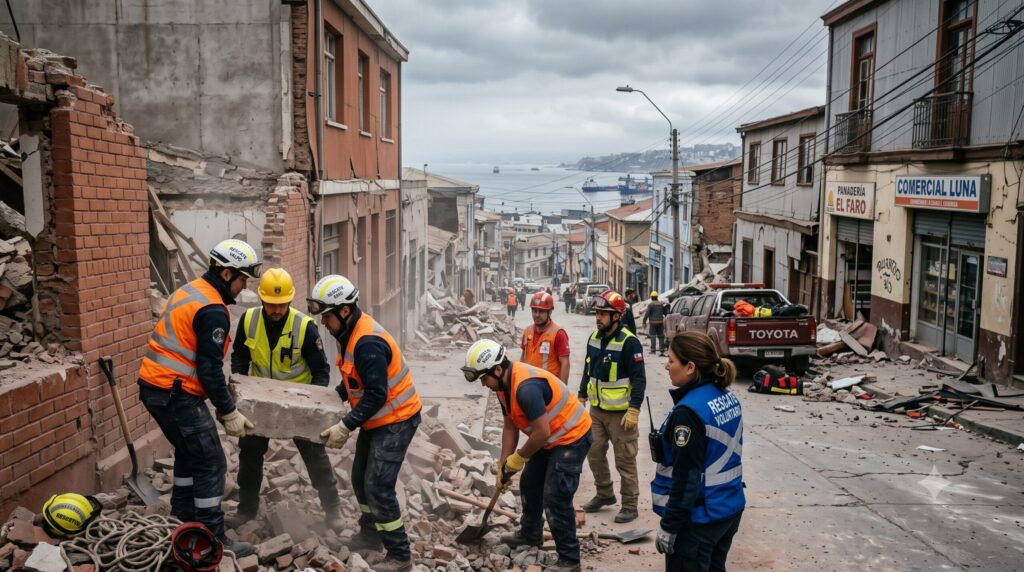
On July 17, an earthquake measured at M7.3–7.4 struck off the coast of Chiapas, Mexico, near the Guatemala border, triggering a brief tsunami alert across the Pacific. According to Mexico’s National Seismological Service and Euronews, the quake was felt as far away as Villahermosa and Antigua, Guatemala, and prompted evacuations across multiple states, though no deaths or major damage were reported.
On July 28, a M6.8/M7.1 earthquake struck Kumamoto Prefecture on Japan’s Kyushu island, the same region devastated by a major quake sequence in 2016. According to BBC reporting and JMA data, the death toll climbed to 38, including a heatstroke death of a woman sheltering in her car after evacuating. A shopping mall explosion and a factory chimney collapse caused significant damage, and more than 9,000 residents remained in evacuation shelters as of early August.
Breaking the Pattern
Here’s the thing about a normal summer: one region burns while another is stable. When floods hit one continent, the others are usually dry. When an earthquake strikes one coast, the rest of the world is quiet.
A normal summer does not have all of these things happening at once.
According to Weather.com, during the peak of the July heat domes, over 165 million Americans in the Midwest and East had been placed under either “major” or “extreme” heat-related health risk alerts. Many experienced triple-digit heat indices, with daily low temperatures that didn’t drop below the mid-80s, offering little relief at night — a condition that prevents the human body from recovering and allows heat stress to accumulate.
By late July, roughly 70–80 million people were facing the third major heat dome event in a single month, with temperatures of 95–105°F expected from the Gulf of Mexico coast to the Great Plains and the Midwest. Forecasters warned of sustained high temperatures and accumulating discomfort, with overnight lows not expected to provide relief — a pattern that stretched from late June through early August with no substantial break.
The UN’s own Secretary-General framed this directly on July 31. According to UN News: “El Niño is strengthening, adding fuel to a planet already on fire with scorching heat domes, apocalyptic wildfires and record hot seas. El Niño is not just on our doorstep; it is inside the house and turning up the heat, and this is only a warm-up act.”
This is not normal. This is not a bad summer. This is a pattern.
What Scripture Says
Jesus addressed this. Right there in Matthew, almost 2,000 years before any of this happened.
Matthew 24:7 (KJV): “For nation shall rise against nation, and kingdom against kingdom: and there shall be famines, and pestilences, and earthquakes, in divers places.”
The phrase “in divers places” is the one that matters here. Jesus wasn’t describing a localized crisis — one earthquake somewhere, one famine somewhere else. He was describing a pattern of simultaneous, cross-category destruction across multiple regions. And that’s exactly what we’re watching unfold.
Three earthquakes on three different fault systems, on three different continents — Venezuela’s Caribbean coast, Mexico’s Pacific coast, Japan’s Kyushu island — struck within a five-week span that also saw record wildfires in the U.S., Canada, and Europe, and catastrophic flooding in China and Chile. Nine distinct disasters. Five continents. One summer.
Luke 21:25 (KJV) adds another layer: “And there shall be signs in the sun, and in the moon, and in the stars; and upon the earth distress of nations, with perplexity; the sea and the waves roaring.”
That phrase — “distress of nations with perplexity” — reflects the strain on national resources. France categorizing their wildfire crisis as the worst situation since WWII. Chile mobilizing crisis committees due to systemic infrastructure failures from torrential rains. The United States at National Preparedness Level 5, the highest tier that exists, with nearly all firefighting resources already committed and August still ahead.
Here’s what Samuel’s read of this looks like: We are not seeing isolated events that happen to cluster together. We are seeing the pattern Jesus described — earthquakes in multiple places, disasters across categories, nations strained to their capacity, the normal rhythms of summer breaking down in ways that stretch credibility. This appears to fit what Scripture calls “the beginning of sorrows” — the start of labor contractions that increase in frequency and intensity as they build toward something larger.
That doesn’t mean this is the fulfillment of every end-times prophecy. Some things are sealed — we don’t know the day or the hour, and anyone who claims to know the exact timing is working outside Scripture’s own guardrails. What it does mean is that a pattern Jesus described is becoming visible in real time, and believers should be watching with appropriate seriousness.
There are other ways to interpret this data. Secular climate science attributes this global polycrisis strictly to the climate crisis driven by carbon pollution compounded by a strengthening El Niño pattern. That explanation isn’t in conflict with the theological one — a Creator can use ordinary means (a warming climate, an El Niño cycle) to bring about what Scripture anticipated. The facts of what happened aren’t in dispute; the meaning assigned to them is.
This Is Not Isolated
While this report focuses specifically on the global drought and wildfires 2026 and the increasing earthquakes 2026 we’ve just documented, it does not stand alone. These disasters overlap with Category 10 (Wars and Rumors of Wars) as governments stretch their internal resources thin to fight fires and floods, leaving their geopolitical flanks exposed. The UN is warning of further intensification via El Niño through August and October.
The defining feature of summer 2026 is not any single number — it’s the absence of a quiet region. Historically, when one part of the world burns, another is often stable. In summer 2026, no major region was spared.
This is not chaos. It is pattern. And pattern implies Author.
Why This Matters
If the talk of catastrophic global disasters gives you anxiety, that’s okay. That’s a reasonable response to the data. But here’s what I’d invite you to sit with: these signs aren’t meant to produce fear — they’re meant to produce clarity.
Jesus told His followers to watch. Not to panic. Not to date-set. Not to build bunkers. To watch. To notice. To recognize a pattern and let it sharpen your understanding of the season we’re in.
For believers, that clarity carries a specific weight: if these are, in fact, the contractions before something greater, then the appropriate response isn’t dread — it’s the same one the early church had. Urgency about who has and hasn’t heard the gospel. Readiness in the sense of spiritual alignment, not stockpiling. And peace in the sense of knowing who wrote the script.
For seekers or skeptics, the historical reliability of these texts — written centuries before anyone could have engineered a “birth pangs” narrative to fit modern disasters — is itself worth sitting with. Scripture anticipated this pattern. That doesn’t make you believe it. But it should make you curious about what else Scripture anticipated, and whether the promises attached to those prophecies are trustworthy.
We have a full month of summer ahead of us. August historically is the hottest month of the year. The fire season typically peaks in late summer. Hurricane season is ramping up. And El Niño is expected to strengthen through October. We’re not at the end of the story yet.
The Bottom Line
A single 48.2°C reading on a Sardinian island is a headline. Five continents in simultaneous crisis — heat, fire, flood, and earthquake — in the same six-week window is a pattern. And Scripture told us almost 2,000 years ago what that pattern would look like.
Your redemption draweth nigh (Luke 21:28, KJV).
If this stirs something in you — if you feel the weight of what’s unfolding and want to understand it through the lens of Scripture — that’s the right response. That’s what watching looks like.
Grace and peace,
Samuel Clark
- Weather on This Day (NOAA records) — “July 2026 East Coast Heat Wave: Every Record It Broke, DC to Boston“
- Central Maine — “Maine communities break and tie daily temperature records, with more heat on tap Friday“
- Weather on This Day (NOAA GHCND) — “July 2026 Heat Recap: Nearly 3,000 Records Fell as Montana Hit 116°F“
- Arizona Republic — “Phoenix heat sets records for warm nights, hot days“
- IBTimes — “July 2026 Is Likely America’s Hottest Month Ever: New Dome Hits West“
- CNN — “Western US heat dome brings dangerously hot temperatures to tens of millions“
- Weather.com — “Extreme heat dome breaks numerous record highs across Central and Eastern US“
- AP News — “Fires near Spokane, Washington, have burned 600 structures and forced 60,000 evacuations“
- National Interagency Fire Center — “National Fire News“
- AP News — “Wildfire smoke makes air unhealthy from the US Midwest to East Coast“
- EPA — “EPA Statement on Cross-Border Wildfire Smoke and Air Quality Impact on U.S.“
- CNN — “Tracking the wildfires in Europe, in maps and charts“
- Mappr — “Wildfires Across Europe in 2026“
- IQAir — “Indoor Air Quality Alert: Gansu, China Flash Flooding“
- Discovery Alert — “Chile’s Copper Mines Winter Storm Disruption: July 2026 Impact“
- Euronews — “Venezuela’s twin earthquakes: the toll one month later“
- Euronews — “7.4 magnitude earthquake strikes Mexico and Guatemala coasts“
- BBC — “Japan earthquake: Death toll rises to 34“
- UN News — “Strong El Niño ahead, UN weather agency warns“