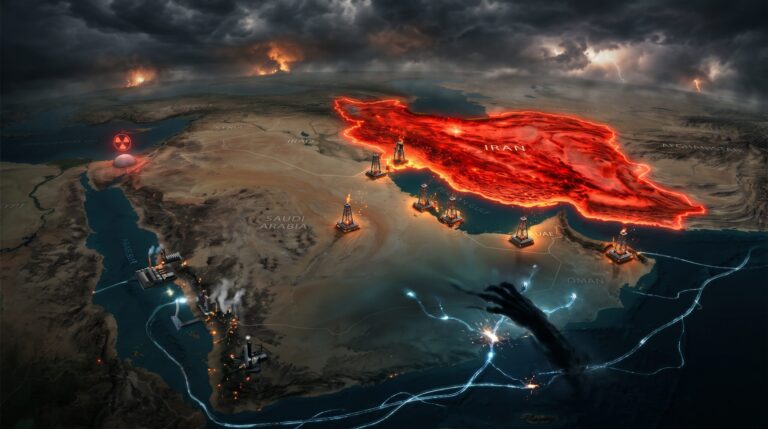
Zechariah 12 Israel alone sounds like the kind of phrase people throw around at prophecy conferences, right up until you watch two longtime allies stand on opposite sides of a clock. In the same news cycle, Israeli Mossad chief Roman Gofman flew to Washington to lobby for fresh joint strikes on Iran, President Donald Trump told reporters aboard Air Force One he won’t rush any decision until after the beginning of the year, and Washington announced a $4 billion direct aid cutoff to Israel at year’s end. Any one of those headlines could be shrugged off as routine diplomatic friction. When these events unfold simultaneously within a single week, they warrant a thoughtful, measured evaluation.
In this analysis, friend, we’re taking a slightly different approach. While I will lay out the key data points, I’ll also clearly distinguish between details directly verified in primary reporting, those requiring qualification, and instances where media narrative has outpaced verified facts. Some of the claims bouncing around social media right now, especially about a massive Iranian tanker armada ready to smash the blockade, are bigger than the reporting supports, and you deserve the version you can trust.
Here’s the path we’ll walk: what Benjamin Netanyahu and his intelligence chiefs are pushing for right now, why Israel’s own military brass isn’t on the same page, why Trump is holding off until January after a bruising midterm election, what that $4 billion aid cutoff actually is behind the election-day timing, how to separate verified oil-tanker data from Iranian state-media hype, and what Scripture says to do with all of it, which is neither panic nor a shrug. If you’re new here, our guides to the biblical signs of the end times in 2026 and the 2026 Iran war and the Ezekiel 38 Hormuz blockade give you the big map. This report is today’s weather.
What Bibi and Israel Are Saying: Act Now
If you’re sitting in Jerusalem right now, the clock looks very different than it does from the Oval Office. According to Reuters reporting cited by The Times of Israel, Mossad Director Maj. Gen. Roman Gofman visited Washington last week and met with CIA Director John Ratcliffe and U.S. special envoy Steve Witkoff to lobby for fresh joint U.S.-Israeli military strikes on Iran. Former Israeli minister Ron Dermer, one of Netanyahu’s closest confidants, was also in Washington making the same case to Trump administration officials.
Zoom out, because the details matter. Netanyahu believes the window to strike Iran effectively is narrowing fast, and Israeli officials worry Washington could begin drawing down its regional military posture before the end of the year while diplomatic channels stay open. As we covered in our earlier breakdown of the November 17 U.S. strikes on Iran and our report on the November 12 escalation, this conflict has moved from shadow pressure to open military exchange in a matter of days. From Netanyahu’s vantage point, waiting until January isn’t neutral. Every week of delay gives Tehran time to dig deeper, repair air defenses, and keep regional proxies active.
Let’s keep our facts straight on what is confirmed versus what carries an asterisk:
- Confirmed: Mossad chief Roman Gofman and confidant Ron Dermer lobbied senior U.S. officials in Washington and Miami for renewed joint strikes on Iran, presenting Israeli intelligence on Tehran’s nuclear program, as confirmed by Reuters.
- Confirmed: Netanyahu has stated publicly that pressure against Tehran’s regime must continue until the government collapses, and Israeli security ministers have discussed preparations for potential renewed operations.
- With an asterisk: Reports of a specific four-to-seven-day joint bombing blueprint and a November 11 security cabinet directive ordering the IDF to step up unilateral strike preparations come from unnamed sources briefed on closed-door Israeli deliberations, and Netanyahu’s office hasn’t publicly confirmed those operational details.
Inside Israel, Not Everyone Agrees
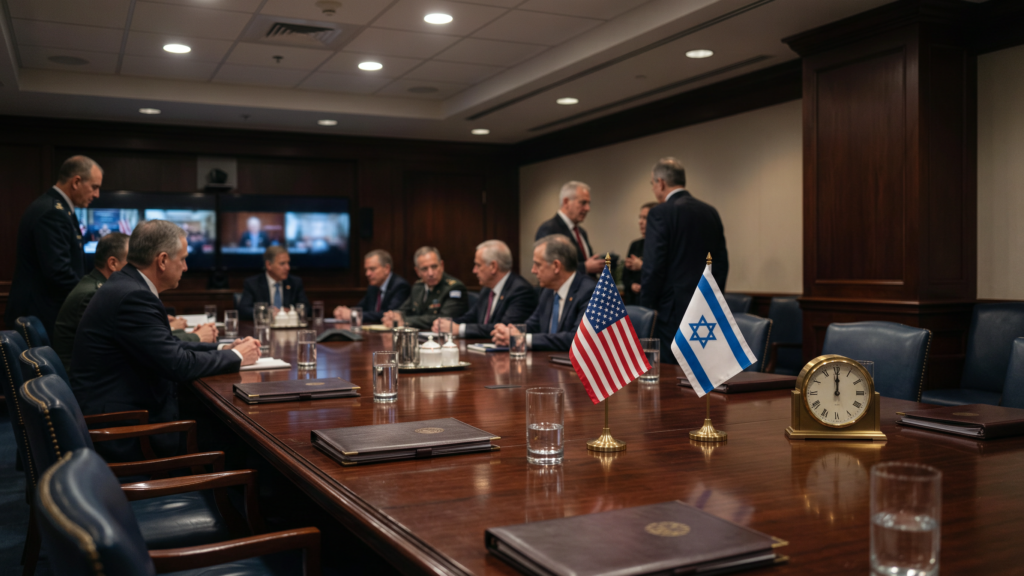
Here is the part we can’t skip if we want to be honest. Israel isn’t speaking with one voice on this.
According to The Jerusalem Post and The Times of Israel, citing reporting from The Washington Post, IDF Chief of Staff Lt. Gen. Eyal Zamir has pushed back against launching immediate fresh strikes on Iran. Senior defense officials assessed there was no immediate operational threat requiring unilateral preemptive action right now, creating visible friction between Netanyahu’s intelligence circle and the military high command. An Israeli security official denied claims that Netanyahu asked Mossad to plan a covert operation behind Zamir’s back, calling that detail false, even as Israeli outlets like Channel 12 confirmed sharp policy disagreement over timing.
There is also a domestic political reality shaping how Washington hears Jerusalem. Following Israel’s inconclusive October 27 election and the swearing-in of the 26th Knesset, Netanyahu is governing as an interim caretaker prime minister while opposition leader Gadi Eisenkot attempts to assemble a coalition. Opposition figures have accused Netanyahu of pushing escalation during a government transition, a charge Netanyahu flatly denies. Both things can be true at once: Iran’s nuclear and missile threats are real, and Netanyahu’s political footing at home is fragile. Nobody outside the room knows how much each factor weighs on his urgency, so a careful watchman names both without pretending to read minds.
What Trump Is Saying: Hold Off Until January
While Jerusalem is pressing the accelerator, the White House has tapped the brakes.
Speaking to reporters aboard Air Force One on Thursday, November 19, as he returned from his trip to China, President Trump made his timeline unmistakably clear. Asked by Reuters about renewed strikes on Iran, Trump said, “Well, I’ll talk to you about it after the beginning of the year.” He repeated that exact window in separate interviews with Fox News (“We’ll see what happens after 1 January”) and Axios (“I’m not rushing to make any decisions on Iran”), as tracked by TIME and Breitbart.
That isn’t a permanent no. It’s a “not yet.” In ordinary diplomacy, six weeks isn’t long. When you’re sitting in Jerusalem watching enemy centrifuges and missile tunnels, six weeks feels like an eternity. Trump is buying time to see if sanctions and the naval blockade force Tehran to bend. Netanyahu is saying time is the one asset Israel doesn’t have.
Why Support at Home Is Waning
Trump isn’t holding off in a vacuum. He’s reading the scoreboard from the November 3 midterm elections, where Democrats won control of Congress and Republicans suffered steep losses across the map.
In the days after the election, both Trump and Vice President JD Vance pointed directly to the Iran war, rising fuel prices, and public frustration over foreign entanglement as major drivers of the GOP defeat. According to CNN’s reporting on November 9, Trump told reporters that a “great dislike” for Israel among segments of the electorate contributed to Republican midterm losses, alongside the economic pain of the Iran conflict. Vance laid out a similar postmortem on X, arguing that voters who backed Trump in 2024 stayed home or flipped because they wanted the war wound down, inflation tackled at home, and U.S. policy toward Israel rebalanced.
You can agree or disagree with their political diagnosis, and plenty of conservatives do. What matters for our watch is simpler: Trump believes it, and he’s governing accordingly. He has a narrow window before a Democratic-led Congress takes office in January, and right now he’s signaling he has zero appetite for launching another major bombing campaign before 2027 begins.
The Aid Cut That Landed Like a Break
If the January timeline felt like a cold shoulder in Jerusalem, the election-day announcement on military aid landed like an earthquake.
On November 3, the morning of the midterm elections, Trump announced on Fox News that the United States will stop giving $4 billion in annual aid to Israel at the end of the year, saying Israel is a successful country that doesn’t need the money and will still be able to purchase American weapons. As PBS NewsHour and the Associated Press reported, Trump bluntly explained the domestic politics behind the timing: the $4 billion payment had become “too easy a target” for Democratic candidates campaigning against unconditional aid.
Let’s be precise about what’s actually new here, because headlines on both sides have missed the context. Phasing out direct grants in favor of commercial defense purchases and joint development had been discussed quietly for months ahead of the expiration of the current 10-year Memorandum of Understanding in fiscal year 2028, and Netanyahu himself had previously spoken about Israel gradually weaning itself off direct financial grants. So the underlying shift wasn’t invented on November 3.
Still, timing communicates everything in diplomacy. Announcing an end-of-year cutoff on election morning to deflect domestic campaign attacks made a long-term transition look like a sudden public break. Add the aid cutoff to the midterm blame, and add both to Trump’s “wait until January” answer on Iran, and you see an alliance fraying in plain sight.
Watchman’s Opinion: Zechariah 12 Israel Alone Means God Intervenes, Not Washington
Watchman’s Opinion Note: The section below shares Samuel Clark’s personal perspective and prophetic commentary, kept strictly separate from the verified news reporting above.
When I read Zechariah 12 (KJV) alongside this week’s headlines, what jumps off the page isn’t a single missile or a single cabinet meeting. It’s the structural isolation of Jerusalem. Look at how the prophet describes that coming day: “Behold, I will make Jerusalem a cup of trembling unto all the people round about, when they shall be in the siege both against Judah and against Jerusalem. And in that day will I make Jerusalem a burdensome stone for all people: all that burden themselves with it shall be cut in pieces, though all the people of the earth be gathered together against it” (Zechariah 12:2-3, KJV).
When I read Zechariah 12 (KJV) alongside this week’s headlines, what jumps off the page isn’t a single missile or a single cabinet meeting. It’s the structural isolation of Jerusalem. Look at how the prophet describes that coming day: “Behold, I will make Jerusalem a cup of trembling unto all the people round about, when they shall be in the siege both against Judah and against Jerusalem. And in that day will I make Jerusalem a burdensome stone for all people: all that burden themselves with it shall be cut in pieces, though all the people of the earth be gathered together against it” (Zechariah 12:2-3, KJV).
Notice who isn’t riding to the rescue in Zechariah 12. Washington isn’t mentioned. A superpower coalition isn’t mentioned. The entire point of the prophecy is that Jerusalem is boxed in so completely that human alliances can’t carry the weight, leaving the Lord Himself to step in: “In that day shall the LORD defend the inhabitants of Jerusalem” (Zechariah 12:8, KJV).
As a watchman, my highest duty to you is maintaining rigorous accuracy and restraint, which is why we must proceed thoughtfully here. I’m not saying this week’s disagreement between Netanyahu and Trump fulfills Zechariah 12. Allies argue over military timing all the time, and Zechariah 12 ultimately points toward the climactic siege of Jerusalem during the Tribulation, leading into the national repentance of Israel when they look upon Him whom they pierced (Zechariah 12:10, KJV), and later the physical return of Christ to the Mount of Olives in Zechariah 14. Conflating a diplomatic delay with final prophetic fulfillment is how watchmen lose credibility.
What I am saying is that we’re watching the stage-setting in real time. For decades, American evangelicals and Israeli leaders alike assumed Washington’s automatic military umbrella was permanent. Now we’re seeing how quickly domestic exhaustion, high gas prices, and political realignment can turn “we’re right behind you” into “wait until January.” That direction of travel fits the exact trajectory Scripture lays out, as we unpack in our guide to fulfilled prophecy and discernment.
The Convoy: A Small Watch Note, Not the Story

Before we wrap up, let’s do a quick reality check on the Iranian oil tanker rumors swirling around social media this week, because there’s a lot of noise mixed in with a very small amount of verified fact.
| Claim Circulating Online | Verification Status | What Original Reporting Actually Shows |
|---|---|---|
| Tanker loading Iranian crude in the Persian Gulf via ship-to-ship transfer | Confirmed | Reuters, citing TankerTrackers.com, confirmed one tanker was loading Iranian crude via ship-to-ship transfer on Nov. 19 and could become the first export since July, though it hadn’t sailed yet. |
| Sanctioned Suezmax Olym transferred crude to Hao Fan | Confirmed (Small Volume) | Bloomberg reporting cited by Rigzone and UANI/Kpler confirmed a transfer of roughly 200,000 barrels, far too small for an economical long-haul voyage. |
| Dozens of loaded tankers massing at Kharg Island to smash the blockade | Unverified (IRGC Media) | The convoy claim originates with IRGC-linked Fars News and hasn’t been independently verified by maritime trackers, as noted by OilPrice. |
| A 2-million-barrel VLCC blockade run happening this week | Misdated (Old Story) | That 2-million-barrel VLCC report dates back to August 2026, not this week’s November developments. |
Data verified via Reuters, Rigzone, and OilPrice alongside our Strait of Hormuz blockade tracker.
That’s why we don’t build a whole report on an unverified tanker convoy. If a blockade-running flotilla actually sails and triggers a naval clash in the Gulf, we’ll cover it with hard receipts. Right now, the bigger, verified story isn’t an unconfirmed convoy at Kharg Island. It’s the widening gap between Jerusalem’s urgency and Washington’s hesitation.
What Would Prove Stage One Is Over
To keep ourselves honest and grounded in biblical discernment, we need clear markers rather than vague hype. Here are four concrete developments I’m watching between now and January:
- A visible U.S. force drawdown in the Middle East: If Washington reduces carrier strike groups or air assets in the region before year’s end, Israel’s fear of a closing window will move from speculation to reality.
- Unilateral Israeli action without U.S. cover: If Jerusalem decides it can’t wait until January and launches major strikes on its own despite internal IDF caution, the dynamic shifts overnight.
- Broader regional coordination against Jerusalem: Zechariah 12 describes surrounding peoples gathering in pressure against Judah and Jerusalem, not just a bilateral duel with Tehran.
- Undeniable strategic isolation: A moment where diplomatic, financial, and military buffers strip away until Israel’s survival visibly rests on God’s intervention alone rather than superpower backing.
Of course, an honest watchman also has to hold the counterpoint. Alliances have weathered sharp disagreements before, from the 1956 Suez Crisis to the 1973 Yom Kippur airlift debates, and Washington still maintains tens of thousands of troops and heavy naval assets in the region right now. A six-week pause isn’t a permanent divorce. What makes this moment worth watching closely is how many pressures are lit at once: war fatigue at home, an aid transition on the calendar, a fractured Israeli coalition, and an unresolved nuclear standoff in Tehran. That isn’t a prediction. It’s a reason to stay awake, because “the whole creation groaneth and travaileth in pain together until now” (Romans 8:22, KJV).
Clear Eyes, Steady Faith: Finding Peace in Shaking Times

If news of shifting war timelines and geopolitical instability brings a sense of unease, take a moment to rest and anchor your perspective in the One who remains sovereign over all things. These unfolding events carry no dread for me, simply because I rest in the unwavering authority of my King.
Scripture never gives us prophecy so we can doom-scroll ourselves into paralysis. It gives us prophecy so we can live with clear eyes, steady faith, and open hands. “A prudent man foreseeth the evil, and hideth himself: but the simple pass on, and are punished” (Proverbs 22:3, KJV). Keep your household steady, pray for the peace of Jerusalem (Psalm 122:6, KJV), and don’t let social media rumors rattle your peace. Jesus told us plainly what posture to take when the nations shake: “And when these things begin to come to pass, then look up, and lift up your heads; for your redemption draweth nigh” (Luke 21:28, KJV).
We read the news like Bereans, testing every headline against the Word of God (Acts 17:11, KJV) and rightly dividing the word of truth (2 Timothy 2:15, KJV). If you want to examine the historical and prophetic foundation behind why we trust Scripture, take a look at our guides on evidence the Bible is true and every messianic prophecy Jesus fulfilled. Above all, make sure your anchor isn’t tied to Washington or Jerusalem, because governments rise and fall, while God’s kingdom stands forever (Daniel 2:44, KJV). “For God so loved the world, that he gave his only begotten Son, that whosoever believeth in him should not perish, but have everlasting life” (John 3:16, KJV). If you’ve never settled where you stand with Jesus Christ, don’t put it off until January. Visit our salvation page today and find true peace with God.
Just as predicted. Stay ready. Keep looking up.
Sources
- Reuters: Israeli spy chief lobbied for joint Iran strikes on U.S. visit, sources say (November 18, 2026).
- The Times of Israel: Mossad chief lobbied for fresh U.S.-Israeli strikes on Iran during U.S. trip (November 18, 2026).
- The Jerusalem Post: Netanyahu asked Mossad head about covert op against Iran without notifying IDF chief Zamir (November 19, 2026).
- TIME: “We’ve Got Time”: Trump Suggests Iran War Will Continue Into 2027 (November 20, 2026).
- Breitbart: Trump Signals No More Major Iran Strikes in 2026 as Economic Pressure Mounts on Tehran (November 19, 2026).
- CTV News / CNN: “Great dislike” for Israel contributed to midterm losses, Trump says (November 9, 2026).
- PBS NewsHour: Trump says U.S. will stop giving $4 billion in aid to Israel next year (November 3, 2026).
- Associated Press / WUSA9: U.S. will halt $4B in aid to Israel as the Mideast ally weans itself from American dependence (November 3, 2026).
- Reuters: Oil tanker loads Iranian crude in Gulf, TankerTrackers.com says (November 19, 2026).
- Rigzone / Bloomberg: Gulf Sees Iran Oil Movement as U.S. Widens Blockade (November 20, 2026).
- OilPrice: Iran Moves to Restart Oil Exports Despite U.S. Naval Blockade (November 20, 2026).