The Trump Xi Putin Meeting was supposed to feel historic. And in one narrow sense, it did. Three leaders sat around one big round table in Shenzhen, with flags behind them and cameras rolling, and for about 80 to 90 minutes the world got to watch the United States, China, and Russia try to talk like grown ups in the same room. That’s not nothing. We’ve seen what happens when they don’t talk at all.
But here’s the hard part. When the cameras left and the joint declaration came out, there wasn’t a deal on Ukraine. There wasn’t a deal on Iran. There wasn’t a new arms control treaty. There was language. Careful, polished, diplomatic language. And if you were hoping this meeting would actually move two wars toward an end, you’ve got every reason to feel let down. I do.
I went into this one with low expectations, and I’ll be honest, it still felt disappointing. Not because talking is bad. Talking is good. It’s because this was a rare moment. You’ve got the three biggest nuclear powers in one room, on the sidelines of APEC, with the whole world watching, and the two wars that are killing people right now got general words instead of concrete steps. That’s the story here. Not that they met. That they met and chose symbolism. We flagged this before the meeting in our watch piece on the Shenzhen summit and what to watch for.
Trump Xi Putin Meeting: What Actually Happened in Shenzhen
Let’s start with what we know. The meeting happened on November 19, 2026, at Kylin Villa in Shenzhen, on the sidelines of the APEC summit. Xi hosted. Trump met Putin separately for about 40 minutes, then met Xi for roughly an hour, then all three sat down together. Reports put the trilateral itself at 80 to 90 minutes, including about 10 minutes of opening remarks for the cameras. USA Today described it as the first ever trilateral talks between the three countries, and noted it lasted 90 minutes with no immediate breakthroughs. The New York Post put it at 80 minutes, including those opening remarks.
The opening remarks told you a lot about each man’s priorities. Xi called it a meeting of groundbreaking significance and said when major powers live in harmony, the world is at peace. When major powers clash, the world falls into turmoil. He pushed for a nuclear weapon free world and said a nuclear war can’t be won and must never be fought. He didn’t directly reference Ukraine in the public remarks.
Putin thanked China for hosting and leaned on the trio’s status as permanent UN Security Council members and World War II victors. He said they’ve got shared responsibility for maintaining international peace and security, and he did mention Ukraine, saying they’d got numerous shared interests in settling regional conflicts, including obviously the conflict in Ukraine. He’d already discussed it bilaterally with Xi the day before and with Trump that day.
Trump called it really making history and said no peace was ever forged by declining opportunities for engagement. He stressed nuclear weapons directly. As the world’s three largest nuclear powers by far, he said, the United States, Russia, and China are uniquely positioned to discuss how to reduce the number of nuclear weapons on Earth and also to lessen the risk that those weapons will ever be used. He also vowed we are not going to let Iran have a nuclear weapon, and he criticized the International Criminal Court as out of control and said it’s strayed far from its jurisdiction. On Ukraine, he said he and Putin had already had a long discussion and I think things are happening. I think that he, and I hope the other side, would like to see an end to that war.
What the Declaration Actually Said
After the meeting, Chinese state media released a short declaration, the China Russia US Heads of State Declaration toward Peace. It had four points. None of them ended a war. All of them tell you where these three could actually agree.
1. UN reform. As permanent members of the UN Security Council, they committed to UN reform so it can respond more effectively to global challenges and fulfill its peace and security mission. That’s broad. It’s also safe. Nobody in that room was going to argue against making the UN work better, at least on paper.
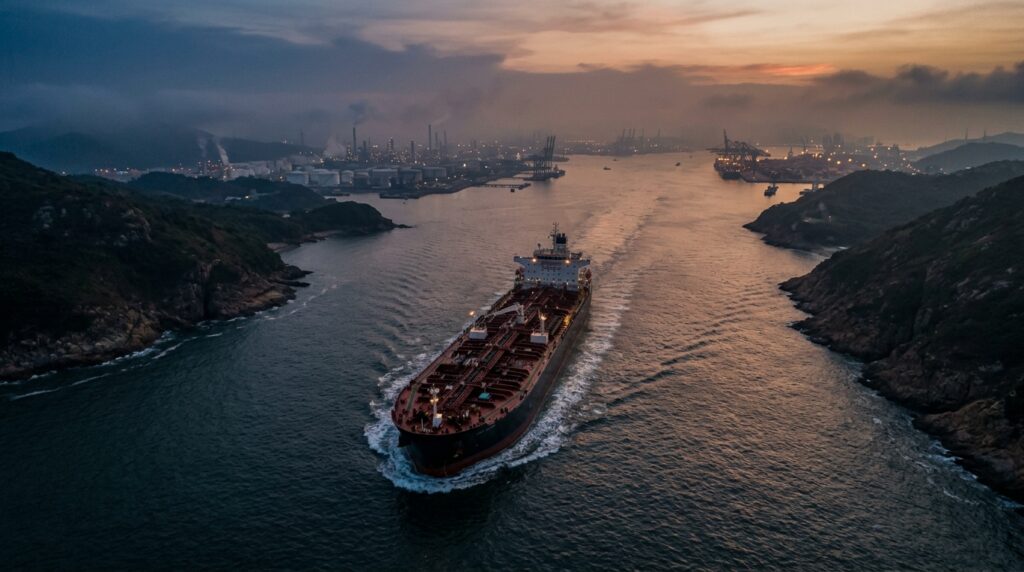
2. Energy. They plan to increase production and supply of refined petroleum products for the benefit of all nations and reaffirmed the importance of stable energy flows. This one matters more than it sounds. With the Iran war disrupting flows and the Strait of Hormuz in the headlines, energy was the one practical topic where interests overlapped. USA Today noted the joint statement also said they were formulating plans to increase production and supply of energy products, disrupted by the Iran war. That’s not peace, but it’s a signal they don’t want an energy shock spiraling. We’ve been tracking how the Iran war has hit energy flows since the US strikes on November 17.
3. State consent and ICC. They recognized the principle of state consent and immunity of state officials as paramount, and concurred that the ICC and similar bodies must not abuse their jurisdiction. This was the most political point. Trump had already slammed the ICC in his opening remarks. Putin, who’s been indicted by the ICC over alleged war crimes in Ukraine, had every reason to back language that limits its reach. It won’t change the court’s work overnight, but it shows you where Trump and Putin align, and where Xi was willing to sign on.
4. Nuclear risk. They reaffirmed that a nuclear war can’t be won and must never be fought, and will conduct dialogue on reducing nuclear risks and preventing proliferation. That’s the most important line in the whole declaration, and also the vaguest. There’s no number, no timeline, no treaty. There’s a promise to keep talking. Given that China has long resisted joining US Russia style talks because its arsenal is smaller, even getting that line signed is something. But something is not the same as a deal.
What It Didn’t Say
Here’s where disappointment turns from a feeling into a fact. The declaration didn’t offer a ceasefire plan for Ukraine. It didn’t offer a path to end the Iran war. It didn’t lock in any nuclear reductions. It didn’t set a date for follow on talks with teeth.
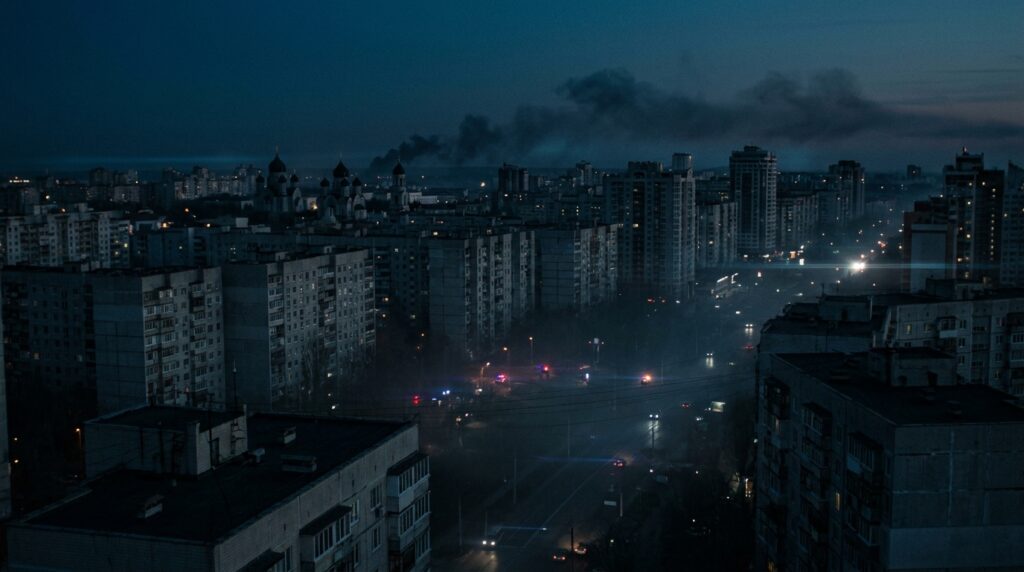
On Ukraine, we’ve got a war approaching five years, with cities getting hit nightly and peace talks in Moscow ending with no breakthrough just days before this meeting. We covered that collapse in our piece on the Moscow talks failing and Ukraine blacked out. To go from that to a trilateral where Ukraine gets a passing mention in Putin’s remarks and a hopeful line from Trump, and then nothing concrete, feels thin. It feels like the issue got managed, not moved.
On Iran, it’s even starker. The US and Iran are in an active war that began in February, with strikes, blockades, and oil flows through the Strait of Hormuz at risk. Trump said he and Xi discussed trade, agricultural purchases, and oil flows through the Strait. That’s useful, but it’s not a peace track. It’s crisis management around the edges while the war keeps going.
And on nuclear weapons, the gap between rhetoric and reality is huge. Trump told Fox News that morning that all three countries only need about 10 nuclear bombs and you don’t need 4,000. He noted the US has 4,000, Russia has 3,800, and China now has 400 or 500 but is going hot and heavy on building. That’s a big, bold idea. The declaration didn’t get anywhere near it. It just said let’s keep talking about risk. The New York Post captured that gap in its report on the brisk 80 minute summit.
Why the Declaration Still Matters, Even If It’s Thin
Now, let’s be fair for a minute. Thin isn’t the same as meaningless. There are a couple reasons this paper still matters.
First, it creates a channel. The US, China, and Russia haven’t had a formal trilateral like this before. Even if this one was mostly symbolism, the fact that they’ve now got a format, a host, and a joint text means the next conversation doesn’t start from zero. If a real crisis hits, and it will, they’ve got a way to get on the phone or in a room faster.
Second, energy coordination is real. If they follow through on increasing refined petroleum supply, that could take some pressure off global prices and keep the Iran war from turning into a full blown energy shock. That’s not a headline peace deal, but for ordinary people paying for fuel and food, it matters.
Third, the nuclear language, vague as it is, locks all three into a public principle: a nuclear war can’t be won and must never be fought. That’s not new, but having Xi, Putin, and Trump sign it together in 2026, while two wars are raging and nuclear rhetoric is heating up, is worth noting. It gives diplomats something to point to when they push for risk reduction talks later.
Fourth, the ICC and UN reform language shows you the shape of a possible alignment. These three don’t agree on much, but they do agree they don’t want outside bodies telling them what they can do. That’s not a good thing for smaller countries, and it’s why Ukraine’s President Zelenskyy said he really doesn’t want this to turn into Yalta 2, 3, 4, with a redistribution of influence. He’s right to worry. When big powers talk about spheres and sovereignty, small nations often pay the price. USA Today flagged that same Yalta comparison, and it’s the right warning to keep in mind. The Hindu’s live coverage also tracked how the day unfolded in Shenzhen.
Why Disappointment Is Fair
Let’s come back to the feeling that started this piece. Disappointment is fair here because the opportunity was real.
You’ve got Trump, who’s built his whole brand on being the guy who can make a deal in the room. You’ve got Xi, hosting on home turf, with all the ceremony and leverage that comes with it. You’ve got Putin, back on a world stage after being treated as a pariah since the 2022 invasion, reportedly leaving his bilateral with Trump in an excellent mood. If there was ever a moment to push for something concrete, even a small concrete step, like a humanitarian pause, a prisoner swap framework, or a date for envoy talks with a mandate, this was it.
Instead, we got a photo op and a four point statement. We got handshakes on the tarmac, an escalator ride, and Trump calling both men his friends. We got good atmosphere. And good atmosphere doesn’t stop drones. It doesn’t reopen the Strait. It doesn’t bring anyone home.
I’m not saying the meeting should never have happened. I’m saying if you’re going to make history, make it count. The world didn’t need another reminder that major powers can sit together. It needed proof that sitting together can actually change something on the ground. This meeting didn’t give us that proof.
And let’s be clear about what that means for the people watching this closely. If you were hoping Shenzhen would be the moment Ukraine turned a corner, it wasn’t. If you were hoping it would be the moment the Iran war found an off ramp, it wasn’t. If you were hoping for a new arms control framework, it wasn’t that either. It was a declaration, not a deal.
Close
So where does that leave us? With a historic photo, a short declaration, and two wars still going.
Nothing changed yet. Stay ready. Keep looking up.
#TrumpXiPutinMeeting #ShenzhenSummit #NuclearRisk
Sources: USA Today – Trump, Putin, Xi hold historic three-way talks | New York Post – 80-minute summit | The Hindu – Live updates from Shenzhen | Related on SamuelClark.com: Trump Xi Putin Trilateral Summit watch piece | US Strikes Iran November 17 | Moscow talks fail, Ukraine blacked out