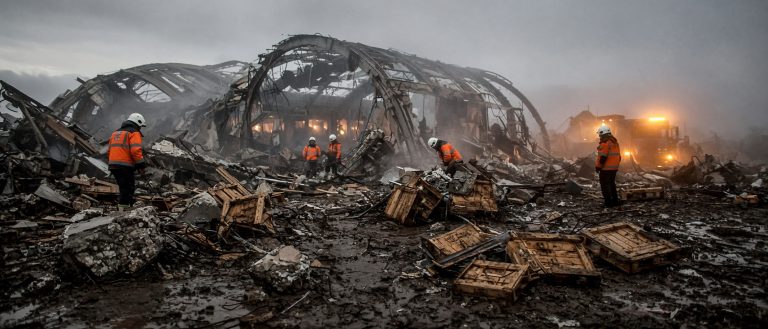
Christian Persecution 2026: Why Jesus Said the World Would Hate Believers
If you walked past a major cathedral in Paris, Madrid, or London yesterday evening, you might have wondered why the stone walls were glowing blood red, and the latest numbers on Christian persecution 2026 tell the story. Yesterday, November 18, hundreds of churches and landmarks lit up for Aid to the Church in Need’s Red Week to draw attention to 413 million believers living in countries where religious freedom isn’t guaranteed. On that exact same afternoon in Washington, U.S. Rep. Chris Smith chaired a congressional hearing titled “Worldwide Persecution of Christians: Responding to New Challenges,” where witnesses laid out how state regimes, extremist militias, and hostile laws are squeezing believers across multiple continents. And sitting behind both of those events is the Open Doors 2026 World Watch List, which documents more than 388 million Christians facing high levels of persecution and 4,849 killed for their faith in a single reporting year. Any one of those headlines could be dismissed as a localized political fight, yet stacked together in the same week, they force an honest question: is Jesus’ warning that believers would be hated for His name’s sake actually getting worse, and why does it keep happening?
I want to do something a little different in this report, friend. I’ll give you the numbers, but I’ll also tell you which ones I could confirm in the original reporting, which ones come with an asterisk, and where the headlines have run ahead of the facts. Some of the figures bouncing around social media are bigger than the reporting supports, and you deserve the version you can trust.
Here’s the path we’ll walk: first, we’ll audit the 2026 persecution numbers from Open Doors, Aid to the Church in Need, and Congress so we know what’s actually measurable; second, we’ll go back to first-century Jerusalem and ask why religious and government leaders really hated Jesus; third, we’ll compare that ancient pattern to what’s happening in Nigeria, India, and authoritarian states today; and finally, we’ll look at what Scripture says to do with all of it, which is neither panic nor a shrug. If you’re new here, our guides to the biblical signs of the end times in 2026 and our ongoing Christian persecution watch give you the big map. This report is today’s weather.
Confirmed vs. Asterisk: Can We Prove Persecution Is Getting Worse?
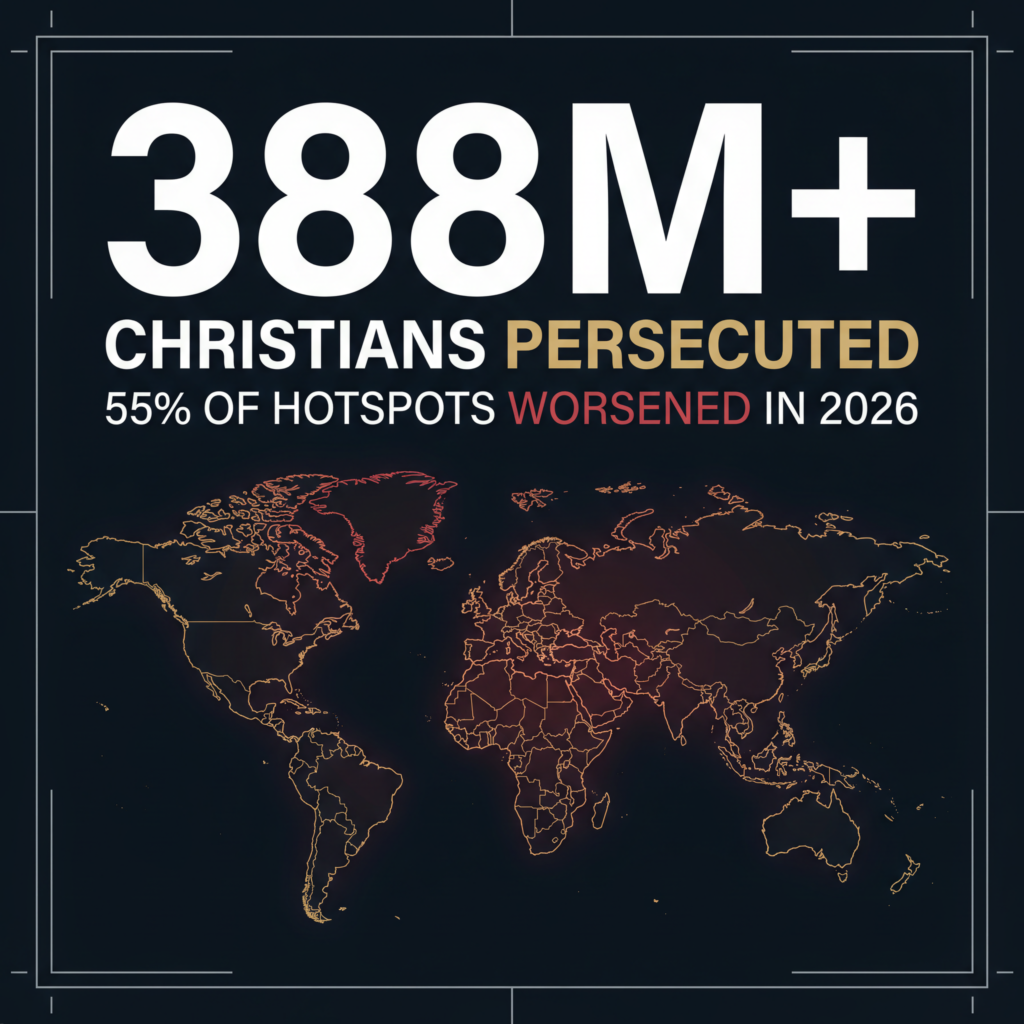
When people hear that persecution is rising, some assume it’s just internet echo-chamber talk. Let’s check the primary data instead of guessing, and let’s put an honest asterisk where two organizations measure different things.
- Confirmed: Over 388 million Christians face high levels of persecution. According to the Open Doors 2026 World Watch List Advocacy Report, more than 388 million believers worldwide face high to extreme persecution and discrimination, including 315 million inside the top 50 watch-list countries alone.
- Confirmed: Faith-related killings remain concentrated and deadly. Open Doors documented 4,849 Christians killed for their faith in its 2026 reporting cycle, with 3,490 of those deaths occurring in Nigeria.
- Confirmed: Conditions worsened in over half of monitored hotspots. In its Persecuted and Forgotten? 2024-2026 report, Aid to the Church in Need examined 18 countries of particular concern and found that persecution intensified in 55 percent of them, driven by authoritarian surveillance, religious nationalism, and militant violence.
- Asterisk: Why you’ll see both “388 million” and “413 million” in the news. Both numbers are real, yet they measure slightly different things. Open Doors’ 388 million figure tracks believers experiencing high-to-extreme persecution and discrimination. Aid to the Church in Need’s 413 million figure counts Christians living in countries where serious religious freedom violations occur, part of the 5.4 billion people worldwide living where religious freedom isn’t fully guaranteed.
- Asterisk: Persecution isn’t brand-new to 2026. Let’s be fair to history. The early church faced Roman arenas, and believers under Soviet communism endured decades of gulags. What makes 2026 worth watching isn’t that persecution was invented yesterday. It’s the sheer scale, the global reach, and the way digital surveillance and state laws now stack on top of physical violence.
Zoom out, because the details matter. Whether you look at militant ambushes in Africa or courtroom convictions in Asia, the pressure isn’t coming from one single corner of the map.
| Global Region / Country | Primary Source of Pressure (2026) | Verified On-the-Ground Impact |
|---|---|---|
| Nigeria & Sub-Saharan Africa | Islamist terror groups and armed militias | 3,490 Christians killed for their faith in Nigeria alone; mass abductions and millions displaced across the region. |
| India | State anti-conversion laws and religious nationalism | 12 states enforce Freedom of Religion Acts; believers like Jose and Sheeja Pappachan received five-year prison sentences under Uttar Pradesh’s law. |
| China & Authoritarian States | State surveillance and strict digital regulation | Heavy restrictions on churches, arrests of leaders, and tight control over online worship and ministry. |
| Syria & Middle East | Political upheaval, instability, and targeted violence | Shrinking historic Christian communities facing an uncertain future and ongoing harassment. |
Sources: Open Doors World Watch List 2026, Aid to the Church in Need (2024-2026), and U.S. House Tom Lantos Human Rights Commission (Nov. 18, 2026).
Why Was Jesus Actually Hated?
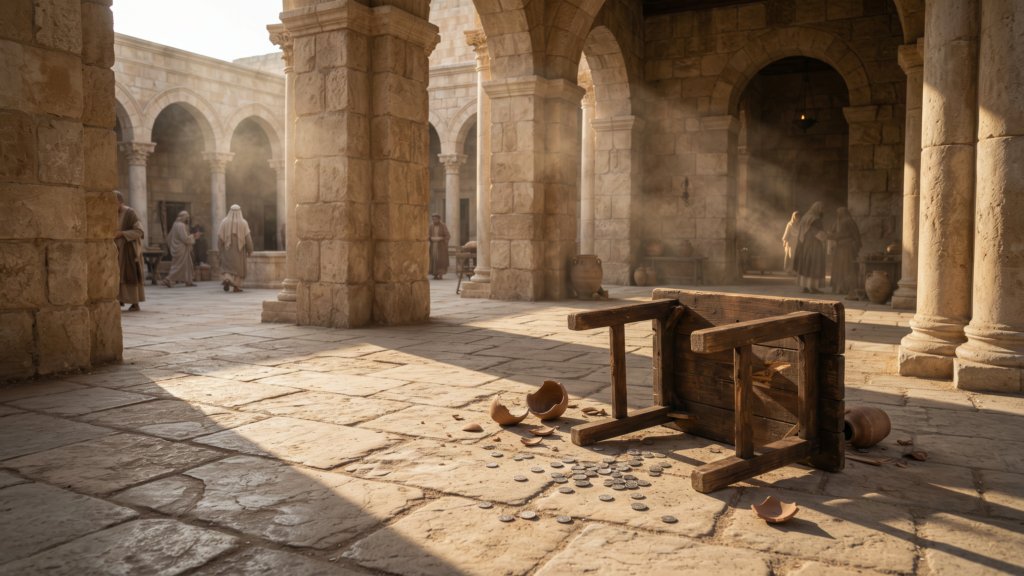
Now let’s ask the deeper question. Why did the religious establishment and the Roman government team up to send Jesus to a Roman cross? Was it because He was walking around Galilee spreading hatred?
Not for a second. Jesus healed lepers nobody else would touch, fed hungry crowds, forgave outcasts, and told His followers to love their enemies. You don’t crucify a man for feeding the poor. You crucify a man when His truth threatens your grip on power.
Look closely at what actually triggered the elites of first-century Jerusalem:
- He disrupted their financial racket. When Jesus overturned the tables of the moneychangers in the Temple (Matthew 21:12-13, KJV), He didn’t just make a scene. He hit the religious establishment right in the wallet, exposing how they had turned the house of prayer into a den of thieves that profited off ordinary worshipers.
- He exposed their hypocrisy in public. In Matthew 23, Jesus looked straight at the scribes and Pharisees and called them out for piling heavy burdens onto everyday people while living in greed, pride, and corruption behind closed doors.
- He threatened their status and control. In John 11:48 (KJV), the chief priests and Pharisees said the quiet part out loud: “If we let him thus alone, all men will believe on him: and the Romans shall come and take away both our place and nation.” Notice that word: their place. Their titles, their seats of authority, and their monopoly over the people.
Power hates competition, and corrupt power hates the light. That’s why two groups that couldn’t stand each other, the religious elite and the Roman governor, suddenly became allies the moment Jesus exposed what they were doing.
From First-Century Jerusalem to November 2026
Hold that thought. Look at what Rep. Chris Smith said yesterday in Congress when describing the perpetrators of Christian persecution today. He pointed to authoritarian states trying to subordinate independent belief to political power, majoritarian movements treating Christians as “outsiders” to a religiously homogeneous nation, and violent militias operating with impunity.
Sound familiar? The costumes changed, and the tools upgraded from Roman spears to digital surveillance and anti-conversion statutes, yet the motive is identical.
A believer whose ultimate loyalty belongs to Jesus Christ can’t be completely owned by a corrupt government, a religious monopoly, or an ideological mob. When Christians refuse to bow to a state’s version of truth, or when converts in India and Nigeria refuse to renounce Christ even under threats of prison or death, they expose the limits of earthly power. That’s why Red Week witnesses from Burkina Faso and Nigeria keep reminding the West that this isn’t just a political disagreement. It’s a clash of kingdoms.
What Scripture Actually Says: Expect the Friction, Don’t Fear It
Here’s where I want to be careful, because careful is what a watchman owes you. In Matthew 24:9 (KJV), Jesus warned His disciples plainly: “Then shall they deliver you up to be afflicted, and shall kill you: and ye shall be hated of all nations for my name’s sake.” And on the night before His crucifixion, He explained why: “If the world hate you, ye know that it hated me before it hated you… Remember the word that I said unto you, The servant is not greater than his lord. If they have persecuted me, they will also persecute you” (John 15:18, 20, KJV).
I’m not saying yesterday’s congressional hearing or Red Wednesday is the final fulfillment of Matthew 24’s Tribulation passages. Those verses sit inside the broader prophetic blueprint leading up to Christ’s return, and treating every news report like a prophetic stopwatch is how people burn out their faith. What I am saying is that the direction of travel is unmistakable. The hostility Jesus described isn’t fading away as the world gets more “modern.” It’s sharpening, and we watch it loosely and with open hands, testing everything through biblical discernment and comparing current headlines against our library of fulfilled prophecy. “For we know that the whole creation groaneth and travaileth in pain together until now” (Romans 8:22, KJV).
Calm Hands, a Settled Heart: How Believers Respond

If reading about 388 million persecuted believers, broken government promises, and rising hostility leaves a knot in your stomach, take a deep breath, grab a sandwich, and remember who sits on the throne. This stuff doesn’t trouble me at all, because I know who my King is.
Scripture never tells us to hide in fear or return hatred for hatred. Proverbs 22:3 (KJV) reminds us that “A prudent man foreseeth the evil, and hideth himself: but the simple pass on, and are punished.” Prudence isn’t panic. It’s staying awake, praying faithfully, and living with quiet courage.
- Pray by name for the persecuted church: Don’t let 388 million stay a faceless statistic. Pray for pastors in Nigeria’s Plateau State, families facing anti-conversion laws in India, and underground believers under surveillance in China.
- Anchor your family in Scripture now: Know what you believe and why you believe it before cultural or legal pressure tests your convictions.
- Speak truth with grace: Jesus exposed corruption without losing His compassion for ordinary people. Stand firm on the gospel, and keep extra love and practical help ready for your neighbors.
Even more importantly, remember how this story ends. Jesus told His disciples, “And when these things begin to come to pass, then look up, and lift up your heads; for your redemption draweth nigh” (Luke 21:28, KJV). One day, the God of heaven will set up a kingdom that shall never be destroyed (Daniel 2:44, KJV), and every corrupt throne on earth will answer to Him. For those who belong to Christ, our hope isn’t tied to earthly governments or congressional hearings. Scripture teaches that believers are not appointed to wrath (1 Thessalonians 5:9, KJV), that Jesus promises to keep His church from the hour of temptation coming upon the whole world (Revelation 3:10, KJV), and that the Lord Himself will descend to gather His people home (1 Thessalonians 4:16-17, KJV). So be like the Bereans in Acts 17:11 (KJV) and search the Scriptures daily, rightly dividing the word of truth (2 Timothy 2:15, KJV).
If you’re wondering whether you can really trust the Bible when the world feels this hostile, take a look at the historical evidence the Bible is true and read through every Messianic prophecy Jesus fulfilled. And if you haven’t settled where you stand with Jesus Christ yet, don’t put it off another day. “For God so loved the world, that he gave his only begotten Son, that whosoever believeth in him should not perish, but have everlasting life” (John 3:16, KJV). You can read clearly how to place your trust in Him today on our salvation page.
Sources
- Open Doors UK & Ireland: World Watch List 2026 Advocacy Report (January 2026)
- Aid to the Church in Need (ACN UK): Persecuted and Forgotten? A Report on Christians Oppressed for Their Faith 2024-2026
- Aid to the Church in Need International: Red Week 2026 Global Campaign & Religious Freedom Statistics
- Aid to the Church in Need: From World Capitals to Remote Villages, the World Turns Red for Persecuted Christians (November 16, 2026)
- U.S. Rep. Chris Smith (Tom Lantos Human Rights Commission): Opening Statement on Worldwide Persecution of Christians (November 18, 2026)
- U.S. Rep. Chris Smith: Hearing Announcement and Witness List, Worldwide Persecution of Christians (November 13, 2026)