The 2026 Persecution Surge: A Young Pastor’s Death in Uganda and the Shadow of Matthew 24
Examining the brutal murder of 25-year-old Pastor Bernard Mulongo against a record-breaking global spike in faith-based violence. Christian persecution statistics 2026
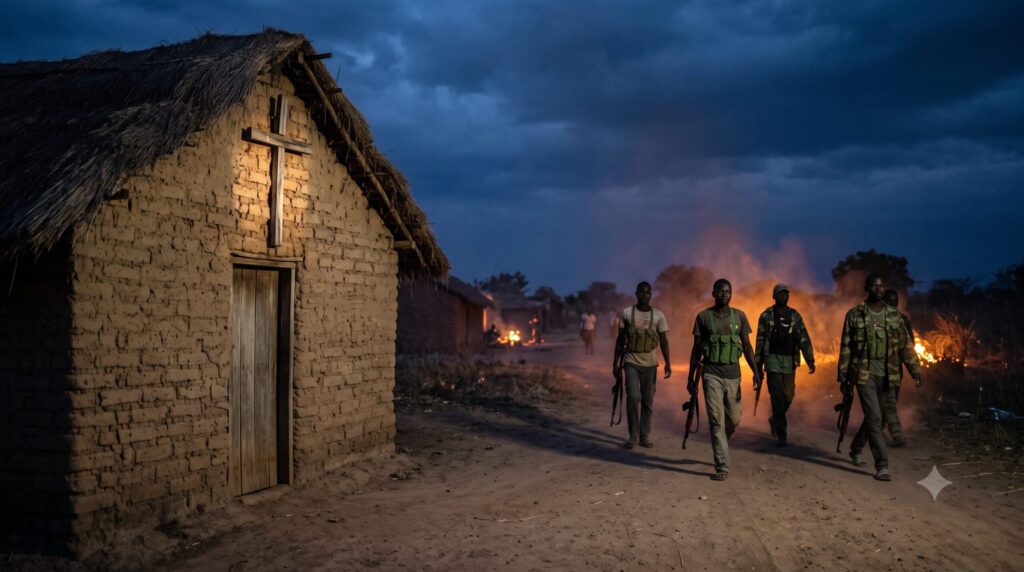
On July 18, 2026, something happened in a small Ugandan village that the Western church barely noticed. A 25-year-old pastor named Bernard Mulongo participated in an open-air interfaith debate in Mbale, Uganda, where two Muslim women converted to Christianity. That evening, as Mulongo and a companion rode their motorcycle nine miles outside the city, they were ambushed. According to Christian Daily International, Mulongo was murdered—his life cut short because he preached the Gospel boldly.
But here’s what unsettles me: this wasn’t an isolated crime. It was a data point.
On the same day Mulongo died, somewhere in the world, approximately 11 other Christians were killed for their faith. In Sub-Saharan Africa alone, Christian martyrs in Africa numbered 4,491 in 2026—93% of all faith-based killings worldwide. We are not talking about a regional flare-up. We are talking about a systemic, accelerating wave of anti-Christian violence that has reached levels the global church has never seen.
The question isn’t whether persecution is rising. The data settled that months ago. The question is: what does it mean? And is Jesus’ warning in Matthew 24 actually unfolding in real time?
The Mbale Ambush: What Happened to Pastor Bernard Mulongo?
The timeline matters. According to Christian Daily International, Pastor Bernard Mulongo of the New Restoration Church of Christ was actively engaged in public evangelism. On July 18, he participated in an open-air interfaith debate, followed by an evening radio broadcast where he discussed the Gospel. Two Muslim women publicly converted to Christianity that day—a direct, visible challenge to the religious status quo.
What happened next reveals how quickly violence can follow conviction. According to the same source, Imam Hassan Musa reportedly confronted Mulongo and warned him: “Bernard, you deserve death for blasphemous deeds.” That night, Mulongo and a companion were ambushed on their motorcycle. Mulongo was killed. His companion survived.
This is the personal tragedy. But the numbers tell a larger story.
According to Open Doors’ World Watch List 2026, an estimated 388 million Christians experience high levels of persecution globally in 2026—a staggering figure that represents roughly one in seven Christians on Earth. The Open Doors World Watch List 2026 global analysis recorded an all-time high persecution score across the top 50 nations. We are not talking about isolated incidents. We are talking about systemic, accelerating hostility.
And here is the paradox that should grip every believer: Uganda’s constitution explicitly guarantees freedom of worship. It’s written on paper. It’s the law of the land. Yet Sub-Saharan Africa—a region where legal protections theoretically exist—accounts for 93% of all faith-based killings worldwide. The law no longer protects the faithful. Something deeper is at work.
A Shift in Scale: Why 2026 Marks a Historical Departure
Persecution is not new. Christians have been martyred since Stephen was stoned in Acts 7. The early church knew hostility. Medieval believers faced inquisitions. Twentieth-century communism hunted the faithful across Eastern Europe and China.
But what we are witnessing now is different in kind, not just degree.
Historically, persecution flared in isolated totalitarian regimes or localized tribal pockets, leaving large swaths of the global church relatively undisturbed. A believer in Western Europe could live an entire life without witnessing active hostility toward the faith. A pastor in North America could preach freely. Even in hostile nations, persecution tended to be geographically concentrated.
The rising tide of Christian martyrs in Africa represents a structural shift. Entire regions in Sub-Saharan Africa have become violent epicenters where non-state actors—tribal militias, radical ideological movements, and decentralized networks—enforce religious compliance regardless of national laws. This is not state-sponsored persecution, which at least has predictable rules. This is grassroots, community-level violence driven by ideological radicalization and weak governance.
Analysts at Global Christian Relief note that the compound risk emerges from two simultaneous pressures: weak state institutions that cannot enforce the law, and rapid ideological radicalization that views Christian conversion as an existential threat. Legal protection on paper means nothing when the neighbor with the machete answers to a different authority.
This breakdown of legal protection—this moment when constitutional guarantees fail to shield the faithful—mirrors exactly what Jesus described. The lawlessness He warned of is not abstract. It is happening in villages and cities where the written law has become invisible.
“They Shall Kill You”: The Biblical Blueprint for End-Times Persecution
Jesus was not ambiguous about this. In Matthew 24, His disciples asked Him directly: “What shall be the sign of thy coming, and of the end of the world?” His answer was specific. He did not begin with wars or earthquakes. He began with this:
Matthew 24:9 — “Then shall they deliver you up to be afflicted, and shall kill you: and ye shall be hated of all nations for my name’s sake.”
Read that carefully. Not “persecuted in some nations.” Not “hated by some groups.” Hated of all nations. The scope is global. The hostility is comprehensive. And it precedes His return.
This is the end times persecution Matthew 24 that I have tracked for decades. It is not a theory. It is not speculation. It is a direct statement from Jesus about what the world would look like as His return draws near.
The apostle John saw the same pattern in Revelation. When the fifth seal opened, he witnessed something that haunts every generation of believers:
Revelation 6:9 — “And when he had opened the fifth seal, I saw under the altar the souls of them that were slain for the word of God, and for the testimony which they held:”
These are not distant theological abstractions. These are real people. Real blood. Real sacrifice. And in 2026, we are watching this passage move from prophecy into lived reality across an entire continent.
But there is more. Jesus also said something that should steady every anxious heart:
John 15:20 — “Remember the word that I said unto you, The servant is not greater than his lord. If they have persecuted me, they will also persecute you; if they have kept my saying, they will keep yours also.”
In other words: if the world rejected Jesus, why would we expect it to embrace us? Persecution is not a sign that something has gone wrong with God’s plan. It is a sign that God’s plan is unfolding exactly as promised.
Now, here is where the birth pangs model becomes crucial. Jesus described persecution as one component of a larger pattern—not a single event, but an accelerating series of events. Matthew 24:8 calls them “birth pangs”: “But all these are the beginning of sorrows.” Birth pangs do not arrive once. They arrive with increasing frequency and intensity until the birth occurs. What we are seeing in 2026 is not an isolated spike. It is the frequency and intensity increasing simultaneously across multiple categories—persecution, wars, moral collapse, and ideological hostility toward God’s Word.
From a Pre-Tribulation perspective, the Church is witnessing the spiritual shadow of the coming Tribulation fall across the earth. While believers will be caught up prior to God’s final wrath, the systemic buildup of hatred toward biblical truth is actively preparing the world to accept a global, coercive system. The world is being conditioned to view Christian conviction as intolerable.
Some disagree with this reading. Secular analysts argue that the violence is entirely driven by economic desperation, resource scarcity, and climate degradation in East Africa—factors that are real, but incomplete. Post-Millennial believers argue that persecution is a temporary regional setback that will ultimately be overcome by the earthly expansion of church influence before Christ’s return. That is a coherent position, though the data suggests otherwise.
But here is what we know for certain: God has not revealed the exact day or hour. We do not know when Christ will return. What we do know is that He told us to watch. And watching means noticing patterns, not setting dates. Noticing convergence, not claiming certainty.
Converging Indicators: Persecution, Lawlessness, and Global Instability
Pastor Mulongo’s death does not stand alone. The Christian persecution statistics 2026 do not represent a single vector of instability. They are one thread in a much larger tapestry of convergence.
Simultaneously, we are tracking record-setting global violence against Christians documented by the Open Doors World Watch List 2026 global analysis. At the same time, destabilization in the Sahel and East Africa is creating security vacuums where non-state actors operate freely—the very conditions that enabled Mulongo’s murder. And undergirding all of this is a rapid erosion of basic religious liberty protections worldwide, a moral decay that Scripture calls out in 2 Timothy 3:1–3: “This know also, that in the last days perilous times shall come. For men shall be lovers of their own selves, covetous, boasters, proud, blasphemers, disobedient to parents, unthankful, unholy.”
When ideological violence, geopolitical collapse, and hostility toward God’s Word erupt simultaneously across multiple continents, it reflects systematic convergence rather than isolated coincidence. Pattern implies Author.
But here is the anchor that holds every believer steady:
Luke 21:28 — “And when these things begin to come to pass, then look up, and lift up your heads; for your redemption draweth nigh.”
Jesus did not give us these warnings to paralyze us with fear. He gave us these warnings so we would recognize them—and so we would know that His promise is trustworthy. When we see what He said would happen actually happening, our faith deepens.
Standing Firm in the Shadow: Our Response to the Rising Tide
If the talk of global persecution and rising martyrdom gives you anxiety, that is a normal response. We live in a time when the cost of conviction is visibly rising. But let me offer something that might steady you.
First: maintain active, informed awareness without surrendering to fear. We are called to watch, not to panic. There is a profound difference. Watching means you see what is happening and you remain spiritually alert. Panic means you lose your footing and forget who holds your future.
Second: understand that Pastor Mulongo’s life was cut short at age 25 because he boldly proclaimed the Gospel. His sacrifice calls us to shed spiritual lethargy and share the truth while time remains. We do not know how much time we have. But we know that every day we remain on this earth is a gift—and that gift carries a responsibility to speak.
Third: recognize that observing Jesus’ specific warnings unfold in real time should fortify your faith in the absolute reliability of Scripture. When a 2,000-year-old prophecy begins to materialize in your generation, it is not a coincidence. It is confirmation. The King James Bible is not a collection of ancient stories. It is a document that has predicted the exact moment you are living in. That should change how you read it.
The Martyrdom of Bernard Mulongo and the Proof of Scripture
The martyrdom of Bernard Mulongo and the shocking Christian persecution statistics 2026 remind us of something the early church understood instinctively: light always provokes reaction from darkness. Persecution has never destroyed the true Church. It only clarifies it.
When the world turns violent against the Gospel, it does not prove the Gospel is weak. It proves the Gospel is real. If Christianity were merely a social convenience or a therapeutic philosophy, the world would ignore it. But the world does not ignore it. The world attacks it. And that attack is the fulfillment of Christ’s promise.
True peace is found only in Jesus Christ, who stated in John 14:6: “I am the way, the truth, and the life: no man cometh unto the Father, but by me.” That is not a suggestion. That is not one option among many. That is the only path to reconciliation with God. And that reconciliation is a free gift, received by trusting in His finished work on the cross—His death, burial, and resurrection on your behalf.
If you have never received that gift, today is the day. Confession of sin, belief in Christ’s resurrection, and surrender of your life to His Lordship—that is the Gospel. That is how you move from darkness into light.
If you are already a believer, then you know what comes next: we pray for the persecuted. We stand with them. We do not forget them. And we live with the urgent awareness that our time is short.
Pray for the family of Pastor Mulongo and persecuted believers globally. Subscribe to the Weekly Convergence Report to receive biblically anchored, evidence-based research delivered directly to your inbox.
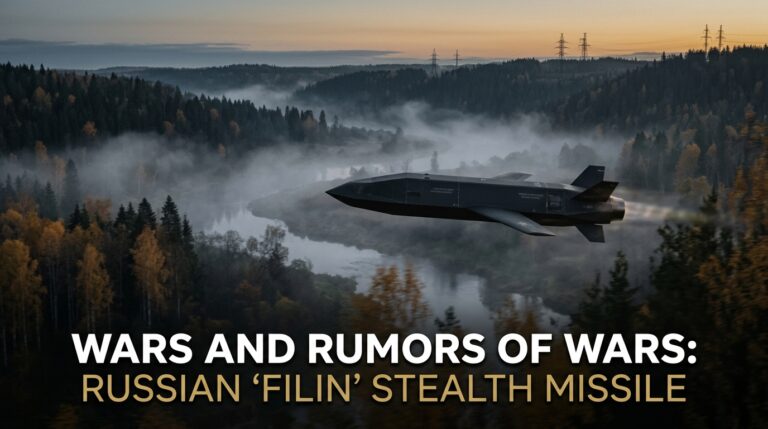
Filin Cruise Missile making headlines as Russian deploys a new type of undetectable missile against Ukraine. #WarsAndRumorsOfWars #FilinMissile #TyphoonChampi #BirthPangs #Ukraine