Tankers hit mines Hormuz is the phrase that flooded your feed this weekend, and it is also the phrase we have to slow down on. On Saturday, two tankers were hit off Khasab. On Sunday, Iran said two supertankers had hit mines off Ghanam Island. On Sunday evening, a third report came in from the Gulf of Oman. Three reports, three different kinds of proof, and only one of them comes with independent verification. If you want to stay ready without getting fooled, you have to learn to tell the difference between a claim and a confirmation, and this weekend is a perfect test.
I am not going to tell you that we know everything that happened out there. We do not. What we do have is a clear timeline, a clear gap between what UKMTO confirmed and what the IRGC claimed, and a clear reason why that gap matters. Let us walk through it in order, with the sources linked to the exact sentence they support, so you can check it yourself.
The Weekend in Order: Tankers Hit Mines Hormuz Timeline
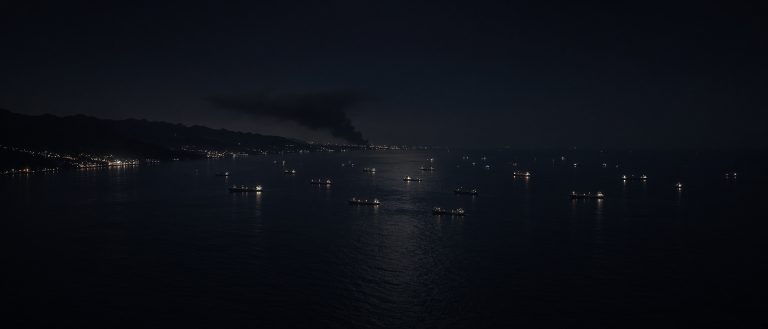
Saturday, November 21, started with two separate UKMTO warnings. UKMTO reported that an outbound tanker was hit on its stern about 11 nautical miles north of Khasab. About 50 minutes later, UKMTO reported a second tanker hit in its engine room about 17 nautical miles east of Khasab. UKMTO did not make clear whether both reports involved the same vessel or two vessels, and it did not name a weapon. It said unknown projectile. That wording matters. It is careful, and it is honest about what was not yet known.
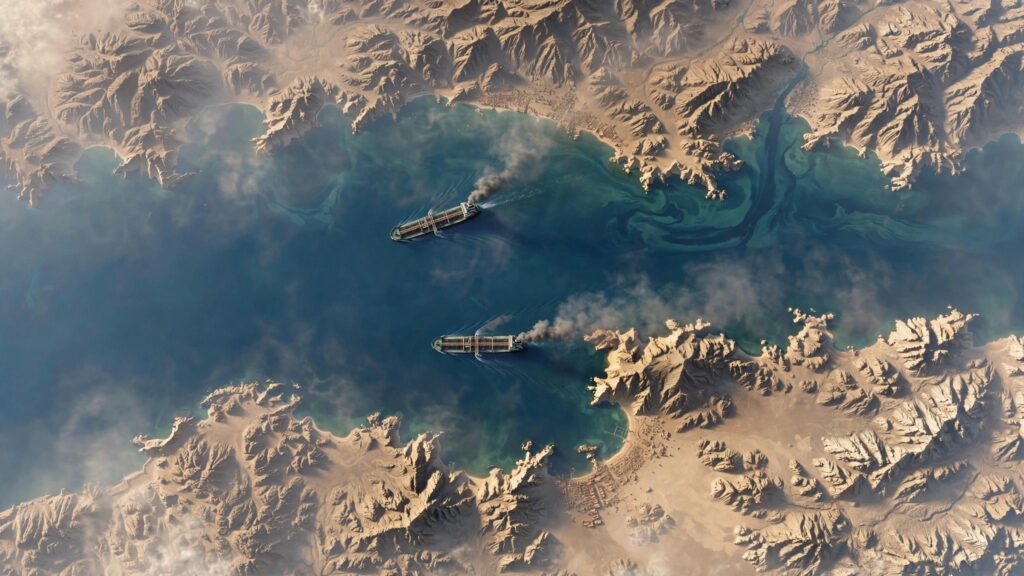
Sunday brought the mine claim. The IRGC Navy said two supertankers exploded after striking naval mines while trying to cross unauthorized routes in the Strait of Hormuz. The claim placed the incident north of Ghanam Island, in the eastern part of the Strait, and said the vessels had switched off detection and navigation systems. It also said the vessels were carrying a combined total of more than 4 million barrels of crude oil. No ship names were given. No photos were given. No casualty numbers were given.
Sunday evening brought a third report, and it was different again. UKMTO announced that a tanker was involved in an incident with military forces in the Gulf of Oman, east of the Strait of Hormuz, near Chabahar. The bulletin said a company security officer alerted UKMTO, authorities are aware, and investigations are ongoing. It did not identify the tanker, the forces, or any damage. So we have a verified projectile pattern, an unverified mine claim, and a verified but vague military incident, all in about 36 hours.
What UKMTO Confirmed
UKMTO is the part of this story you can lean on. It is not perfect, but it is consistent. It reports what was reported to it, it gives a location, it gives a time, and it tells you when it does not know something. That is why we treat UKMTO as confirmed for the fact that an incident happened, and as limited for the cause.
For Saturday, the confirmed facts are the locations and the damage areas: stern hit north of Khasab, engine room hit east of Khasab, about 50 minutes apart. A second report from the same day confirms the same two locations and the same timing. For Sunday evening, the confirmed fact is that an incident with military forces happened near Chabahar, and that the details are still under investigation.
That pattern fits a bigger trend. CNN analysis of UKMTO data found at least 22 attacks reported in November, the second highest figure since the war began. Three tankers were struck exiting the Strait on Friday and Saturday alone, according to maritime risk reporting cited by CNN. So Saturday was not an outlier. It was part of a busy, violent month at sea.
If you are new to this beat, here is a simple rule that will save you a lot of confusion: UKMTO tells you that something happened. It does not always tell you who did it. When a post jumps from UKMTO said a tanker was hit to this proves Iran did it, or this proves the US did it, that jump is opinion, not a UKMTO finding. We will keep that line clean in this article.
What the IRGC Claimed
The IRGC story is longer, more detailed, and less verified. Iranian media reported that two supertankers hit naval mines and caught fire after entering a restricted area east of the Strait of Hormuz, north of Ghanam Island, after the vessels reportedly switched off detection and navigation systems. The IRGC also issued a warning to shipping firms about using unauthorized routes.
Read that claim slowly, because the details are doing a lot of work. Unauthorized route. Restricted area. Switched off systems. Those three phrases shift blame to the tanker. They say, in effect, if you had followed our rules, you would not have hit our mines. That is a legal argument, not just a news report. It is also a control argument. If Iran can define which routes are authorized, and then place mines on the routes it calls unauthorized, it can control movement without having to sink every ship.
That does not mean the mine claim is false. Mines are real weapons, and they have been reported in this waterway for weeks. What it means is that we have not seen independent proof for this specific Sunday claim. No named vessel. No satellite photo released to the public. No third party confirmation from UKMTO, from an owner, from an insurer, or from a rescue service. In a story where the source has a clear interest in showing control, that lack of outside proof has to be stated, not smoothed over.
There is also a pattern you should know. The IRGC has made very similar mine claims repeatedly since late October, including reports on October 29 to 30, November 7, November 12, November 17, and November 19. Each time, the claim was two or three tankers, on an unauthorized route, after switching off systems. Each time, independent verification was limited or absent. When a claim repeats in the same shape, that does not prove it is false, but it does mean we should not treat the newest version as fresh proof. We should treat it as a repeated claim that still needs proof.
Fact Box: Confirmed vs Claimed
Use this box when you see a new post today. Ask, is this in the confirmed column or the claimed column?
| CONFIRMED by UKMTO or other independent source | CLAIMED by IRGC, not yet independently confirmed |
| Saturday, 2 hits off Khasab, stern and engine room, unknown projectile | Sunday, 2 supertankers hit mines north of Ghanam Island |
| Sunday evening, incident with military forces near Chabahar, details under investigation | Vessels carried 4 million barrels combined |
| At least 22 attacks reported in November, per CNN analysis of UKMTO data | Vessels switched off detection and navigation systems |
| Kharg still staged, more than 14 tankers, no departure confirmed | Vessels were on an unauthorized route and are to blame |
If a post mixes the two columns without labeling them, it is not giving you news. It is giving you a narrative.
Why the Gap Matters: Deception Is the First Move
You might wonder why we are spending so much time on wording. A tanker was hit. A tanker burned. Does it really matter if it was a mine or a projectile? Yes, it matters a lot, for three reasons.
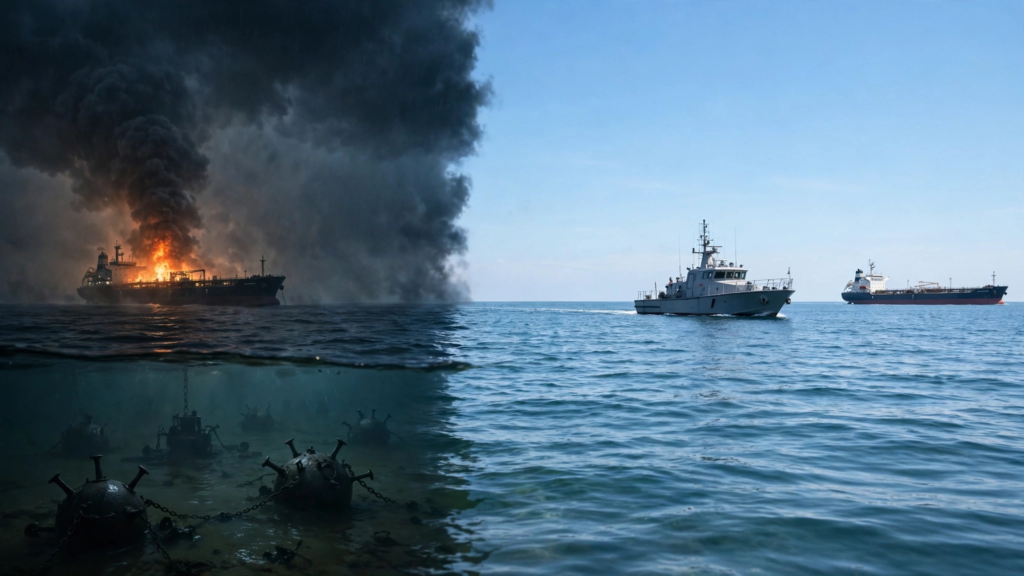
First, mines and projectiles point to different actors and different risks. A mine can sit in the water for days or weeks. It does not need a crew to fire it. It creates a long term fear that the water itself is unsafe, even when no one is shooting. A projectile is a moment. It needs someone to launch it, and it ends when it hits. If you are a captain deciding whether to sail tomorrow, those two risks feel very different.
Second, the unauthorized route story is a permission story. If you accept that Iran can declare parts of an international chokepoint unauthorized, and then mine those parts, you have accepted a new rule for who controls the Strait. That is not a small shift. The Strait of Hormuz carries about 20 to 25 percent of seaborne oil. Whoever controls the rules for that waterway controls a lever on food prices, fuel prices, and shipping insurance for the whole world.
Third, deception works best when it is close to true. A real hit off Khasab makes a claimed mine hit off Ghanam sound plausible. A real fire makes a claimed explosion sound plausible. A real incident near Chabahar makes a claimed pattern sound plausible. That is why we check the source for each incident, not just the vibe of the weekend. One true event does not prove the next event, even if they happened on the same weekend.
This is where we have to be careful with our own hearts too. When we want a story to be true because it fits what we expect, we get sloppy. We share the claim before we check the proof. We add a verse to a claim that has not been confirmed. We turn a warning into a certainty. That is not discernment. That is excitement. Discernment slows down, it separates, and it waits for proof.
Qatar, Trump, and the Gap Where Claims Grow
While the ships were burning, diplomacy was stalling. A Qatari delegation visited Tehran on Friday night and held two hours of talks with Iranian officials, according to Deputy Foreign Minister Kazem Gharibabadi, as reported by Tasnim. Iran has said reopening the Strait is not difficult if the US accepts Tehran conditions, including lifting the maritime blockade and easing sanctions on oil exports. Qatar has been trying to shorten the timeline for parallel steps, with Iran at one point offering to reopen within two days if conditions are met. No deal was announced.
At the same time, Washington signaled a pause. President Trump told Axios he is not rushing into any decision on Iran, and that we will see what happens after the beginning of the year. That does not mean there will be no strike. It means no major decision is being rushed before 2027, even as Israel presses for renewed action.
Put those two facts together and you get the gap where claims grow. Diplomacy is talking but not closing. Military action is paused but not ruled out. In that gap, each side has an incentive to shape the story. Iran has an incentive to show it controls the waterway, even without a full battle. The US has an incentive to show the blockade is working, even while ships are still being hit. Qatar has an incentive to show progress, even when the talks end without a deal. None of that makes any one claim false. It just means we should expect more claims in the gap, not fewer.
That gap is also why Kharg still matters. More than 14 tankers are still staged at Kharg Island, which handles roughly 85 to 90 percent of Iran crude oil exports, with crews assigned and flags raised, but no departure confirmed as of Sunday. If you want the full breakdown of that staging, including the spoof tanker we already debunked, read our earlier report. Iran Kharg Tanker Convoy is the anchor for this series. Iran Says We Will Break the Blockade covers Tehran official words. Hormuz Supertanker Sunk covers the earlier sinking claims. US Strikes Iran Nov 17 covers the strike that set the current tempo.
What the Market Is Saying
If you only watched the headlines, you would expect oil to spike. It has not, at least not in a big way. Brent crude was trading around $92.01 per barrel, with West Texas Intermediate around $83.00, as tanker threats offset supply glut fears. That flat price tells you something the headlines do not. The market is weighing two fears at once: the fear that Hormuz will close, and the fear that the world already has too much oil. For now, those fears are canceling each other out.
That does not mean you should ignore the risk. It means you should not mistake a flat price for safety. Insurance costs, shipping delays, and rerouting can hit food and fuel prices even when Brent looks calm. A captain who refuses to sail because he does not trust the mine claim is still a captain who does not deliver oil, even if no mine ever touched his ship. Fear moves markets too, not just fire.
It also means you should watch what happens next, not just what happened this weekend. If a named vessel appears, with a photo, with an owner confirming damage, that will move the market more than another unnamed claim. If Kharg actually sails, that will move it more than another staging photo. If Qatar announces a real deal, with a date and a verification step, that will move it more than another two hour talk. Watch for names, photos, and dates. Claims without those three things are noise.
OPINION: The following is opinion, not a confirmed fact. It is our read of the pattern, and we label it so you can weigh it yourself.
In our opinion, mines on Iran own claimed unauthorized route do not add up as pure defense. Defense is protecting your own port. Control is telling everyone else which parts of an international waterway they are allowed to use, and then making the other parts feel unsafe. Mines do control work very well, because they do not need to sink a ship to change behavior. They only need to make a captain wonder if the next mile is mined.
In our opinion, that is what is happening here. The repeated mine claims, in the same shape, with the same blame language, look less like a series of accidents and more like a message: sail our way, or risk the water. That message works even if some of the claims are exaggerated, because the fear is real even when the proof is thin. We are not saying every mine claim is false. We are saying the pattern fits a control strategy better than it fits a simple defense story.
We will change this opinion if independent proof appears. Show us a named vessel, a verified photo of a mine strike, a third party damage report, and we will update this article with a dated note. Until then, we keep the opinion labeled, and the facts separated.
What to Watch
Here is what we are watching next, and what would change this story.
1. Next UKMTO warning. If UKMTO names a vessel, gives a precise location, and describes damage, that is confirmation. If it stays vague, treat it as a signal, not proof.
2. Any named vessel or photo from Ghanam. A name plus a photo from an owner, an insurer, or a rescue service would turn the IRGC claim into a confirmed event. Without that, it stays a claim.
3. Any Kharg departure. Staged is not sailed. If satellite shows a convoy actually leaving Kharg and entering the Strait, that is a new phase. If it stays staged, the standoff continues.
4. Any Qatar deal with a date and a verification step. Two hours of talks is not a deal. A deal has a date, a sequence, and a way to check it. Watch for those three details.
5. Oil and insurance. If Brent breaks above $95 and stays there, or if war risk insurance jumps, that tells you the market is starting to believe the risk is real, not just reported.
We will update this article with a dated note if any of those five things happen. If they do not, we will close this story the same way we close every story in this series: with what we know, what we do not know, and what we are still watching.
Closing
So where does this leave you? Do not trade a claim for a confirmation. Do not let a real hit off Khasab make you believe an unverified claim off Ghanam without proof. Do not let a real incident near Chabahar make you believe a whole pattern without names and photos. Stay slow, stay sourced, and stay ready.
Matthew 24:4 says, Take heed that no man deceive you. That verse is not about being cynical. It is about being careful. In a weekend full of mines, projectiles, and military incidents, careful is the most spiritual thing you can be.
Just as predicted. Stay ready. Keep looking up.
Sources and Link Map
External sources, each mapped to the exact sentence it supports in the article above. All links are live and verified for this article.
UKMTO Khasab hits, Reuters via Devdiscourse: https://www.devdiscourse.com/article/international/4010319-uk-maritime-agency-reports-two-tanker-incidents-near-oman-iran-says-vessel-hit-mine-east-of-hormuz?amp
UKMTO 50 minutes apart, JBizNews: https://jbiznews.com/two-tankers-hit-by-projectiles-near-strait-of-hormuz-within-50-minutes-ukmto-says/
CNN, 22 attacks in November: https://www.cnn.com/2026/11/22/middleeast/hormuz-attacks-highest-levels-iran-war-intl?cid=external-feeds_iluminar_meta
IRGC mine claim, PressTV: https://www.presstv.co.uk/Detail/2026/11/22/781364/two-oil-supertankers-explode-in-strait-of-hormuz-irgc-navy-warns-shipping-companies
IRGC Ghanam Island, Gaza Herald: https://gazaherald.com/2026/11/22/iranian-navy-two-supertankers-hit-mines-near-hormuz-strait/
Gulf of Oman incident, Daily Guardian / Euronews: https://dailyguardian.eu/tanker-incident-involving-military-forces-reported-in-strait-of-hormuz/
Kharg 14 tankers, NY Post: https://nypost.com/2026/11/22/us-news/iran-amasses-14-oil-tankers-at-key-export-hub-as-tehran-weighs-challenge-to-us-blockade-report/
Qatar delegation, Devdiscourse / Tasnim: https://www.devdiscourse.com/article/international/4010367-qatari-delegation-visits-tehran-for-talks-iranian-official-says?amp
Trump not rushing, NY Post / Axios: https://nypost.com/2026/11/19/us-news/trump-not-rushing-into-iran-decision-says-we-will-see-what-happens-in-2027/
Oil price Brent $92, OilPrice: https://oilprice.com/Latest-Energy-News/World-News/Oil-Prices-Steady-as-Hormuz-Tanker-Threats-Offset-Supply-Glut-Fears.html
Internal links:
Iran Kharg Tanker Convoy: https://samuelclark.com/iran-kharg-tanker-convoy/
Iran Says We Will Break the Blockade: https://samuelclark.com/iran-says-we-will-break-the-blockade/
Hormuz Supertanker Sunk: https://samuelclark.com/hormuz-supertanker-sunk/
US Strikes Iran Nov 17: https://samuelclark.com/us-strikes-iran-nov-17/