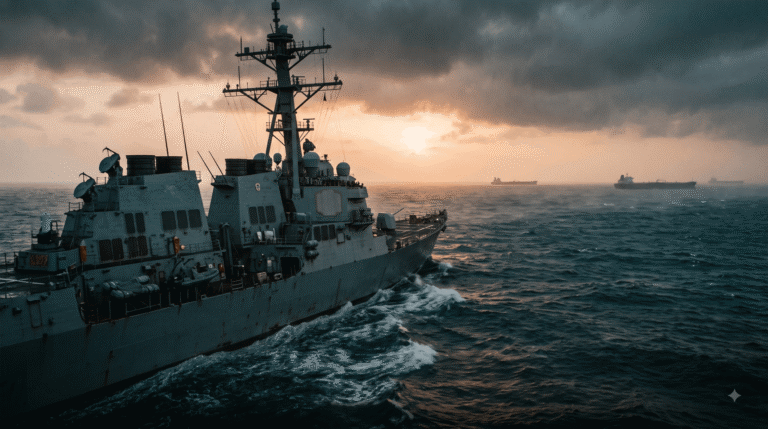
The Iran Kharg tanker convoy is staged, it is crewed, and it is waiting. It has not sailed. That distinction matters more than the headlines right now, because the noise around Hormuz is moving faster than the ships.
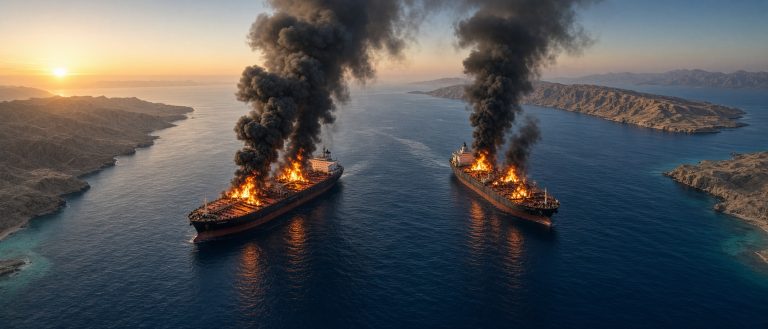
More than 14 Iranian-flagged tankers are positioned near Kharg Island, Iran’s main crude export terminal. Crews have been assigned. Iranian flags are raised. Satellite and ship tracking show the massing. What they do not show, as of Nov 22, is a convoy leaving Kharg, breaking a line, or delivering oil past the blockade. If you remember only one line from this piece, remember that one.
The Iran Kharg Tanker Convoy Is Staged, Not Sailing
Kharg is not a random anchorage. It handles 85 to 90 percent of Iran’s seaborne crude exports. It has roughly 30 million barrels of storage and deep water for supertankers. When Tehran wants to signal it can still export, this is where it signals from. That is why the count matters.
Reports from Euronews Persian, the Jerusalem Post, Gulf News, and other outlets, citing satellite imagery and vessel tracking, put the number at more than 14 tankers near Kharg. The Institute for the Study of War noted on Nov 20 that Tehran municipality affiliated outlet Hamshahri claimed Iran had staged 14 tankers at Kharg to attempt to run the blockade.
Kpler identified about 20 tankers near Kharg in the same window. Most appear loaded but remain stationary. Loading operations at the terminal had largely halted under blockade pressure. So we have a picture of preparation, not movement.
The idea itself came from IRGC affiliated media. Fars News Agency published a column proposing a Fereydun Plan, referencing the Shahnameh, under which a group of tankers would break the blockade. Euronews Persian described the convoy information as unofficial. No independent confirmation has emerged that any convoy has departed Kharg or successfully exited toward the Gulf of Oman or Asian markets.
That is the line we have to hold. Staged is real. Sailed is not confirmed.
The Blockade in 30 Seconds
This is not a new blockade. It was first imposed on April 13, 2026, temporarily lifted in June after a memorandum, and reinstated on July 14 after that agreement collapsed. As of Nov 21 to 22, it had been continuously enforced for about 130 days.
In that time, about 147 to 150 commercial vessels have been redirected or turned back since July 14, according to CENTCOM related reporting. Visible crude exports have collapsed to near zero. That is the pressure Tehran is trying to answer.
On Nov 18, CENTCOM widened the rules. Any ship that receives cargo via a ship to ship transfer from a blockaded vessel carrying cargo loaded at an Iranian port or coastline may be considered to be evading the blockade, even if it has not entered Iranian ports. That update, shared through the Joint Maritime Information Centre as advisory 017-26, means a vessel that takes Iranian crude at sea can now be treated as evading, subject to boarding, diversion, seizure, or force.
Keep that Nov 18 rule in mind. It is the reason the next section matters so much.
The One Transfer That Did Happen
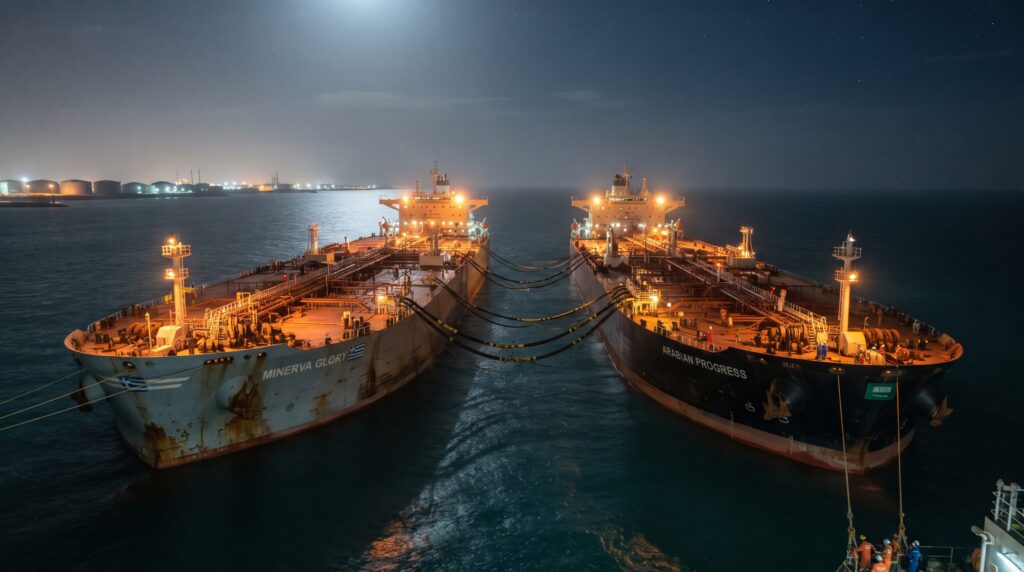
On or about Nov 17, the first observed ship to ship transfer of Iranian crude since the blockade was reinstated took place near Kharg Island. It was small, it was quiet, and it was done with tracking off.
United Against Nuclear Iran and Bloomberg reported that the sanctioned Suezmax tanker Olym, claiming a false Guyana registry, transferred about 200,000 barrels to the medium range tanker Hao Fan, not on the US Treasury sanctions list, claiming a false Nicaragua registry. Both vessels operated with AIS switched off during the transfer.
TankerTrackers co founder Samir Madani told Reuters on Nov 19 to 20 that a tanker was receiving Iranian crude via STS in the Gulf. He said if that vessel successfully exited the blockade zone, it would mark the first successful seaborne export of Iranian crude since mid July. He did not identify the tanker but noted it was not subject to US Treasury sanctions.
Then TankerTrackers posted on Nov 19, BREAKING: Iran appears to be preparing to ship out oil again. A day later, when reports escalated into claims of an imminent multi tanker convoy challenge, TankerTrackers clarified, Wishful thinking. That is definitely not what is going on.
That back to back sequence is the whole story in miniature. Limited STS activity and positioning are observed. A coordinated breakout convoy is not confirmed. Do not blur those two things.
What Tehran Said, In Their Own Words
Iranian officials have publicly framed the blockade as something that must be answered.
Foreign Minister Abbas Araghchi told ILNA on Friday, The blockade must be broken. Iran is making every effort regarding oil exports and negotiations. That quote was carried widely, including in reporting on hardliners pushing the convoy idea.
Deputy Foreign Minister Kazem Gharibabadi said Iran will take any action necessary to break the blockade, which Tehran considers an act of war. A Qatari delegation held talks in Tehran on Nov 21.
Lawmaker Vahid Ahmadi, on the National Security Committee, said 14 oil tankers were preparing to challenge the blockade. His line was blunt, If we cannot sell oil, others should not be able to sell it either. He added that possible military escorts were under consideration, and that Qatar and Oman had been informed. Reporting on the Gharibabadi warning also noted the same convoy staging at Kharg.
We are reporting those words as official statements. We are not treating them as proof a convoy will sail. Tehran has signaled intent before. Intent and departure are two different things.
The Reported Threat to Six Gulf States
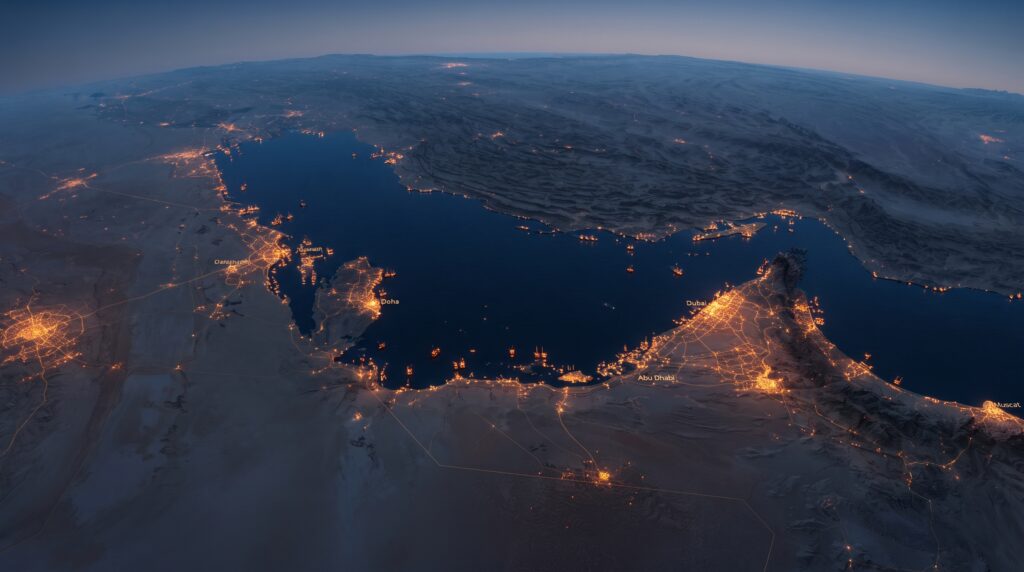
This next part must be read carefully. It is reported, not verified as intent, and it comes from IRGC linked media, not from a confirmed operational order.
IRGC linked media, including Fars and others, warned that any US attempt to attack or detain the tankers would trigger immediate strikes on regional energy infrastructure. The reporting specifically named oil facilities in the UAE, Saudi Arabia, Qatar, Kuwait, Oman, and Bahrain.
IRGC spokesman Hossein Mohabbati stated that if Iranian vessels are attacked, we will strike harder.
We are including the full list because you need to see the scale of the threat as reported. We are labeling it as reported because no independent confirmation exists that strikes have been ordered or that any of those six states have been targeted in connection with this convoy.
Recent days have also seen tanker incidents near Oman’s Khasab, with reported projectiles and an Iranian claim of a vessel striking a naval mine. That underscores an already elevated threat environment in the Strait. No casualties have been reported specifically tied to the Kharg Island tanker preparations.
The Tanker That Did Not Exist
Now the spoof. This is where the feed got fooled.
On Nov 21 to 22, MarineTraffic AIS data appeared to show a vessel identifying as the Iranian flagged tanker Khat Shekan, Persian for line breaker, underway near the Strait of Hormuz, heading toward the Gulf of Oman at about 6 to 8.5 knots, with a reported draught of 22.5 meters consistent with a heavily laden VLCC. The name and the timing fueled rapid speculation of a blockade breaking attempt.
TankerTrackers debunked the signal within hours, in plain language, Congrats, you just found a spoof. This tanker does not even exist. All of the data supplementing that AIS transmission is wrong and there is nothing on satellite imagery to corroborate those movements. The Iranians know better than to attempt to ship out a VLCC right now given how many were fired upon in recent months.
The inconsistencies confirm it:
Satellite imagery showed no physical vessel matching the reported movements.
The listed call sign matched US records for a Liberian flagged tanker, Stolt Bobcat, not an Iranian vessel.
Declared destination OIL TERMINAL was matched by MarineTraffic to a Nigerian terminal, with an arrival time that would have required travel from Iranian waters to Nigeria in a matter of hours, physically impossible.
The vessel does not exist in legitimate registries as claimed.
Conclusion, Khat Shekan is a tracking spoof and is not part of any real Iranian challenge to the blockade. It should be disregarded as a watch item. If you saw it shared as proof the convoy had sailed, you saw a fake.
This is why we check satellite against AIS, not AIS alone. AIS can be spoofed. A hull on water cannot be faked as easily.
Why Hormuz Still Matters
Shipping through the Strait of Hormuz remains significantly depressed, with reports of about 65 percent below pre war levels in recent weeks. Oil market reaction has been muted so far, consistent with the absence of confirmed physical disruption.
That muted market is telling you something. Traders are not pricing a breakout that has not happened. They are watching, like we are, for movement, not for posts.
Kharg matters because Hormuz matters. Historically, the Strait carries roughly 20 to 25 percent of seaborne oil trade. When you mass tankers at the terminal that feeds that chokepoint, and you threaten retaliation across six Gulf states if those tankers are touched, you create conditions for a wider confrontation even if no tanker moves. That is the tension, even without a departure.
OPINION BOX: Prophetic Lens – Deception Is the Sign, Not the Noise
This section is opinion and prophetic framing. It is not news reporting.
Jesus opened His warning about the end of the age with deception. In Matthew 24:4, He said, Take heed that no man deceive you. Not, watch for earthquakes first. Not, watch for wars first. Deception first. The Khat Shekan spoof is a small, perfect picture of that warning in real time. A ship that did not exist moved across screens, and people believed it had broken a blockade.
Then He added wars and rumours of wars, and nation rising against nation, and famines and pestilences and earthquakes in divers places, and He called those the beginning of sorrows in Matthew 24:6 to 8. We are not setting dates, and we are not saying this convoy is that moment. We are saying the pattern fits. A chokepoint that carries 20 to 25 percent of seaborne oil, a staged convoy, a threat to six energy states, and a fake signal designed to create urgency, that is what beginning of sorrows pressure looks like when it is still in the rumour stage.
Iran will not be wiped out in this round, in our reading. It is being positioned, not removed. The pressure is economic, military, and informational at the same time. If Tehran attempts a physical breakout and it is met with force, the next step is not just a tanker story. It is a Gulf energy story, and a global food and fuel story, because when oil cannot move, everything else gets more expensive and more fragile.
So we watch the real ships, not the ghost ships. We watch satellite, not just AIS. And we remember that deception is not a side effect of this moment. In this telling, it is the opening sign.
What We Are Watching Next – Watchlist Close
We are not closing this story. We are watching it. Check date: Nov 25, 2026. We will check for:
Any confirmed movement of the Kharg positioned tankers toward the Gulf of Oman.
Success or interdiction of the vessel that received the STS cargo from Olym.
Any escalation of attacks on regional energy infrastructure in the six named Gulf states.
Continued separation between verified satellite and AIS correlated activity and spoofed signals.
If a convoy departs and is confirmed by satellite and independent tracking, we will update this article with a dated note and a follow up story. If it does not, we will close this watch item with a dated note. We will not leave a promise hanging.
Just as predicted. Stay ready. Keep looking up.
Sources and Link Map – Verified Only
External links are mapped to exact sentences in the article. Internal links use verbatim slugs.
External: ISW Iran Update Nov 20 for Hamshahri 14 tanker claim – ISW
External: gCaptain / Reuters for CENTCOM Nov 18 STS expansion – gCaptain
External: Maritime Executive for JMIC advisory 017-26 – Maritime Executive
External: Europe Says for Araghchi quote and hardliners pushing convoy – Europe Says
External: Breitbart for Gharibabadi warning and Kharg staging – Breitbart
Research base: User research document Iran Prepares 14 Tankers to Challenge US Blockade Plus Spoof Tanker Debunked, Nov 22, 2026. All factual claims in this article are drawn from that document and the outlets it cites. Prophetic framing is analytical context only.
Internal: Related reading on this site – Iran Says We Will Break the Blockade | US Strikes Iran Nov 17 | Hormuz Supertanker Sunk
#IranKhargTankerConvoy #Hormuz #Blockade #TankerTrackers #BeginningOfSorrows