The Day Everything Fell Together In The Global Stock Market Crash November 2026
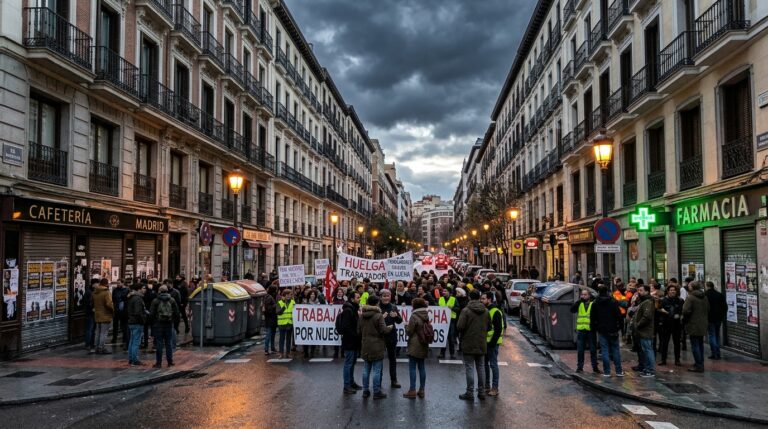
It did not happen in one country. It did not happen in one sector. It happened everywhere, on the same day.
In America, the Dow fell more than a thousand points. The S&P 500 fell three percent. The Nasdaq fell more than four percent. That alone would have been a headline day.
But then you look at Asia, and the picture gets bigger.
South Korea fell more than six percent. Taiwan fell almost five percent. Japan fell almost three percent. In China, Shanghai fell to its lowest close since July of last year. Shenzhen fell more than three percent. The tech index fell more than four percent.
This was not a local wobble. This was a global shake.
And that is why this story matters. A single market can fall for a single reason. When markets fall together, it usually means something deeper is moving underneath.
So let us ask the honest question. Is this just an AI bubble popping? Or is this the economic train coming off the rails?
I believe it is deeper than AI. AI is the spark. Debt is the fuel. Fear is the wind. And the whole system has been running hot for a long time.
Monday Gave Us a Fake Recovery
To understand Wednesday, you have to rewind to Monday.
Monday gave Wall Street a jolt of hope. Jensen Huang returned as Nvidia CEO, and the market ripped higher. For a day, it felt like the AI story was back.
Then Tuesday came, and the bounce started to fade. Nvidia slipped again. The Nasdaq slipped again. The mood changed.
By Wednesday, the bounce was dead.
Nvidia fell below $150 after falling about five to eight percent intraday. The company at the center of the AI boom was now leading the selloff. The fear gauge, the VIX, jumped to 33.
That pattern tells you something important. When a market needs one man, one headline, or one bounce to hold it up, it is not healthy. It is fragile. And fragile markets do not need a huge shock to break. They just need the story to stop working.
The AI story stopped working this week.
Why AI Is at the Center, But Not the Whole Story
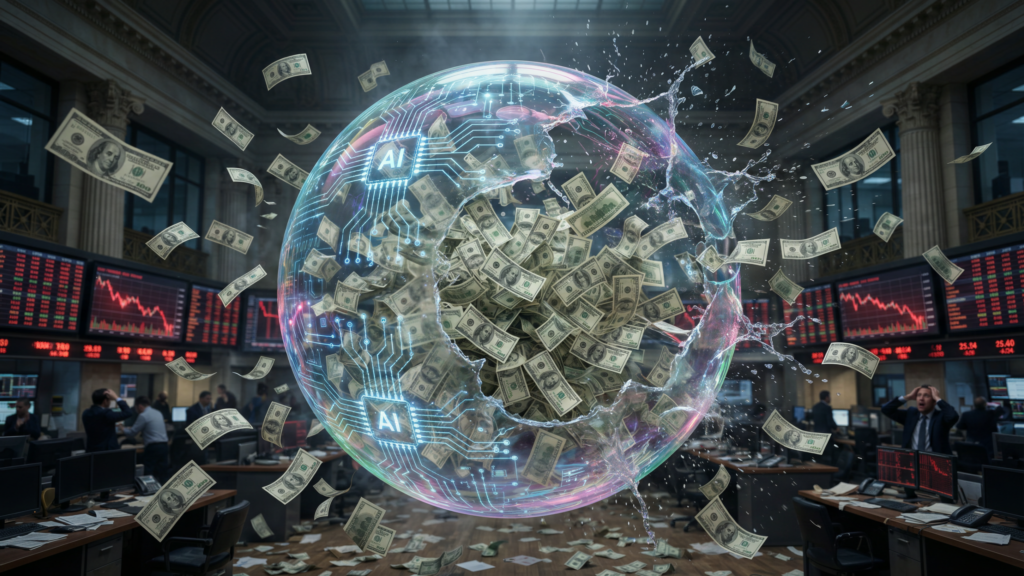
Let us be clear. AI is real. The technology is real. The demand is real. Data centers are being built. Chips are being sold. Companies are spending.
The problem is not that AI is fake. The problem is how it is being paid for.
A lot of this buildout is being funded with debt. A lot of it is being funded with promises. A lot of it is being funded with the belief that future profits will show up fast enough to cover present spending.
Investors are starting to ask a simple question. When does this pay off?
They are not asking it quietly anymore. They are asking it by selling.
They are punishing companies even when those companies beat expectations. They are raising the bar so high that almost nothing clears it. That is what happens when trust starts to crack. It is no longer about one earnings report. It is about whether the whole math still works.
That is why chipmakers, server makers, and data center stocks fell together. It was not one bad company. It was one big doubt.
But if you stop there, you miss the bigger convergence.
America: Hot Inflation, High Rates, Fresh Tariffs
In America, three pressures hit on the same day.
First, inflation came in hot. Core PCE inflation rose 3.3 percent year over year in October. That is well above the Federal Reserve target of 2 percent. It told traders that prices are not cooling the way they hoped.
Second, growth still looked hot. Q3 GDP was revised to 4.3 percent. That sounds good, until you realize what it means for rates. If the economy is still running hot, the Fed has less reason to cut. Some traders even started betting on hikes.
Third, fresh tariffs entered the picture. The US proposed country-specific tariffs on goods from 14 major trading partners, including India, Japan, and the European Union, plus an additional 20 percent tariff on imports from China. There was also talk of a 25 percent tariff on advanced computing chips.
Put those together and you get a market that feels squeezed from every side. Inflation says rates stay high. Tariffs say costs go up. AI says spending is massive and returns are uncertain.
That is a triple hit. And it landed on a market that was already nervous.
China: The Quiet Crisis Underneath the Headlines
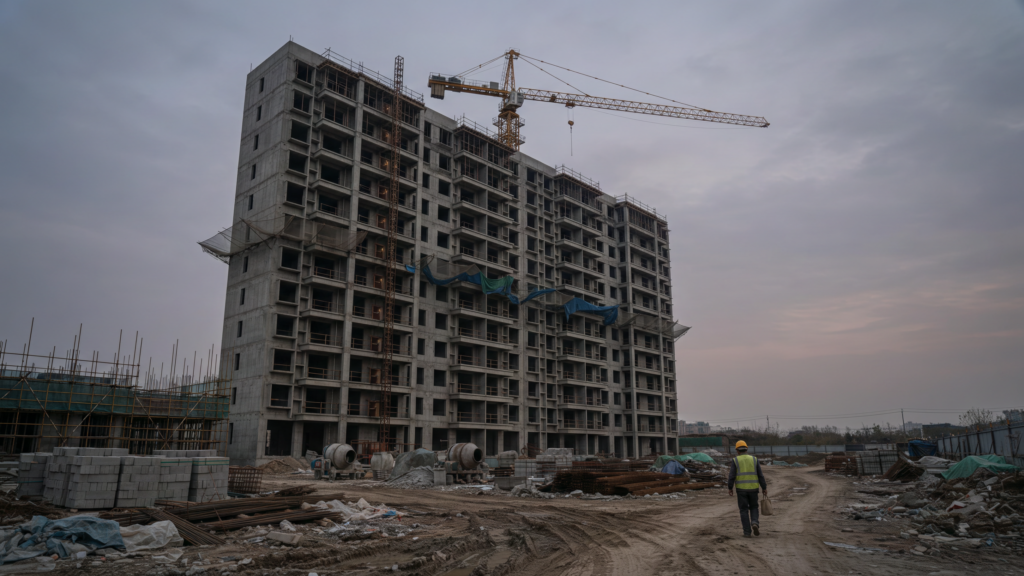
Now let us look at China, because this is where the story gets deeper.
China is the second largest economy in the world. When China wobbles, the world feels it. And right now, China is wobbling in a way that does not fit in a single headline.
Start with property. Property investment in China fell 21.6 percent in the first ten months of 2026. New home prices kept falling in October. Resale values kept falling too.
This is not a one month dip. This has been going on for years. Housing inventories are near record highs. Developer financing has been squeezed. Banks are exposed to forms of real estate lending that are harder to see and harder to unwind.
Then look at the everyday economy. Retail sales rose just 0.4 percent year over year in October. That is barely growth. Industrial production slowed to 4.8 percent. Fixed asset investment fell 8.1 percent in the first ten months.
That is what a stalled domestic economy looks like. People are not spending. Businesses are not investing. Confidence is thin.
And local governments are feeling it too. They raised 1.85 trillion yuan from land sales in the first ten months of 2026, down 25.8 percent from a year earlier. For years, land sales helped fund local government. When that money dries up, the pressure moves everywhere else.
In October, Beijing even allocated 300 billion yuan of unused borrowing capacity to help counties and districts meet day to day expenses. That is not a sign of strength. That is a sign of strain.
One state owned conglomerate, Zhuhai Huafa Group, became a flashpoint in October as it struggled with debt payments. It rattled the bond market. It reminded everyone that the property crisis did not end. It just moved into new corners.
So when Shanghai fell to its lowest close since July of last year, it was not just reacting to Wall Street. It was reacting to its own weight.
China is trying to grow with exports while its home market stalls. That can work for a while. It cannot work forever.
The Bigger Picture: A World Built on Debt
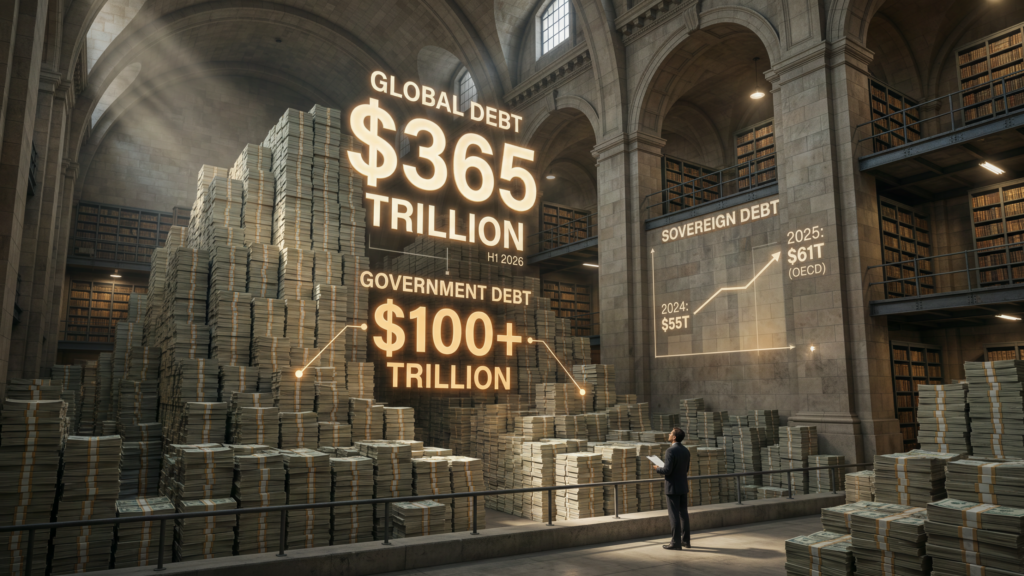
Here is where we have to zoom out even further.
Global debt passed $365 trillion in the first half of 2026. Governments alone owe more than $100 trillion. The OECD put sovereign debt alone at $61 trillion in 2025, up from $55 trillion in 2024.
The IMF warned in its April 2026 Fiscal Monitor that global public debt hit nearly 94 percent of GDP in 2025, and is on track to hit 100 percent by 2029.
Read that again. Governments around the world owe roughly as much as the whole world produces in a year.
And it is not just governments. Companies borrowed to build AI. Households borrowed to survive inflation. Emerging markets borrowed in dollars when rates were low, and now they have to refinance at much higher rates.
The IMF flagged a $1.4 trillion refinancing wall for emerging and frontier economies between the second quarter of 2026 and the first quarter of 2027. Eight to twelve countries may need restructuring. That would be the largest cascade since the Latin American debt crisis of the 1980s.
This is why I keep saying this is not just an AI bubble. AI is one car on the train. Debt is the track. And the track has been bending for years.
When rates were near zero, debt felt free. When rates rose, debt got expensive. When confidence falls, debt gets dangerous.
That is the moment we are in.
What the Bible Says About a Moment Like This
This is where discernment has to come in. We cannot just watch numbers. We have to ask what kind of moment this is.
The Bible is blunt about debt.
In Proverbs 22:7, it says the borrower is servant to the lender.
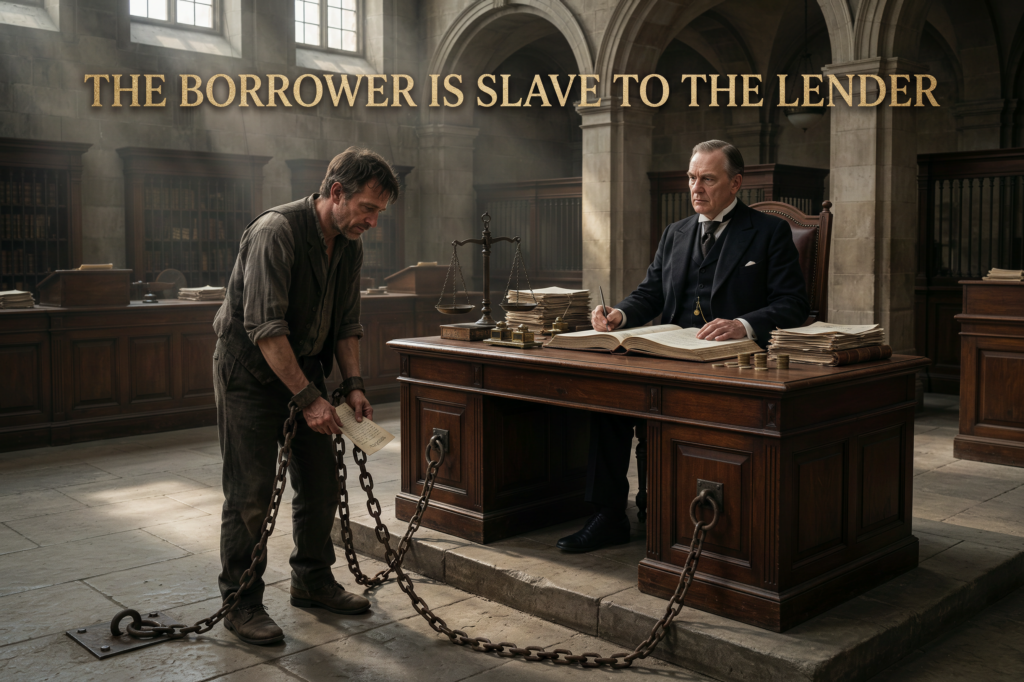
That is not just personal advice. That is a principle for nations too. When a nation lives on borrowed money, it loses freedom. It loses options. It becomes a servant to interest payments, to lenders, to market moods, to fear.
In Haggai 1:6, God describes a people who earn wages, only to put them in a bag with holes in it.
Does that sound familiar? You work. You earn. You save. And somehow it never feels like enough. Prices rise. Debt rises. Fear rises. The bag keeps leaking.
And in Matthew 6:19, Jesus said do not lay up treasures on earth, where moth and rust destroy, and where thieves break in and steal.
Earthly systems shake. That is not pessimism. That is reality. Markets shake. Currencies shake. Empires shake. The Bible never promised us a stable earthly system. It promised us a stable kingdom.
That does not mean we ignore what is happening. It means we read it correctly. We do not panic. We do not worship the market. And we do not put our hope in the next bounce.
We watch. We prepare. We stay steady.
What To Watch Next
I am not here to tell you the market will crash tomorrow, or that it will bounce tomorrow. Anyone who tells you they know for sure is selling you something.
But here is what I am watching.
First, the Nasdaq. It is down almost 20 percent from its early October record high. That puts it near bear market territory. If it breaks and holds below that line, fear will get louder.
Second, the Fed. With PCE at 3.3 percent and GDP at 4.3 percent, will the Fed hold, cut, or even hint at hikes? The market is hanging on every word.
Third, tariffs. Will the new tariff proposals actually land? Will China, the EU, Japan, or India retaliate? Trade wars do not stay in trade. They bleed into prices, profits, and politics.
Fourth, China property and local debt. If another large developer or local government vehicle wobbles, watch the bond market. That is where quiet crises get loud.
Fifth, Black Friday and holiday spending. If consumers pull back, that will confirm what the retail data already hints at. People are tired. Wallets are thin. Confidence is fragile.
None of these alone would end the world. Together, they form a convergence. And convergence is what we watch for here.
Stay Ready, Not Scared
I know days like this can make people anxious. I get it. When you see a thousand points wiped off the Dow, when you see red everywhere, when you see fear spiking, it is easy to feel like everything is falling apart.
But fear is a terrible counselor. Panic makes bad decisions. Calm makes clear decisions.
So here is my encouragement. Do not make big moves out of fear. Do not chase the bounce. Do not stare at the ticker all day. Build on what cannot be shaken.
Prepare where you can. Pay down what you can. Save what you can. Help someone near you who is struggling. Keep your eyes up.
The markets will do what markets do. They will rise. They will fall. They will shake.
Our job is not to worship the market. Our job is to discern the hour.
This week, the hour looked like this. America shook. Asia shook. China shook. Debt shook. Fear shook.
That is not just an AI bubble popping. That is a system showing its cracks.
Just as predicted. Stay ready. Keep looking up.
Sources
Reuters – Tariff and volatility coverage
IMF – April 2026 Fiscal Monitor
OECD – Global Debt Report 2026
Related on SamuelClark.com
2026 Global Weather Events – Birth Pangs
Fulfilled Prophecy and Discernment
#StockMarketCrash, # Nasdaq, #AIBubble